Por qué en inglés se repite el sujeto en frases largas

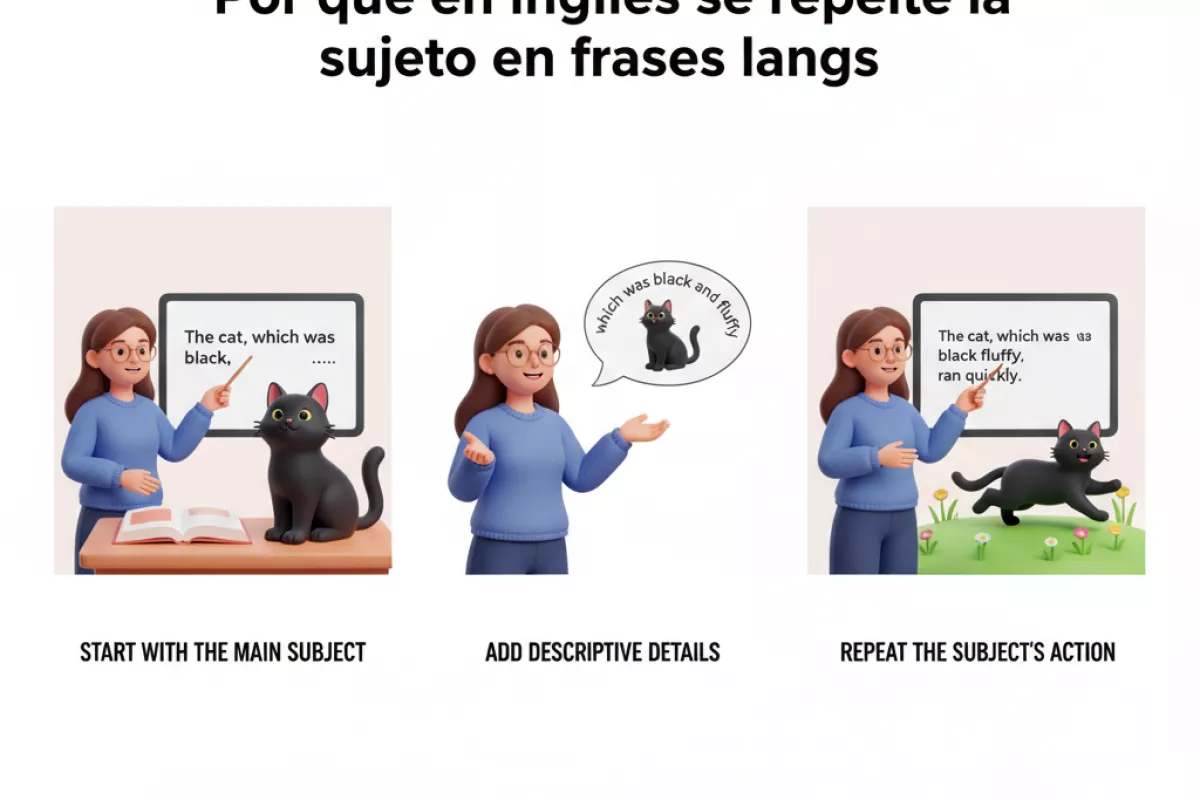 Aprende por qué el sujeto es tan importante en inglés y en qué se diferencia del español. Verás cómo mejora la claridad y la estructura de la oración, ejemplos con frases largas, errores comunes cuando se omite, consejos para escribir con mayor claridad y un ejercicio práctico final.
Cuando una frase en inglés se alarga, es habitual repetir quién realiza la acción para que el interlocutor no se pierda a mitad de la idea. En clase lo veo constantemente: en español podemos apoyarnos más en sujetos implícitos, pero en inglés la claridad es prioritaria y la referencia se refuerza. Entender este hábito te ayudará a leer, escribir y hablar de forma más natural, especialmente en frases con varias partes.
Importancia del sujeto en inglés
En inglés, el sujeto funciona como el “ancla” que permite identificar con rapidez quién realiza la acción o a quién se le atribuye un estado. Como el idioma depende mucho del orden de palabras (Subject–Verb–Object), mantener el sujeto explícito ayuda a que el lector no tenga que reconstruir la referencia cuando la oración se alarga con incisos, complementos o varias ideas encadenadas.
Además, a diferencia del español, el verbo en inglés ofrece poca información de persona: I work / you work / we work comparten la misma forma verbal. Por eso, cuando una frase crece, es común “reafirmar” el sujeto (con un pronombre u otra referencia) para evitar ambigüedades y mantener el hilo.
Por qué el sujeto se mantiene visible en oraciones largas
- Concordancia limitada: el verbo cambia poco; el sujeto aporta la mayor parte de la información de persona y número.
- Orden rígido: mover elementos como en español suele sonar marcado o incorrecto; repetir el sujeto mantiene el patrón básico.
- Incisos y añadidos: tras una cláusula larga, el lector agradece volver a una referencia clara (he, they).
- Evitar “falsos sujetos”: complementos largos pueden parecer el actor de la acción si no se reintroduce el sujeto real.
- Control de la referencia: en textos con varios participantes, repetir el sujeto reduce confusiones entre he/she/they.
- Lectura por bloques: el inglés tiende a segmentar; reponer el sujeto al inicio de un bloque facilita el procesamiento.
Patrones donde suele reaparecer el sujeto
La repetición no siempre significa “decir lo mismo dos veces” de forma literal: a menudo se trata de usar un pronombre para retomar un sustantivo ya mencionado, o de reiniciar la estructura tras una subordinada. Estos patrones son especialmente frecuentes en escritura formal y en frases con varias capas de información.
| Patrón | Ejemplo | Función |
|---|---|---|
| Retomar con pronombre tras un inciso | My brother, after years abroad, he decided to return. | Reanudar el hilo después de información intercalada. |
| Reinicio tras una subordinada larga | When the meeting ended and everyone had left, we started the cleanup. | Marcar el sujeto principal al volver a la idea central. |
| Dos acciones separadas por mucho material | The team reviewed the data, and they proposed a new plan. | Evitar que el segundo verbo quede “flotando” sin agente claro. |
| Contraste entre sujetos cercanos | Laura explained the issue, but she didn’t approve the change. | Fijar quién hace qué cuando hay contraste o giro. |
| Repetición por claridad en listas de ideas | The report outlines the risks, it explains the costs, and it suggests alternatives. | Dar ritmo y claridad en enumeraciones largas. |
Señales prácticas para decidir si conviene repetirlo
En la práctica, la decisión depende de la distancia entre el sujeto y el verbo, y de cuántos elementos compiten por la atención. Si tras el sujeto aparecen varios complementos, aclaraciones o una subordinada extensa, reintroducirlo con un pronombre suele hacer la frase más legible.
- Si entre el sujeto y el verbo hay un bloque largo (por ejemplo, una relativa con who/which), considera retomar el sujeto al reanudar la idea.
- Si aparecen varios sustantivos posibles, usa un pronombre para fijar la referencia: the manager vs. the client.
- Si encadenas acciones con and/but, repetir el sujeto puede evitar lecturas erróneas, sobre todo cuando cambia el foco.
- Si el sujeto es una idea larga (p. ej., una frase con what), un pronombre posterior puede “aligerar” la continuación: What we need now is… It will help us…
- Si el sujeto es no contable (information (información)), recuerda que suele ir en singular y se retoma con it, no con they.
Diferencia con el español
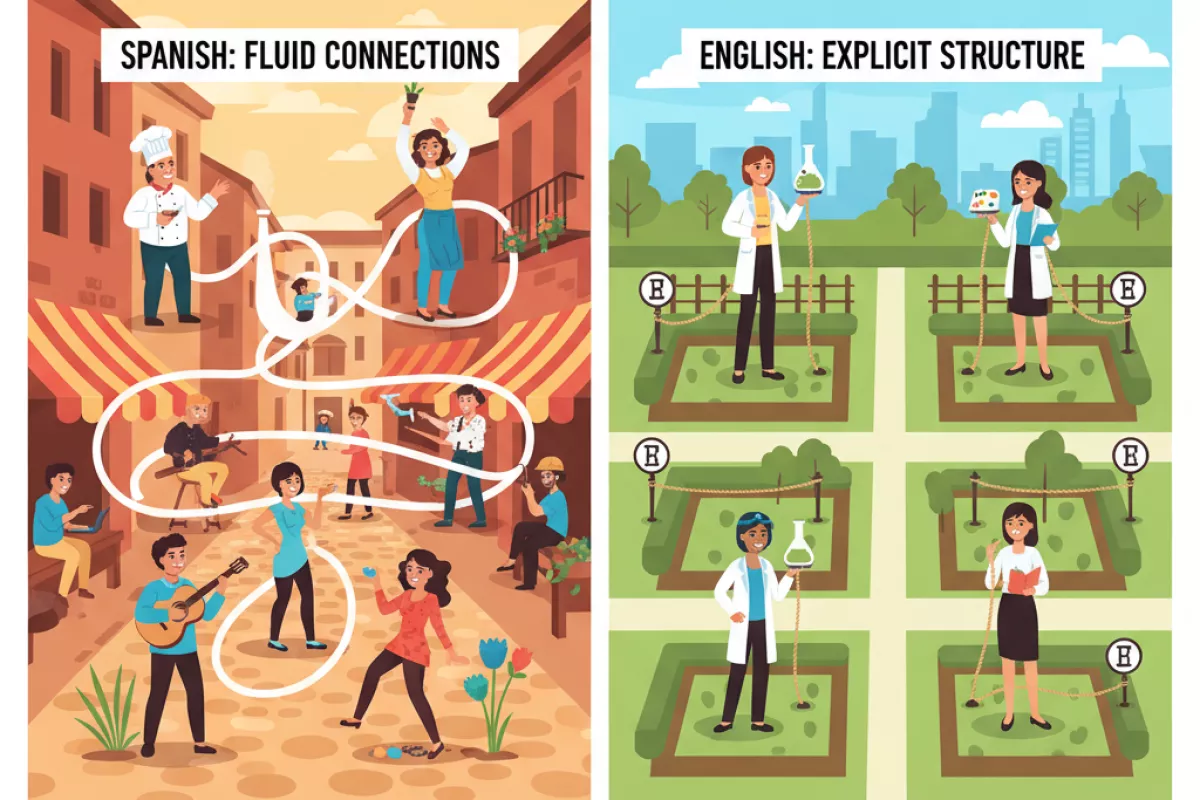
En español es habitual encadenar información en una sola oración sin volver a mencionar el sujeto, porque la concordancia verbal y los pronombres implícitos (sujeto tácito) permiten mantener claro “quién hace qué”. En inglés, en cambio, la estructura depende más del orden y de sujetos explícitos; por eso, cuando una frase se alarga con incisos, subordinadas o complementos, es frecuente “re-anclar” la oración repitiendo el sujeto o usando un pronombre para recuperar el hilo.
La consecuencia práctica es que lo que en español suena natural como una oración larga con varios tramos, en inglés suele requerir un recordatorio del sujeto para evitar ambigüedad o para que el lector no llegue al verbo principal sin saber a qué se refiere. Esto no es redundancia “innecesaria”, sino una estrategia de claridad y de ritmo sintáctico.
Qué permite el español y qué exige más el inglés
| En español | En inglés | Efecto típico |
|---|---|---|
| El sujeto puede omitirse por la información del verbo | El sujeto suele ser obligatorio y explícito | En inglés se repite o se retoma con pronombres para mantener referencia |
| Se toleran oraciones muy largas con varias subordinadas | Se prefiere dividir o “re-anclar” con sujeto/pronombre | Más repeticiones de “he/she/they/it” o del nombre propio |
| Los relativos pueden sostener la referencia durante más tiempo | Los relativos ayudan, pero no siempre bastan en tramos largos | Se añade un nuevo sujeto antes del verbo clave |
| Los incisos pueden alejarse del verbo sin perder el sujeto | Incisos largos aumentan el riesgo de perder el antecedente | Repetir el sujeto reduce confusión y mejora la lectura |
Patrones donde el inglés “retoma” el sujeto con más frecuencia
- Tras un inciso largo: “My brother, after years of working abroad, he decided to return.” (él)
- Después de una subordinada inicial extensa: “When the meeting ended and everyone had left, she called me.” (ella)
- Con dos posibles referentes (evitar ambigüedad): “Laura spoke to Ana while she was driving.” (¿quién?)
- Al reintroducir el tema tras información nueva: “The proposal, with all the changes we discussed, it still needs approval.” (eso)
- Con enumeraciones largas antes del verbo principal: “The delays, the costs, and the risks, they are increasing.” (ellos)
- En estilo oral, para asegurar comprensión inmediata: “That guy from accounting, he said it was fine.” (él)
- Con “this/that + noun” como recordatorio: “This decision, it affects everyone.” (esto)
- Cuando el relativo queda lejos del verbo: “The report that you sent yesterday, it was very helpful.” (eso)
- En correcciones o aclaraciones: “My manager—she wants the draft today.” (ella)
- En textos con muchas subordinadas, para evitar “oraciones laberinto”: se repite el nombre propio en lugar de “he/she” si hay varios personajes
- Con “it” anticipatorio (sujeto formal): “It’s important to note that…” (es)
- Con “there” existencial (sujeto vacío): “There are several reasons…” (hay)
Cómo trasladar una frase larga del español sin perder naturalidad
- Si en español encadenas tres o cuatro ideas, en inglés suele funcionar mejor dividir en dos oraciones y repetir el sujeto al inicio de la segunda.
- Cuando haya dos personas u objetos posibles, prioriza la claridad: repite el nombre en vez de un pronombre si “he/she/it/they” puede confundir.
- Usa pronombres de forma estratégica: “it” para ideas/decisiones (eso), “they” para grupos (ellos), evitando que el lector tenga que “adivinar” el antecedente.
- Si introduces un inciso largo entre sujeto y verbo, considera reordenar: mover el inciso al final o convertirlo en una oración aparte para no forzar una repetición.
Claridad y estructura de la frase
En inglés, cuando una oración se alarga con incisos, subordinadas o aclaraciones, es fácil que el lector “pierda” el hilo de quién hace la acción principal. Por eso es frecuente que el idioma vuelva a mencionar el sujeto (con un nombre, un pronombre o un demostrativo) para reanclar la idea y mantener la lectura fluida.
Esta repetición no suele ser redundancia gratuita: funciona como una señal de estructura. Ayuda a separar bloques de información, evita ambigüedades con varios posibles referentes y permite que la parte final de la frase sea procesable sin tener que releer el inicio.
Cuándo se repite el sujeto para evitar ambigüedad
- Tras un inciso largo: “The manager, after reviewing the reports and talking to the team, she approved the plan.” (En registro formal se prefiere evitar el pronombre extra; en habla espontánea aparece como “reinicio”.)
- Cuando hay varios candidatos: “When Laura met Ana after the meeting, she was tired.” (¿Quién estaba cansada?) Repetir el nombre aclara: “Laura was tired.”
- Después de una subordinada extensa: “Although the proposal was revised several times, the committee rejected it.”
- Con aposiciones y detalles: “My brother, the one who lives in Chicago, he just got a new job.”
- En enumeraciones largas: “The interns, the assistants, and the new hires, they all need training.”
- Para separar dos acciones del mismo sujeto: “I checked the data, and I realized we had an error.”
- Para evitar que un pronombre se “pegue” al sustantivo equivocado: “The dog chased the cat, and it ran under the table.” (¿Quién corrió?) Repetir: “the cat ran…”
- Con relativos que alejan el núcleo: “The book that you lent me last month, it was fascinating.”
- En cambios de tema dentro de la misma frase: “As for the budget, it needs approval.”
- En estilo conversacional con “restart”: el hablante arranca, añade información y vuelve a empezar con el sujeto para cerrar la idea.
Patrones típicos que “recolocan” el sujeto
Además de repetir literalmente un nombre, el inglés usa estructuras que reintroducen el tema de forma muy visible. Son recursos de organización: colocan el referente en una posición fuerte (inicio de cláusula) y facilitan conectar con el verbo principal.
| Patrón | Función | Ejemplo |
|---|---|---|
| As for + tema | Cambiar o delimitar tema | “As for the schedule, it’s already confirmed.” |
| Speaking of + tema | Conectar con algo mencionado | “Speaking of the report, it needs a summary.” |
| This/That + sustantivo | Retomar una idea previa | “That decision caused delays.” |
| It + verbo + to/that… | Posponer el “contenido pesado” | “It’s important to check the figures.” |
| There is/are + sustantivo | Introducir información nueva | “There are two issues we need to solve.” |
| The thing is (that)… | Reenmarcar explicación | “The thing is, we don’t have enough time.” |
Errores frecuentes de hispanohablantes y cómo evitarlos
- Copiar la omisión del sujeto del español: en inglés no se puede decir “Is important to…”; se necesita “It is important to…” (importante).
- Usar pronombres sin referente claro: si “he/she/it/they” puede apuntar a dos cosas, conviene repetir el sustantivo o reformular.
- Confundir “it” y “they”: “it” suele retomar algo singular o una idea; “they” retoma plural. Si el sustantivo es incontable (uncountable: “information”), normalmente va con “it”.
- Repetición poco natural en registro formal: duplicaciones tipo “My father he…” son comunes en conversación, pero en escritura cuidada se prefiere: “My father, who…, said…” sin pronombre extra.
- Frases demasiado cargadas: si la oración acumula tres o más incisos, a veces es mejor dividir en dos frases en lugar de “rescatar” el sujeto varias veces.
Guía práctica: cómo decidir si repetir el sujeto
- Si entre el sujeto y el verbo principal hay más de una idea intermedia, reintroducir el sujeto suele mejorar la comprensión.
- Si aparecen dos personas/objetos del mismo género o número, repetir el nombre evita confusiones con “he/she/they”.
- Si el cierre de la frase contiene la información clave, conviene que el sujeto esté cerca del verbo para que el final sea directo.
- Si estás escribiendo formalmente, prioriza reformular (relativas bien colocadas, dividir frases) antes que duplicar “noun + pronoun”.
Ejemplos de oraciones largas
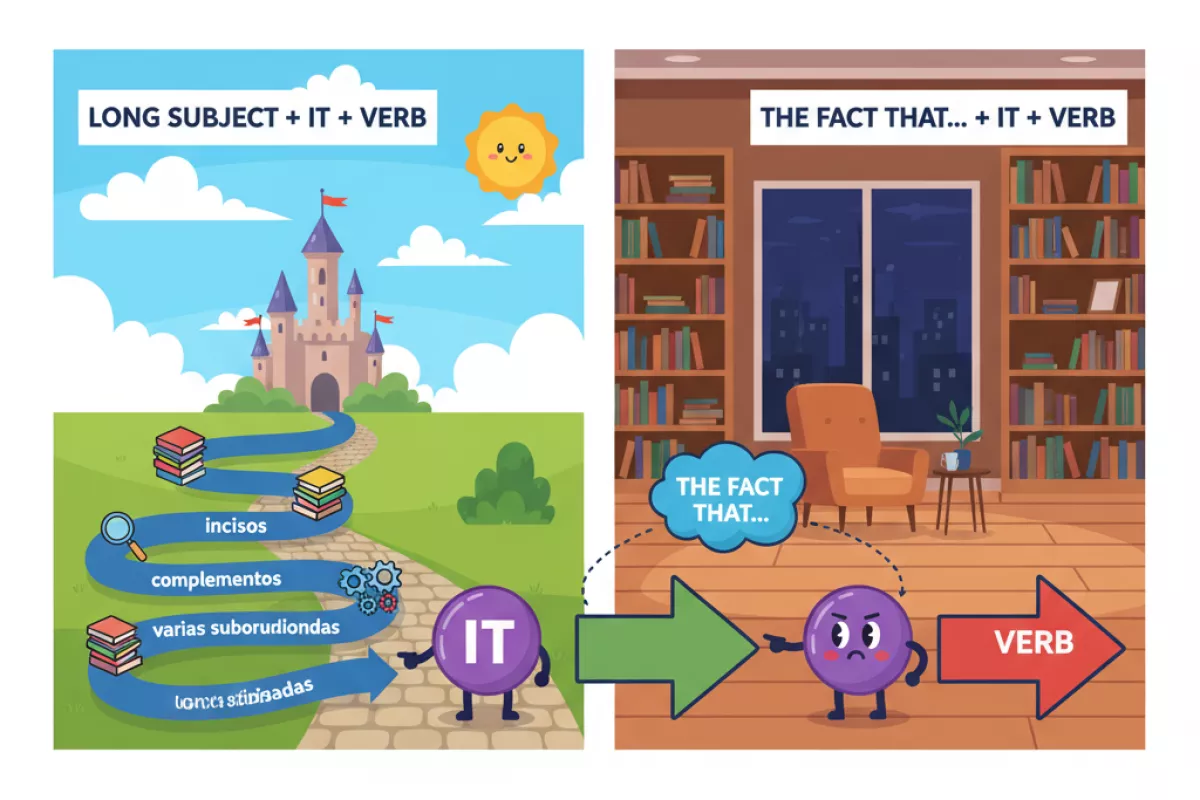
En inglés, cuando una oración se alarga con incisos, complementos o varias subordinadas, es habitual que el sujeto se “reafirme” con un pronombre (it, they, he, she) o con una repetición controlada del sintagma nominal. Esto ayuda a mantener claro quién realiza la acción principal cuando el lector ya ha pasado por mucha información intermedia.
En la práctica, el patrón más común es: sujeto largo + información extra + pronombre + verbo. También aparece con estructuras como the fact that… + it + verbo o con sujetos en forma de gerundio, donde it funciona como sujeto “de apoyo” (dummy subject).
Patrones frecuentes con ejemplos
- Sujeto largo + pronombre de refuerzo: The manager of the new department, along with two external consultants, she will present the plan tomorrow.
- Apposición + recordatorio del sujeto: My brother, a doctor with ten years of experience, he doesn’t like working night shifts.
- Inciso largo entre comas + pronombre: The students, after weeks of preparation and several practice tests, they finally felt confident.
- Lista dentro del sujeto + pronombre: The budget cuts, the hiring freeze, and the new reporting rules, they changed how the team worked.
- Relativa extensa + pronombre: The book that you recommended last month and that I couldn’t find anywhere, it arrived yesterday.
- Complemento preposicional largo + pronombre: The decision by the committee in charge of safety regulations, it surprised everyone.
- Contraste con “especially/particularly” + pronombre: The new policies, especially the ones about remote work, they need clarification.
- “As for…” + pronombre: As for the final report with all the attachments, it is ready to send.
- “Regarding…” + pronombre: Regarding the emails from last week and the follow-up requests, they have been answered.
- “The fact that…” + it: The fact that the server went down twice during the demo, it worried the client.
- Gerundio como sujeto + it: Working with incomplete data for months, it makes the analysis unreliable.
- Cláusula larga como sujeto + it: That she had to redo the entire project after the requirements changed, it was frustrating.
- “This/That” + pronombre aclaratorio: That kind of behavior in a professional setting, it isn’t acceptable.
- Nombre colectivo + they (uso frecuente): The team, after a long meeting and several disagreements, they decided to postpone the launch.
- Repetición parcial del sujeto (sin pronombre): The head of operations for the European region, the head of operations, approved the request.
Comparación rápida: sin refuerzo vs. con refuerzo
| Tipo de estructura | Sin refuerzo | Con refuerzo (más claro en frases largas) |
|---|---|---|
| Sujeto + inciso largo | The students, after weeks of preparation, passed the exam. | The students, after weeks of preparation, they passed the exam. |
| Relativa extensa | The book that you recommended arrived yesterday. | The book that you recommended, it arrived yesterday. |
| “The fact that…” | The fact that the server went down worried the client. | The fact that the server went down, it worried the client. |
| Cláusula como sujeto | That she had to redo everything was frustrating. | That she had to redo everything, it was frustrating. |
| Lista en el sujeto | The budget cuts and the hiring freeze changed the plan. | The budget cuts and the hiring freeze, they changed the plan. |
Notas de uso para evitar errores típicos
- Este “doble sujeto” es más común en habla informal, énfasis o ciertos registros; en escritura formal suele preferirse evitarlo o reestructurar la oración.
- Si el sujeto es singular, lo normal es it/he/she; si es plural, they. Ojo con nombres colectivos (team, staff): pueden ir con it (más “unidad”) o they (más “personas”).
- Con the people (plural), se usa they; con the staff puede variar según el énfasis.
- En estructuras con the fact that o una cláusula larga, it funciona como sujeto “vacío” (sujeto expletivo), útil para que el verbo principal no quede demasiado lejos del inicio.
Errores comunes al omitir el sujeto
En inglés, cuando una oración se alarga con incisos, subordinadas o varias acciones encadenadas, el sujeto suele funcionar como “ancla” para que el lector identifique quién hace qué. Por eso, intentar copiar el patrón del español (donde el sujeto puede quedar implícito con más facilidad) provoca ambigüedades o frases que suenan incompletas.
El problema no es “repetir por repetir”, sino evitar huecos gramaticales: en inglés, muchas estructuras exigen un sujeto explícito en cada cláusula finita. Cuando se omite, el lector puede interpretar otro sujeto, perder el referente o entender que falta el verbo principal.
Patrones típicos de error
- Cláusula sin sujeto tras una subordinada larga: se añade información y luego se intenta continuar sin reintroducir quién realiza la acción.
- “Sujeto fantasma” después de un conector: tras and, but, so, se omite el sujeto como si el verbo pudiera “colgar” del anterior.
- Participios iniciales mal “enganchados” (dangling participles): el participio parece describir a un sujeto que no está o no es el correcto.
- Confusión entre sujeto real y complemento: el último sustantivo mencionado se interpreta como sujeto aunque no lo sea.
- Uso incorrecto de pronombres para retomar el referente: se omite el sujeto y luego se usa it o they sin un antecedente claro.
- Mezcla de voz activa y pasiva sin reintroducción del agente: al cambiar a pasiva, se pierde quién ejecuta la acción.
Ejemplos frecuentes (incorrecto vs. correcto)
| Error al omitir | Versión natural en inglés | Qué se rompe |
|---|---|---|
| When I arrived at the office, after the meeting, went to my desk. | When I arrived at the office, after the meeting, I went to my desk. | Falta sujeto en la cláusula principal. |
| My brother talked to the manager and decided to leave. | My brother talked to the manager, and he decided to leave. | Ambigüedad: ¿quién decidió? |
| After reviewing the report, the conclusions were clear. | After reviewing the report, I found the conclusions clear. | Participio “colgante”: ¿quién revisó? |
| Because the system was updated and caused errors, had to roll back. | Because the system was updated and caused errors, we had to roll back. | Conector + verbo sin sujeto explícito. |
| The team met with the client, and after a long discussion, agreed on the plan. | The team met with the client, and after a long discussion, they agreed on the plan. | El lector busca el sujeto en la segunda acción. |
| If you see Laura, tell that will be late. | If you see Laura, tell her that I will be late. | Falta objeto (her) y sujeto (I) en la subordinada. |
Cómo evitar estas omisiones en frases largas
- Reintroduce el sujeto tras incisos extensos: si entre el sujeto y el verbo principal metes una aclaración larga, repite el pronombre antes del verbo.
- Tras conectores, verifica si hay un nuevo verbo finito: si aparece un verbo conjugado nuevo, normalmente necesita su propio sujeto explícito.
- Cuida los participios iniciales: si empiezas con After + -ing o Having + past participle, el sujeto que viene después debe ser quien realiza esa acción.
- Usa pronombres con antecedente claro: it (ello/eso) y they (ellos) deben apuntar a un referente inequívoco; si hay dos candidatos, repite el sustantivo o reescribe.
- Divide la oración si hay cambio de agente: cuando la segunda acción la hace otra persona, una segunda frase suele ser más clara que “forzar” la elipsis.
Cómo mejorar la claridad
En inglés, cuando una oración se alarga con incisos, relativas o varias ideas encadenadas, el lector puede “perder” el hilo de quién hace qué. Por eso es común que el idioma recurra a repetir el sujeto (o a reintroducirlo con un pronombre) para volver a anclar la información y evitar ambigüedades.
La clave práctica es pensar en puntos de reinicio: después de un tramo largo entre el sujeto y el verbo, o tras una interrupción importante, conviene volver a mencionar el sujeto o reformular la estructura. No se trata de repetir por repetir, sino de guiar la lectura y reducir la carga de memoria.
Patrones útiles para “re-anclar” el sujeto
- Repetición del sujeto tras un inciso largo: “The committee, after reviewing the data and hearing the witnesses, the committee decided…” (mejor que dejar el verbo muy lejos del sujeto).
- Pronombre de apoyo para retomar el referente: “The committee, after reviewing the data, it decided…” (it = “ello”, para retomar).
- Repetición con nombre más corto: “The International Development Association … the association announced…”
- Reintroducción con this/that + noun: “The policy was revised twice. This change reduced costs…” (this change = “este cambio”).
- Reinicio con “as for / regarding”: “As for the timeline, it needs revision.”
- “Subject + verb” temprano, detalles después: “The committee decided to postpone the vote, after…”
- Uso de “there is/there are” para evitar sujetos pesados: “There are several reasons why…” (there are = “hay”).
- Dividir una relativa larga en dos oraciones: “The manager, who… and who…, approved…” → “The manager… . She approved…”
- Convertir una cadena de preposiciones en una frase nueva: “The report on the impact of…” → “The report is about… . It shows…”
- Repetir sujeto cuando hay varios candidatos posibles: si aparecen dos entidades, repetir el nombre evita que “he/she/it/they” sea ambiguo.
- Repetición estratégica en enumeraciones largas: “The team reviewed…, the team compared…, and the team recommended…”
- Evitar “dangling modifiers” reponiendo el sujeto: “After reviewing the file, the lawyer called…” (no “After reviewing…, the call…”).
Cuándo conviene repetir y cuándo es mejor reescribir
| Situación | Riesgo típico | Solución clara |
|---|---|---|
| Mucho material entre sujeto y verbo | El lector olvida el sujeto antes de llegar a la acción | Repetir sujeto o usar pronombre para retomar |
| Dos o más referentes posibles | Pronombres ambiguos (it/they) | Repetir el nombre del referente clave |
| Relativas encadenadas (who/which/that) | Oración “serpiente” difícil de seguir | Partir en dos oraciones y reintroducir sujeto |
| Enumeraciones largas de acciones | Se diluye quién ejecuta cada acción | Repetir el sujeto cada 1–2 acciones o agrupar |
| Incisos con “however / in fact / therefore” | Se pierde el hilo lógico | Reinicio: “However, the company…” |
Microajustes que mejoran la lectura sin “sonar repetitivo”
- Alterna nombre y etiqueta: “the company” → “the firm” → “the business” (sin cambiar el referente).
- Usa pronombres solo cuando el referente sea único: si hay dos sustantivos recientes, evita “it/they”.
- Coloca el verbo principal pronto: si el verbo llega tarde, el lector acumula información sin saber la función.
- Reduce el “stacking” de sustantivos: “customer service policy update plan” → añade preposiciones o divide.
- Cuida el número: “data” puede tratarse como plural en registro formal (“data are”), pero en uso común aparece como singular (“data is”); elige una opción y mantén coherencia.
- Atención a contables e incontables: “information” (incontable) no va con “an”; mejor “some information” (algo).
- Evita que “this/that” quede “colgando”: mejor “this issue / that decision” que solo “this/that”.
Ejemplos de reescritura rápida (antes → después)
- “The proposal, after several revisions requested by legal and finance, was approved.” → “The proposal was approved after several revisions requested by legal and finance.”
- “Maria told Ana that she would send the file.” → “Maria told Ana that Maria would send the file.” (para eliminar ambigüedad).
- “The device, which was tested in three labs and which showed inconsistent results, needs calibration.” → “The device was tested in three labs and showed inconsistent results. It needs calibration.”
- “The team reviewed the budget, the timeline, and the risks, and recommended changes.” → “The team reviewed the budget, the timeline, and the risks. The team recommended changes.”
Ejercicios prácticos
En oraciones extensas en inglés, es frecuente volver a mencionar el sujeto (o sustituirlo por un pronombre) para que el lector no “pierda” quién hace la acción principal. Esto ocurre especialmente cuando se insertan incisos, cláusulas relativas o varias ideas encadenadas.
En las actividades siguientes practicarás tres patrones: (1) reanudar el sujeto tras un inciso, (2) repetirlo en coordinaciones largas, y (3) evitar ambigüedades cuando hay varios posibles sujetos cerca. Fíjate en la concordancia y en el uso de pronombres como it (ello/eso), they (ellos/ellas) o he/she (él/ella).
Ejercicio 1: Reanudar el sujeto después de un inciso
- The new policy, after several meetings and a long debate, ____ going to affect remote workers the most.
- My sister, who lives abroad and rarely visits, ____ coming next week.
- The laptop, despite the scratches on the lid, ____ still works perfectly.
- Those students, after the final exam and the project presentation, ____ exhausted.
- The manager, along with two assistants and a consultant, ____ approved the plan.
- The results, even though they were unexpected, ____ published yesterday.
- This book, which I bought years ago and never opened, ____ surprisingly helpful.
- The tickets, after all the delays and changes, ____ finally arrived.
Mostrar respuestas
- is
- is
- it
- were
- has
- were
- is
- they
Ejercicio 2: Insertar un “recordatorio” del sujeto en frases largas
- Rewrite: The marketing team, after reviewing the data from last quarter and meeting with sales, decided to change the campaign.
- Rewrite: Our neighbors, who moved in recently and have been renovating every weekend, keep parking in front of our driveway.
- Rewrite: The device, although it looks simple and has only two buttons, can store hundreds of files.
- Rewrite: The committee, after hearing all the proposals and discussing the budget constraints, will announce a decision tomorrow.
- Rewrite: The students, who had studied for weeks and practiced with mock tests, felt confident.
- Rewrite: The report, despite the missing appendix and the formatting issues, was accepted.
Mostrar respuestas
- The marketing team, after reviewing the data from last quarter and meeting with sales, they decided to change the campaign.
- Our neighbors, who moved in recently and have been renovating every weekend, they keep parking in front of our driveway.
- The device, although it looks simple and has only two buttons, it can store hundreds of files.
- The committee, after hearing all the proposals and discussing the budget constraints, it will announce a decision tomorrow.
- The students, who had studied for weeks and practiced with mock tests, they felt confident.
- The report, despite the missing appendix and the formatting issues, it was accepted.
Ejercicio 3: Evitar ambigüedad cuando hay dos sujetos posibles
- Rewrite to make the subject clear: When Laura met Ana after the conference, she said the schedule had changed.
- Rewrite to make the subject clear: Carlos told Miguel that he needed to update the document.
- Rewrite to make the subject clear: The CEO spoke to the manager after the interview, and he requested a second meeting.
- Rewrite to make the subject clear: The teacher emailed the student because she was concerned about the grade.
- Rewrite to make the subject clear: Julia called Marta while she was driving.
- Rewrite to make the subject clear: The doctor explained the results to the patient, and he recommended more tests.
Mostrar respuestas
- When Laura met Ana after the conference, Laura said the schedule had changed.
- Carlos told Miguel that Miguel needed to update the document.
- The CEO spoke to the manager after the interview, and the CEO requested a second meeting.
- The teacher emailed the student because the teacher was concerned about the grade.
- Julia called Marta while Julia was driving.
- The doctor explained the results to the patient, and the doctor recommended more tests.
Ejercicio 4: Completar con el sujeto repetido o con pronombre
- The contract, after multiple revisions and a final legal review, ____ was signed this morning.
- Those files, which were stored on an old server and nearly forgotten, ____ were recovered.
- The conference, despite the travel issues and the last-minute cancellations, ____ will take place.
- My parents, after the long flight and the time change, ____ went to bed early.
- The proposal, which includes a timeline and a cost estimate, ____ needs approval.
- The clients, after reading the updated terms and asking several questions, ____ agreed.
- The engine, although it makes a strange noise at low speed, ____ runs smoothly on the highway.
- The new interns, who started yesterday and are still learning the tools, ____ need guidance.
- The website, after the redesign and the security audit, ____ loads faster.
- The chairs, even though they look identical, ____ are from different suppliers.
Mostrar respuestas
- it
- they
- it
- they
- it
- they
- it
- they
- it
- they