Say, tell, speak y talk: diferencias claras en inglés

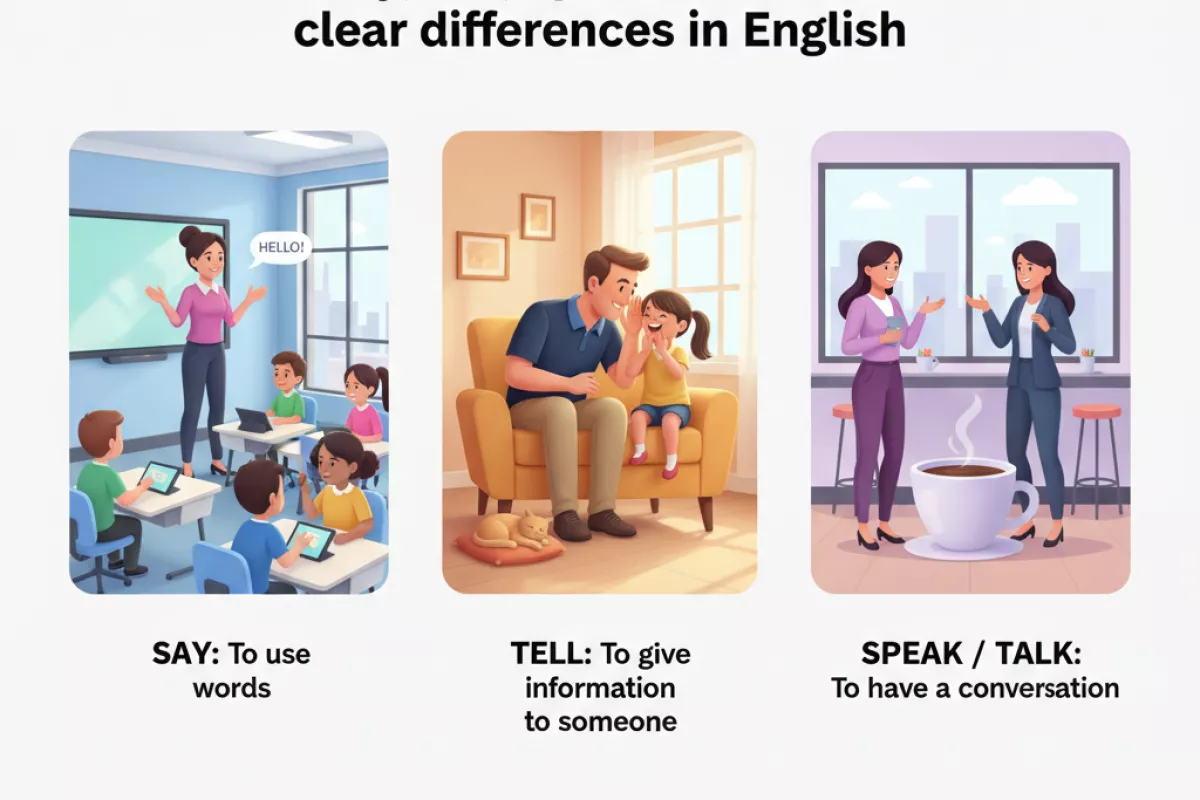 Aprende la diferencia entre say, tell, speak y talk: qué tienen en común y cómo cambian según la estructura y el contexto. Verás el patrón típico de say, cuándo tell necesita un objeto, cuándo speak suena más formal y por qué talk es más común en el día a día, además de errores frecuentes y un ejercicio práctico final.
En inglés no basta con traducir decir o hablar como un solo verbo. Según la intención, el receptor y la estructura de la frase, tendrás que elegir entre say, tell, speak o talk. La diferencia se nota mucho en conversación real: say me, tell to me o talk English son errores frecuentes que aparecen por traducir directamente desde el español.
En esta guía aprenderás cuándo usar cada verbo, qué estructura suele ir después, qué preposiciones necesitas y cómo evitar los errores más comunes. La idea no es memorizar cuatro traducciones, sino reconocer el patrón: si importa el contenido exacto, el destinatario, el idioma, la formalidad o la conversación.
Qué tienen en común estos verbos
Say, tell, speak y talk pertenecen al campo de la comunicación. Todos pueden relacionarse con producir palabras, transmitir información o mantener una conversación, pero cada uno enfoca la situación de forma diferente.
La diferencia principal no está solo en “decir” frente a “hablar”, sino en la estructura que el inglés espera. A veces el verbo necesita una persona después; a veces necesita to; a veces se combina con un idioma; y otras veces se usa para una conversación general.
La idea principal de cada verbo
| Verbo | Idea principal | Ejemplo rápido |
|---|---|---|
| say | Decir palabras o contenido | She said hello. |
| tell | Decir algo a alguien | She told me the truth. |
| speak | Hablar un idioma o en contexto formal | She speaks English. |
| talk | Conversar, charlar, hablar con alguien | We talked for hours. |
Si quieres reforzar la base gramatical antes de estudiar verbos concretos, puedes repasar esta guía sobre cómo funcionan los verbos en inglés. Te ayudará a entender por qué cada verbo exige un patrón distinto.
Señales que ayudan a elegir
- Si aparece una cita o las palabras exactas, suele encajar say: He said, “I’m tired.”
- Si aparece una persona justo después del verbo, suele encajar tell: Tell me the truth.
- Si hablas de un idioma, usa speak: I speak Spanish.
- Si hablas de una conversación, usa talk: We talked about work.
Say: uso y estructura típica
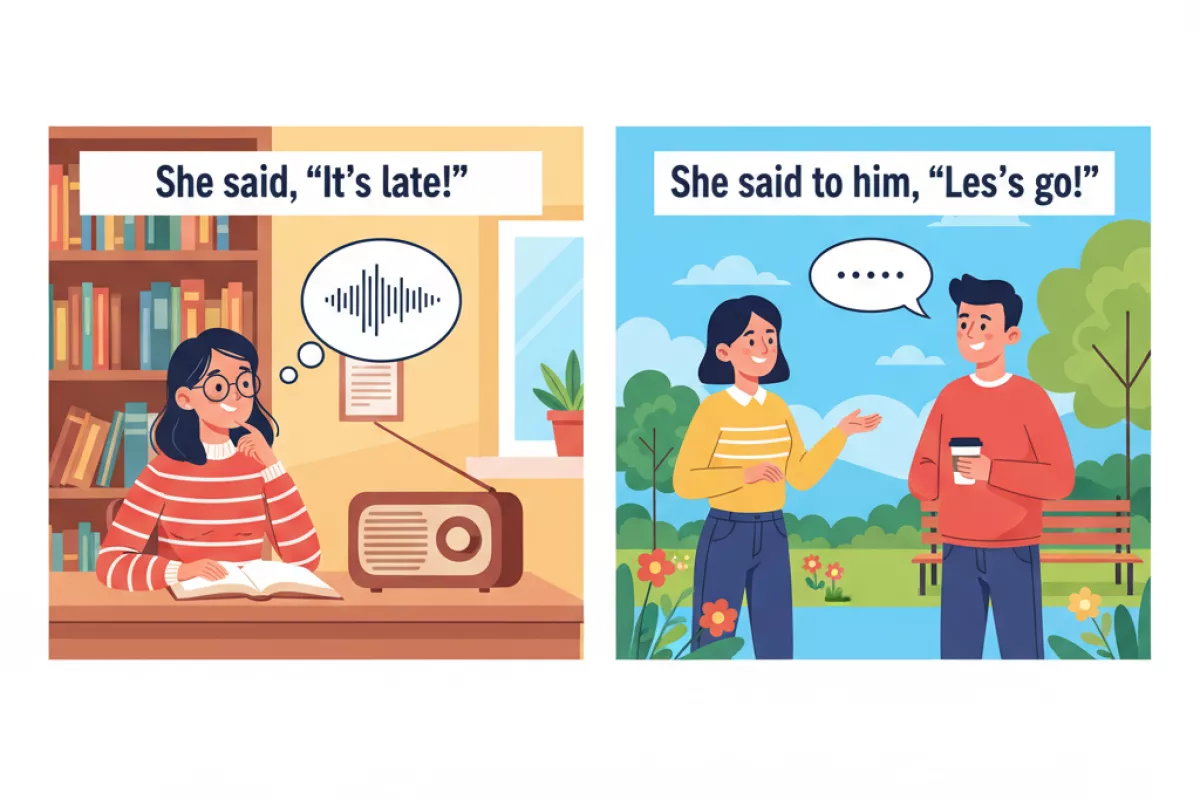
Say se usa cuando el foco está en las palabras, el mensaje o el contenido. Es el verbo más natural para citas directas, frases concretas, respuestas breves y estilo indirecto cuando no mencionamos directamente a la persona que recibe el mensaje.
La pregunta clave con say es: ¿qué palabras o qué mensaje se dijo? Si lo importante es el contenido, normalmente este verbo funciona bien.
Estructuras comunes con say
- say + words: She said hello. → Ella dijo hola.
- say + quote: He said, “I’m busy.” → Dijo: “Estoy ocupado”.
- say + that + sentence: They said that it was impossible. → Dijeron que era imposible.
- say + something / nothing / anything: Nobody said anything. → Nadie dijo nada.
- say + to + person: What did you say to her? → ¿Qué le dijiste?
Cuando uses said para contar lo que alguien dijo en el pasado, recuerda que muchas frases estarán en Past Simple. Puedes repasar ese tiempo aquí: Past Simple en inglés.
Patrones útiles con say
| Patrón | Ejemplo | Uso |
|---|---|---|
| say + quote | She said, “Don’t worry.” | Palabras exactas |
| say + that | He said that he was tired. | Estilo indirecto |
| say + to + person | I said it to him. | Mensaje dirigido a alguien |
| say + sorry / hello / goodbye | Go and say sorry. | Expresiones fijas |
Errores comunes con say
- ❌ Say me the truth. → ✅ Tell me the truth.
- ❌ He said me he was tired. → ✅ He told me he was tired. / He said to me that he was tired.
- ❌ What did you say her? → ✅ What did you say to her?
- ❌ She said me no. → ✅ She said no to me. / She told me no.
Regla práctica: si después del verbo va directamente una persona como me, him, her, us o them, normalmente necesitas tell, no say.
Tell: cuándo necesita objeto
Tell se usa cuando transmites información a una persona. El punto clave es que normalmente necesita un receptor: tell me, tell her, tell us, tell them. Por eso tell responde muy bien a la pregunta: ¿a quién se lo dices?
En la mayoría de usos comunes, el receptor va justo después de tell sin to. Decimos tell me, no tell to me.
Patrón base: tell + persona + información
- Tell me the truth. → Dime la verdad.
- Tell her the plan. → Cuéntale el plan.
- Tell us what happened. → Dinos qué pasó.
- Tell them your name. → Diles tu nombre.
- He told me the news. → Me contó la noticia.
Como tell suele ir seguido de pronombres de objeto, es útil tener clara esta parte: pronombres objeto en inglés. Así evitarás errores como tell I o tell she.
Tell + someone + to + verb
Este patrón se usa para dar instrucciones, órdenes o recomendaciones transmitidas a otra persona.
- Tell him to wait. → Dile que espere.
- She told me to call later. → Me dijo que llamara más tarde.
- They told us to be quiet. → Nos dijeron que estuviéramos callados.
- My boss told me to arrive early. → Mi jefe me dijo que llegara temprano.
Expresiones frecuentes con tell
| Expresión | Ejemplo | Traducción |
|---|---|---|
| tell the truth | Please tell the truth. | Di la verdad. |
| tell a lie | He told a lie. | Dijo una mentira. |
| tell a story | She told us a story. | Nos contó una historia. |
| tell the difference | I can’t tell the difference. | No noto la diferencia. |
| tell the time | Can your son tell the time? | ¿Tu hijo sabe decir la hora? |
Errores comunes con tell
- ❌ Tell to me the truth. → ✅ Tell me the truth.
- ❌ She told that she was tired. → ✅ She said that she was tired. / She told me that she was tired.
- ❌ He told to wait. → ✅ He told me to wait.
- ❌ Say him to leave. → ✅ Tell him to leave.
Speak: situaciones formales
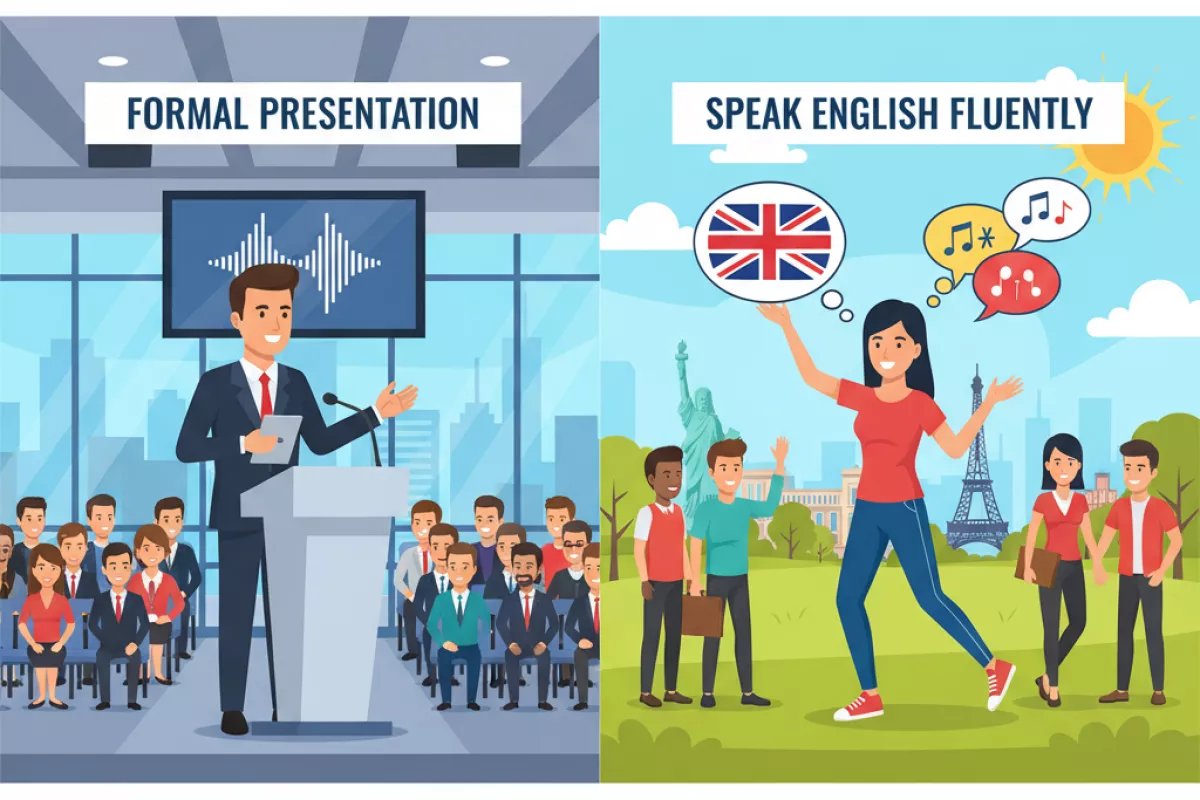
Speak se usa cuando hablamos de idiomas, capacidad de hablar, contextos formales, presentaciones, atención al cliente o situaciones donde la comunicación suena más seria o profesional.
La pregunta clave con speak es: ¿hablamos de idioma, habilidad o situación formal? Si la respuesta es sí, speak suele ser una opción natural.
Speak + idioma
- I speak English. → Hablo inglés.
- She speaks German. → Habla alemán.
- Do you speak Spanish? → ¿Hablas español?
- He speaks three languages. → Habla tres idiomas.
Speak to / speak with
Cuando mencionamos a la persona, usamos normalmente speak to o speak with. Ambas opciones son posibles. Speak to puede sonar un poco más directo o formal; speak with puede sonar más bilateral, como una conversación o consulta.
- I need to speak to the manager. → Necesito hablar con el gerente.
- She spoke with her supervisor. → Habló con su supervisor.
- Could I speak to someone in customer service? → ¿Podría hablar con alguien de atención al cliente?
Speak about / speak on / speak at
- They spoke about the new policy. → Hablaron sobre la nueva política.
- She spoke on climate change. → Dio una charla sobre el cambio climático.
- He spoke at the conference. → Habló en la conferencia.
Las preposiciones cambian mucho el patrón de los verbos de comunicación. Si quieres estudiar esta parte con más detalle, revisa esta guía sobre preposiciones con verbos y adjetivos en inglés.
Errores comunes con speak
- ❌ I speak the English. → ✅ I speak English.
- ❌ Can I speak you? → ✅ Can I speak to you?
- ❌ She speaks very much. → ✅ She talks a lot.
- ❌ We spoke the problem. → ✅ We spoke about the problem.
Talk: uso cotidiano
Talk se usa para conversaciones, charlas e intercambios informales o cotidianos. No se centra tanto en las palabras exactas como say, ni exige siempre una información dirigida como tell. Su foco es la interacción.
La pregunta clave con talk es: ¿hay conversación o intercambio? Si sí, probablemente talk encaja bien.
Talk to / talk with / talk about
- I need to talk to you. → Necesito hablar contigo.
- She talked with her parents. → Habló con sus padres.
- We talked about the exam. → Hablamos sobre el examen.
- Can we talk for a minute? → ¿Podemos hablar un minuto?
Talk como conversación informal
- We talked for hours. → Hablamos durante horas.
- They were talking in the hallway. → Estaban hablando en el pasillo.
- Let’s talk after the meeting. → Hablemos después de la reunión.
- She’s easy to talk to. → Es fácil hablar con ella.
Expresiones frecuentes con talk
| Expresión | Significado | Ejemplo |
|---|---|---|
| talk about | hablar sobre | We talked about money. |
| talk to | hablar con / dirigirse a | I talked to my boss. |
| talk over | discutir algo para decidir | Let’s talk it over. |
| talk someone into something | convencer a alguien | She talked me into joining. |
| small talk | charla trivial | I’m bad at small talk. |
Con verbos como talk, enjoy, avoid o estructuras con preposición, la forma -ing aparece con frecuencia. Puedes ampliar este patrón en la guía sobre verbos seguidos de gerundio en inglés.
Errores comunes con talk
- ❌ I talked my boss. → ✅ I talked to my boss.
- ❌ We talked the problem. → ✅ We talked about the problem.
- ❌ Can we speak? → ✅ Can we talk? en una conversación personal suele sonar más natural.
- ❌ She talks English. → ✅ She speaks English.
Comparación rápida: say, tell, speak y talk
Cuando dudes, no intentes traducir “decir” o “hablar” directamente. Mira qué estructura tienes delante: palabras exactas, receptor, idioma, tema o conversación.
| Quieres expresar... | Verbo más natural | Ejemplo |
|---|---|---|
| Palabras exactas | say | She said, “No.” |
| Mensaje dirigido a alguien | tell | She told me the truth. |
| Idioma | speak | Do you speak English? |
| Conversación informal | talk | We talked for hours. |
| Hablar con un gerente o autoridad | speak to | I need to speak to the manager. |
| Hablar sobre un tema | talk about / speak about | We talked about the project. |
| Dar una instrucción a alguien | tell + person + to | Tell him to wait. |
Atajo para decidir en 10 segundos
- ¿Quieres citar palabras? Usa say.
- ¿Quieres decir algo a una persona? Usa tell.
- ¿Quieres hablar de idioma o situación formal? Usa speak.
- ¿Quieres hablar de una conversación? Usa talk.
Errores frecuentes de hispanohablantes
Los errores con estos verbos suelen venir de una traducción directa del español. En español usamos “decir”, “contar” y “hablar” de forma más flexible, pero en inglés el patrón gramatical es más estricto.
Errores principales y corrección
| Error | Correcto | Por qué |
|---|---|---|
| Say me the answer. | Tell me the answer. | Con receptor directo usamos tell. |
| Tell to me the truth. | Tell me the truth. | Tell no necesita to antes del receptor. |
| She told that she was tired. | She said that she was tired. | Si no hay receptor, say suele ser más natural. |
| I talk English. | I speak English. | Con idiomas usamos speak. |
| I talked my teacher. | I talked to my teacher. | Talk necesita preposición antes de la persona. |
| We talked the problem. | We talked about the problem. | Con temas usamos about. |
| Can I speak you? | Can I speak to you? | Speak necesita to o with antes de una persona. |
| Say the truth. | Tell the truth. | La expresión fija más natural es tell the truth. |
Expresiones fijas que conviene memorizar
- say hello → saludar / decir hola
- say sorry → pedir perdón
- say yes / say no → decir que sí / que no
- tell the truth → decir la verdad
- tell a lie → decir una mentira
- tell a story → contar una historia
- speak English → hablar inglés
- talk about something → hablar de algo
Ejercicios prácticos
Estos ejercicios te ayudarán a automatizar la diferencia entre contenido, destinatario, idioma y conversación. Fíjate especialmente en las preposiciones y en si aparece una persona justo después del verbo.
Ejercicio 1: completa con el verbo correcto
- She didn’t ____ me the truth.
- He ____ that he was tired.
- Can you ____ Spanish?
- We need to ____ about the budget.
- Don’t ____ a word!
- What did you ____ to her?
- Please ____ me your name.
- They were ____ loudly on the phone.
- I can’t ____ French, but I can understand it.
- He ____ “Good morning” and left.
Mostrar respuestas
- tell
- said
- speak
- talk
- say
- say
- tell
- talking
- speak
- said
Ejercicio 2: corrige la frase
- He said me the answer.
- She told that she was late.
- I want to speak about my problem.
- They talked me the news.
- Can I speak you for a minute?
- He spoke me to call him later.
- She said to me “Thanks”.
- We were speaking for hours.
- I talk English at work.
- Tell to her the address.
Mostrar respuestas
- He told me the answer.
- She said that she was late.
- I want to talk about my problem. / I want to speak about my problem. (más formal)
- They told me the news.
- Can I speak to you for a minute?
- He told me to call him later.
- She said to me, “Thanks”.
- We were talking for hours.
- I speak English at work.
- Tell her the address.
Ejercicio 3: elige la opción correcta
- She ____ (said/told) me to wait outside.
- He ____ (said/told) “I’m sorry”.
- Did you ____ (speak/talk) to your teacher?
- We should ____ (speak/talk) about it later.
- I can ____ (speak/talk) a little Italian.
- What did she ____ (say/tell) to you?
- He didn’t ____ (say/tell) anything to anyone.
- They were ____ (speaking/talking) about politics.
- She ____ (said/told) that the meeting was canceled.
- Could you ____ (say/tell) me the time?
Mostrar respuestas
- told
- said
- talk / speak
- talk
- speak
- say
- say
- talking
- said
- tell
Ejercicio 4: reescribe usando el verbo indicado
- (tell) She said to me that she couldn’t come.
- (say) He told me the exact words.
- (talk) We spoke about the project after lunch.
- (speak) He talked in English during the interview.
- (tell) She said me her address.
- (say) She told me “No”.
- (talk) I spoke to my neighbor yesterday.
- (speak) She talked French with her clients.
- (tell) He said to us what happened.
- (say) They told me goodbye.
Mostrar respuestas
- She told me that she couldn’t come.
- He said the exact words.
- We talked about the project after lunch.
- He spoke in English during the interview.
- She told me her address.
- She said “No”.
- I talked to my neighbor yesterday.
- She spoke French with her clients.
- He told us what happened.
- They said goodbye to me.
Ejercicio 5: completa con la preposición correcta
- I need to talk ____ you.
- We talked ____ the new schedule.
- She spoke ____ the director yesterday.
- He speaks ____ German at work.
- They were talking ____ each other.
- What did you say ____ him?
- I’d like to speak ____ you privately.
- She talked ____ her sister for hours.
- He spoke ____ the problem in the meeting.
- Don’t talk ____ your mouth full.
Mostrar respuestas
- to
- about
- to / with
- in
- with / to
- to
- to / with
- with / to
- about
- with
Preguntas frecuentes sobre say, tell, speak y talk
¿Cuál es la diferencia principal entre say y tell?
Say se enfoca en las palabras o el contenido: She said hello. Tell se usa cuando transmites información a una persona: She told me the truth.
¿Por qué no se dice “say me”?
Porque say no lleva una persona directamente como objeto. Lo normal es usar tell me o, si mantienes say, añadir to: say it to me.
¿Cuándo se usa tell?
Usa tell cuando hay un receptor directo: tell me, tell her, tell us. También aparece en expresiones como tell the truth, tell a story y tell the difference.
¿Cuál es la diferencia entre speak y talk?
Speak suele usarse para idiomas, discursos o situaciones más formales: She speaks English. Talk se usa más para conversaciones cotidianas: We talked for hours.
¿Se dice speak English o talk English?
La forma correcta es speak English. Para idiomas se usa speak, no talk.
¿Es mejor speak to o speak with?
Ambas formas son posibles. Speak to puede sonar más directo o formal. Speak with puede sugerir intercambio o conversación. En muchos contextos, las dos opciones son aceptables.
¿Cuándo se usa talk about?
Talk about se usa para introducir el tema de una conversación: We talked about work, They talked about the problem.
¿Qué verbo uso para contar una historia?
Normalmente se usa tell a story: She told us a story. No se dice normalmente say a story.
¿Qué verbo uso para una cita exacta?
Para palabras exactas o comillas, usa say: He said, “I’m sorry”.