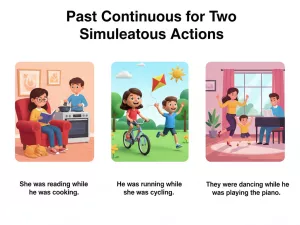
Past Perfect con “when” y “after”: uso real

 Aprende cómo funciona when en el pasado y cómo after marca el orden temporal entre acciones. Verás cuándo usar el Past Perfect con estos conectores, ejemplos reales, errores frecuentes con when/after y cómo evitar confusiones, con ejercicios prácticos para practicar en casa.
Muchos estudiantes se confunden al describir dos acciones pasadas y dejar claro cuál ocurrió primero al usar when y after. En la práctica, no se trata de memorizar reglas, sino de elegir la forma verbal que guíe al oyente de manera natural. Aquí verás cuándo el Past Perfect aporta claridad, cuándo resulta innecesario y cómo pequeños cambios en el orden de las palabras pueden cambiar el significado.
Función de when en el pasado
When introduce una referencia temporal (“cuando”) y conecta dos acciones en el pasado dentro de la misma oración. En la práctica, su papel es marcar el punto en el tiempo en el que ocurre el segundo evento, y por eso suele aparecer como nexo entre una acción “marco” (la que sitúa el momento) y otra acción que ya había sucedido o que sucede justo en ese momento.
La elección del tiempo verbal depende de la relación entre los hechos: si una acción ocurre antes de la otra, es frecuente usar past perfect para la anterior y past simple para la posterior. Si las dos acciones son simultáneas o se entienden como una secuencia natural sin necesidad de enfatizar “anterioridad”, normalmente basta con past simple en ambas.
Patrones más comunes con “when” en narración
- Past perfect + when + past simple: She had left when I arrived. (ya se había ido)
- Past simple + when + past simple: I called her when I got home. (secuencia directa)
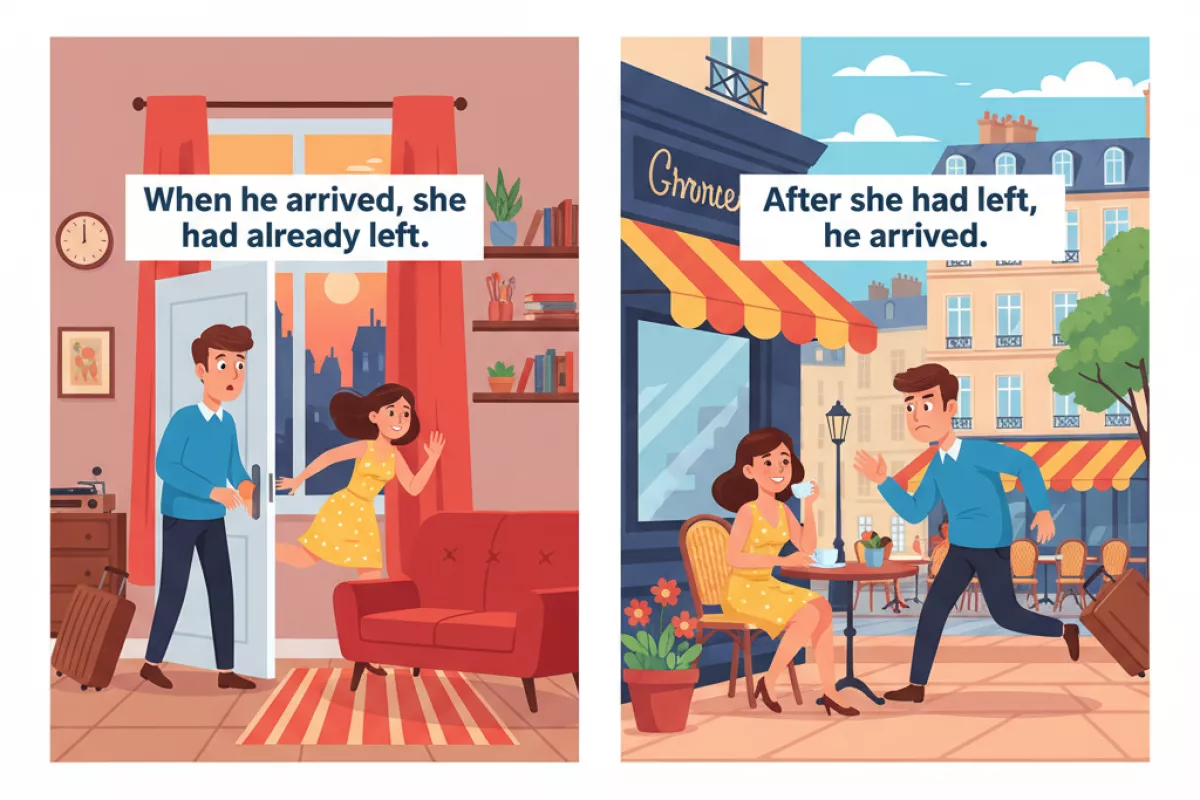
- When + past simple, past perfect (orden invertido para dar contexto): When I arrived, she had already left. (ya)
- When + past simple, past simple (marco temporal neutro): When he opened the door, everyone laughed.
- Past perfect continuous + when + past simple: They had been waiting for hours when the bus finally came. (duración)
- Past simple + when + past continuous: I called you when you were driving. (acción en progreso)
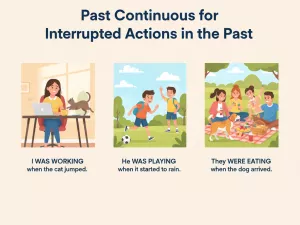
- Past continuous + when + past simple: I was cooking when the phone rang. (interrupción)
- When + past simple, past continuous: When I walked in, they were talking. (escena en curso)
- Past perfect + when + past perfect (menos común; dos anteriores a otro punto): He had finished the report when she had already sent the email. (ya)
- Past simple + when + past perfect (énfasis en que lo segundo era previo): I was surprised when I found out he had lied. (mentido)
- Negación con “when”: She hadn’t eaten anything when the meeting started. (nada)
- Con “just” para anterioridad inmediata: He had just sat down when the lights went out. (justo)
- Con “already” para marcar “antes de lo esperado”: When we arrived, they had already begun. (ya)
- Con “still” para continuidad hasta ese momento: When I called, she was still working. (todavía)
Cómo decidir entre past simple y past perfect con “when”
| Relación entre acciones | Patrón típico | Ejemplo |
|---|---|---|
| Una acción ocurrió antes que la otra (anterioridad clara) | Past perfect + when + past simple | They had left when we arrived. |
| Secuencia narrativa simple (sin énfasis en “ya había”) | Past simple + when + past simple | We arrived when they left. |
| Acción en progreso interrumpida por un evento puntual | Past continuous + when + past simple | I was sleeping when the alarm rang. |
| Duración previa que llega hasta el momento del evento | Past perfect continuous + when + past simple | She had been studying for weeks when she took the test. |
Errores típicos y ajustes útiles
- No usar past perfect por inercia: si la historia avanza paso a paso, past simple suele ser suficiente.
- Usar past perfect cuando hay ambigüedad: When I arrived, he left puede sonar a “se fue al llegar yo”; si quieres “ya se había ido”, mejor he had left.
- Cuidar el orden lógico: con when puedes invertir las cláusulas, pero la relación temporal la marcan los tiempos verbales, no la posición.
- Evitar “when” para periodos largos si no hay punto concreto: si no hay un momento definido, suele encajar mejor una estructura con duración (por ejemplo, con while).
Uso de after con secuencia temporal
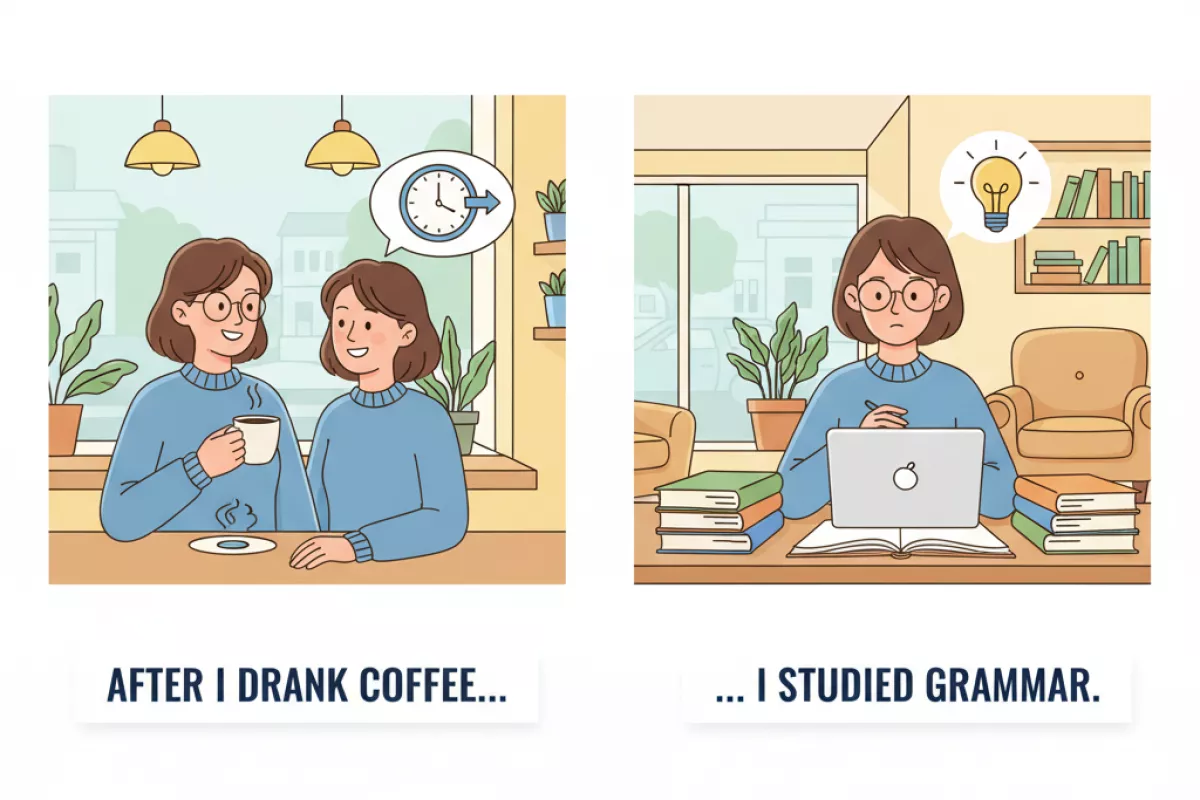
En inglés, after sirve para ordenar dos acciones en el tiempo: primero ocurre el evento de la oración subordinada con after y, a continuación, el de la oración principal. La idea clave es que after ya expresa la secuencia, así que muchas veces no hace falta “marcar” doblemente el orden con tiempos más complejos si el contexto es claro.
En la práctica, el tiempo verbal se elige según lo que quieras enfatizar: si solo necesitas indicar qué pasó antes y qué pasó después, el past simple suele bastar; si quieres dejar explícito que una acción estaba completada antes de otra en el pasado (o evitar ambigüedad), el past perfect encaja bien en la parte anterior.
Patrones más comunes con after (pasado)
- After + past simple, past simple: secuencia clara, estilo neutro.
- After + past perfect, past simple: énfasis en “ya había ocurrido” antes del segundo evento.
- Past simple + after + past simple: mismo significado, cambia el foco informativo (primero se menciona el resultado).
- Past simple + after + past perfect: útil si el primer enunciado podría interpretarse como simultáneo sin esa marca extra.
Ejemplos con past simple (orden suficiente)
- After I finished work, I went home.
- After she called me, we met for coffee.
- After they arrived, the meeting started.
- After we ate, we watched a movie.
- I locked the door after I checked the windows.
- He apologized after he made the comment.
- We left after the concert ended.
- She felt better after she rested.
- After I read the email, I replied.
- They celebrated after they won the match.
- After the rain stopped, we went out.
- I noticed the mistake after I sent the file.
Cuándo usar past perfect con after
El past perfect aparece con after sobre todo cuando el hablante quiere subrayar la finalización de un hecho anterior o cuando hay varios eventos pasados y conviene “anclar” cuál ocurrió primero. No es obligatorio en todas las frases: se usa por precisión, contraste o para evitar lecturas confusas.
| Objetivo | Patrón recomendado | Ejemplo |
|---|---|---|
| Secuencia simple y natural | After + past simple, past simple | After we landed, we took a taxi. |
| Resaltar que algo ya estaba completado | After + past perfect, past simple | After she had signed the contract, she called her lawyer. |
| Evitar ambigüedad con varios hechos previos | Past simple + after + past perfect | He left after he had received the confirmation. |
| Enfocar primero el resultado y luego el “antes” | Past simple + after + past simple | I felt relieved after I talked to her. |
Ejemplos con past perfect (énfasis o claridad)
- After I had finished the report, I sent it to my manager.
- After they had fixed the bug, the app worked properly.
- She realized the key was missing after she had left the office.
- We started the presentation after everyone had arrived.
- After he had apologized, the tension decreased.
- I recognized him after I had seen his photo (foto) online.
- They moved to a new city after they had saved enough money.
- After the team had agreed on the plan, they announced it.
Errores frecuentes y ajustes
- Usar “would” sin necesidad: con secuencia pasada, suele bastar past simple/past perfect. Mejor: After I finished, I went…
- Confundir el orden: la acción en la cláusula con after ocurre primero, aunque aparezca al final. Ej.: I left after I checked = primero “checked”, luego “left”.
- Mezclar tiempos sin motivo: si no hay contraste, dos past simple son naturales; reserva el past perfect para énfasis o para ordenar varios hechos.
- Olvidar que after es conjunción: va seguida de sujeto + verbo (no de infinitivo). Correcto: After she arrived… (no: After arrive…).
Cuándo usar Past Perfect con conectores
Cuando dos acciones pasadas aparecen unidas por conectores temporales como when o after, la elección del tiempo verbal depende de si necesitas marcar claramente cuál ocurrió primero. El Past Perfect se usa para “mirar hacia atrás” desde un punto del pasado y señalar una acción anterior a otra acción también pasada.
En la práctica, este tiempo es más útil cuando el orden no es obvio por el contexto o cuando quieres evitar ambigüedad. Si la secuencia ya queda clara (por lógica, por el conector o por el contexto), muchas veces el Past Simple es suficiente; si no, el Past Perfect ayuda a fijar la cronología.
Patrones típicos con when y after
- After + Past Perfect, Past Simple: After I had finished (terminado) the report, I sent it.
- Past Simple + after + Past Perfect: I sent it after I had finished the report.
- When + Past Simple, Past Perfect (menos frecuente, pero posible): When I arrived, she had already left (se había ido).
- Past Perfect + when + Past Simple: She had already left when I arrived.
- After + Past Simple, Past Simple (si el orden se entiende): After I finished, I sent it.
- When + Past Simple, Past Simple (acciones en secuencia o simultáneas): When I arrived, she left.
Cuándo es recomendable marcar anterioridad con Past Perfect
- Cuando el orden podría interpretarse de dos maneras: When I got to the station, the train had left (ya se había ido).
- Cuando hay resultado previo que explica lo siguiente: After he had lost (perdido) his wallet, he called the bank.
- Cuando aparece already / just / never / before y quieres anclarlo a un punto pasado: She had never seen (nunca había visto) snow before she moved.
- Cuando la oración incluye varios eventos y conviene ordenar: After we had booked (reservado) the hotel, we bought the tickets.
- Cuando el conector no basta para aclarar qué pasó primero en la narración: I realized I had made (cometido) a mistake when I checked the numbers.
- Cuando la segunda acción es el “momento de referencia” (punto de anclaje) desde el que miras hacia atrás: By the time we arrived, they had started (habían empezado).
Comparación rápida: conector + tiempo según la intención
| Conector | Si quieres enfatizar anterioridad | Si la secuencia es obvia |
|---|---|---|
| after | After + Past Perfect + Past Simple | After + Past Simple + Past Simple |
| when | Past Perfect + when + Past Simple | When + Past Simple + Past Simple |
| by the time | By the time + Past Simple + Past Perfect | (casi siempre se usa con Past Perfect) |
| as soon as | Past Perfect + as soon as + Past Simple (si hay contraste claro) | As soon as + Past Simple + Past Simple |
Errores frecuentes y cómo evitarlos
- Usar Past Perfect “por sistema” con after: con after el orden suele ser claro; úsalo solo si aporta claridad o énfasis.
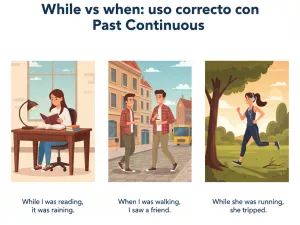
- Confundir simultaneidad con anterioridad: When I was cooking, he called (acciones solapadas) no necesita Past Perfect.
- Olvidar el punto de referencia en pasado: el Past Perfect funciona mejor cuando hay una segunda acción pasada explícita (o muy clara) que actúa como “ancla”.
- Mezclar tiempos sin motivo: si no hay contraste temporal real, mantener Past Simple puede sonar más natural y directo.
Ejemplos reales explicados
En conversaciones y textos narrativos, lo más útil es pensar en dos momentos: un hecho que ya estaba completado y otro que ocurre después. Ahí es donde el pasado perfecto (had + participio) ayuda a dejar clara la secuencia, especialmente cuando aparecen conectores como when y after.
La idea práctica es esta: con when suele haber un “punto de giro” (llegó alguien, pasó algo) y con after se marca una acción previa como condición temporal. Aun así, en inglés real no siempre “obliga” a usar pasado perfecto; se usa cuando el orden podría confundirse o cuando el hablante quiere enfatizar que algo ya había terminado.
Patrones típicos con “when” (acción previa vs. evento puntual)
- I had just left when you called. (just = “justo”)
- She had finished the report when the manager asked for it.
- We had already booked the tickets when the prices dropped. (already = “ya”)
- He had never seen snow when he moved to Canada.
- They had barely started when the power went out. (barely = “apenas”)
- I had saved the file when the computer crashed.
- The train had left when we got to the station.
- She had fallen asleep when I arrived.
- We had met once before when he introduced himself again.
- He had been waiting for an hour when the bus finally came.
Patrones típicos con “after” (secuencia explícita)
- After I had eaten, I went back to work.
- She called me after she had spoken to HR. (HR = “RR. HH.”)
- After we had moved, we realized we missed our old neighborhood.
- They apologized after they had read the full email.
- After he had fixed the bug, the app stopped crashing.
- We celebrated after we had passed the exam.
- After the meeting had ended, everyone relaxed.
- She felt better after she had taken the medicine.
- After I had checked the address, I realized it was wrong.
- They left after they had paid the bill.
Cuándo NO hace falta (y cuándo sí aporta claridad)
Con after y when a veces el pasado simple ya indica bien el orden, sobre todo si la secuencia es obvia por el contexto. El pasado perfecto se vuelve más útil cuando hay riesgo de interpretar mal qué ocurrió primero, o cuando se quiere subrayar que la primera acción estaba completada antes del segundo evento.
| Situación | Versión más simple | Versión con pasado perfecto |
|---|---|---|
| Orden obvio con “after” | After I arrived, we started. | After I had arrived, we started. |
| “When” con evento puntual | When I got home, she left. | When I got home, she had left. |
| Enfatizar “ya” / “todavía no” | When he called, I didn’t finish. | When he called, I hadn’t finished yet. (yet = “aún”) |
| Evitar ambigüedad | After we signed, they changed the terms. | After we had signed, they changed the terms. |
| Dar contexto previo en una historia | When I met her, I worked there. | When I met her, I had worked there for years. |
Detalles que suelen confundir a hispanohablantes
- When no significa “después de” automáticamente: solo marca el momento en que ocurre algo; el orden lo da el tiempo verbal.
- Con when + pasado simple, el segundo evento suele ser puntual (arrived, called, started). El hecho anterior puede ir en pasado perfecto para dejarlo “cerrado”.
- Con after, el orden ya está indicado; el pasado perfecto se usa más por precisión o énfasis que por obligación.
- Had gone (se había ido) y went (fue) cambian el significado: “When I arrived, he went” no implica que se fuera antes; “he had gone” sí.
- En negativas, hadn’t + participio es muy frecuente para “todavía no”: hadn’t finished, hadn’t arrived, hadn’t heard.
Errores frecuentes con when y after
Los fallos más comunes aparecen al decidir qué tiempo verbal usar en cada parte de la oración y qué relación temporal expresa cada conector. La idea práctica es simple: when suele introducir el momento en que ocurre algo (puede ser simultáneo o “en ese punto”), mientras que after marca con claridad que una acción sucede más tarde que otra.
En narración, el Past Perfect se usa para dejar claro qué ocurrió antes de un punto pasado. El problema es que muchos estudiantes lo aplican “por regla” con after o lo omiten con when, sin comprobar si realmente hay dos momentos pasados distintos y si el orden ya es obvio por el contexto.
Confundir “after” con Past Perfect obligatorio
After ya expresa anterioridad, así que el Past Perfect no siempre es necesario. Se usa cuando quieres enfatizar que la primera acción estaba completada antes de la segunda, o cuando el orden podría confundirse.
- Correcto (orden claro sin Past Perfect): After I finished work, I went home.
- Correcto (énfasis en acción completada): After I had finished work, I went home.
- Error típico: After I had went home, I called you. (debe ser had gone, participio irregular: gone = “ido”)
Usar Past Perfect en ambas cláusulas sin necesidad
Si pones Past Perfect en las dos partes, borras la diferencia temporal. Normalmente solo una acción necesita “retroceder” en el tiempo; la otra se queda en Past Simple como punto de referencia.
- Error típico: When I had arrived, he had left.
- Mejor (orden claro): When I arrived, he had left.
- Alternativa (si quieres indicar “justo al llegar”): When I arrived, he left. (secuencial y rápido, sin énfasis en “ya se había ido”)
Elegir “when” cuando en realidad se necesita “after”
When no significa automáticamente “después de”. Puede ser “cuando” en sentido de “en el momento en que”, incluso con solapamiento. Si lo que quieres es una secuencia estricta, after suele ser la opción correcta.
- Ambiguo: When I got home, I took a shower. (puede entenderse como “al llegar”)
- Secuencia explícita: After I got home, I took a shower.
- Con anterioridad marcada: When I got home, my roommate had already cooked. (already = “ya”)
Omitir el Past Perfect cuando “when” introduce un punto de referencia
Con when, el Past Perfect aparece a menudo en la otra cláusula para indicar que algo ocurrió antes de ese “momento pasado”. Si usas solo Past Simple en ambas, puedes perder el matiz de “ya había ocurrido”.
- Mejor con anterioridad: When I arrived, the movie had started.
- Si dices: When I arrived, the movie started. (cambia el sentido: sugiere que empezó justo entonces)
- Mejor con resultado previo: When she called, I had fallen asleep. (fallen = “quedado” dormido)
Errores de forma: participios irregulares y negación
Muchos errores no son de “idea”, sino de forma: usar el pasado en vez del participio, o negar mal el auxiliar. En Past Perfect, la estructura es had + past participle, y la negación es had not / hadn’t + participio.
- had gone (no: had went)
- had seen (no: had saw)
- had done (no: had did)
- hadn’t finished (no: hadn’t finisheded)
- After I hadn’t eaten, I felt sick. (mejor: I felt sick because I hadn’t eaten; con after suena ilógico si no hay “después de” real)
Guía rápida: qué corregir según el tipo de error
| Problema | Qué suele pasar | Ajuste recomendado |
|---|---|---|
| “After” + Past Perfect siempre | Se sobrecarga el texto con had | Usa Past Simple si el orden ya es obvio; reserva Past Perfect para énfasis o claridad |
| Dos Past Perfect en la misma frase | No queda claro cuál es el punto de referencia | Deja una acción en Past Simple y la anterior en Past Perfect |
| “When” usado como “después de” | La secuencia puede interpretarse como simultánea | Cambia a after si necesitas posterioridad estricta |
| Falta de Past Perfect con “when” | Se pierde el sentido de “ya había…” | Usa Past Perfect en la acción anterior al momento introducido por when |
| Participio incorrecto | Errores como had went / had saw | Revisa lista de irregulares: gone, seen, done, taken, written, etc. |
Patrones útiles para autocorrección (checklist)
- Si puedes insertar “ya” (already = “ya”) antes del verbo en inglés, probablemente necesitas Past Perfect: had already + participio.
- Si el conector ya marca el orden con claridad (after), el Past Perfect es opcional, no automático.
- Si la frase suena como “justo en ese momento”, when + Past Simple suele encajar mejor que forzar Past Perfect.
- Si quieres “antes de ese momento pasado”, usa Past Perfect en la acción anterior y Past Simple en la acción de referencia.
- Comprueba siempre la forma: had + participio (written = “escrito”, not: writed).
Cómo evitar confusiones
La mayor parte de los errores con past perfect al usar when y after no vienen de la gramática “difícil”, sino de mezclar dos ideas: (1) qué acción ocurrió primero en el tiempo real y (2) qué acción se presenta como referencia en la frase. La clave práctica es decidir si necesitas marcar explícitamente la anterioridad o si el conector ya la deja clara.
En la vida real, muchas frases funcionan bien sin past perfect porque after ya indica orden. En cambio, con when es más fácil que haya ambigüedad (puede significar “cuando” como punto de tiempo, o “cuando” como evento que dispara otro), y ahí es donde el contraste entre past simple y past perfect ayuda a evitar interpretaciones equivocadas.
Decisión rápida: ¿necesitas marcar anterioridad?
- After + past simple, past simple: suele ser suficiente cuando el orden es obvio por el conector. After I arrived, we started.
- When + past simple, past simple: útil si las acciones son simultáneas o casi simultáneas. When I arrived, they started clapping.
- When + past simple, past perfect: marca que una acción ya estaba completada antes del “when”. When I arrived, they had already left.
- After + past perfect: se usa si quieres enfatizar que algo estaba terminado antes de otra acción, o si el orden no es tan transparente por el contexto. After she had finished, she went out.
Errores típicos y cómo corregirlos
| Confusión | Lo que suena raro | Mejor opción |
|---|---|---|
| Usar had “por sistema” con after | After I had arrived, I had called you. | After I arrived, I called you. |
| Perder la idea de “ya había ocurrido” con when | When I got home, they left. (puede parecer que se fueron después de verte) | When I got home, they had left. (ya se habían ido) |
| Invertir el orden lógico de los hechos | When she had finished the meeting, she was taking notes. | When she finished the meeting, she took notes. o She took notes after the meeting. |
| Confundir “evento” vs “periodo” con when | When I lived in London, I had met my wife. (suena como un hecho puntual mal encajado) | When I was living in London, I met my wife. |
| Olvidar que already cambia el foco | When I arrived, they left already. (posición extraña) | When I arrived, they had already left. |
Patrones seguros para redactar sin ambigüedad
Si dudas, formula primero la secuencia en tu cabeza como “A ocurrió antes que B” y luego elige el patrón que lo refleje. Con when, el recurso más claro para “A ya había pasado” es had + past participle en la acción anterior.
- When + past simple, past perfect: When the police arrived, the thief had escaped.
- When + past simple, already + past perfect: When I called, she had already gone to bed.
- After + past simple, past simple: After we ate, we watched a movie.
- After + -ing (más natural en estilo narrativo): After finishing the report, he sent it.
- Before + past simple, past simple (a menudo evita el past perfect): I checked the address before I left.
- By the time + past simple, past perfect: By the time we arrived, the show had started.
- No sooner... than + past perfect, past simple: No sooner had I sat down than the phone rang.
- Hardly/Scarcely... when + past perfect, past simple: Hardly had we left when it began to snow.
- Past perfect para “causa anterior” (no solo orden): He was tired because he had worked late.
- Past simple para secuencia narrativa simple: She opened the door, walked in, and sat down.
Detalles que suelen confundir a hispanohablantes
- When no siempre equivale a “después de”: puede ser “en el momento en que” (simultáneo) o “al llegar” (punto de tiempo). Por eso When I arrived, they left no garantiza que “ya se habían ido”.
- Con after, el orden está incorporado: si además pones had en ambas acciones, suena recargado y poco natural.
- Had no es “pasado más pasado” por sí mismo: su función es marcar anterioridad respecto a otro pasado, no “hacer la frase más formal”.
- Cuidado con participios irregulares: leave → left, go → gone, break → broken. Un error típico es usar el pasado en lugar del participio.
- Posición de already: normalmente va entre had y el participio (had already left), no al final.
Ejercicios prácticos para casa
La clave al practicar con when y after es controlar el orden de los hechos: el evento que ocurrió primero suele ir en past perfect (had + participle), y el evento posterior suele ir en past simple. En la vida real, esta combinación se usa para evitar ambigüedad cuando dos acciones pasadas están conectadas y quieres dejar claro qué pasó antes.
En los ejercicios, fíjate en dos señales: (1) si la frase marca una secuencia (“después de…”, “cuando…”), y (2) si el verbo principal necesita un participio irregular (por ejemplo, go → gone, “ido”). Trabaja buscando primero el hecho anterior y luego ajusta tiempos y conectores.
Ejercicio 1: Completa con el tiempo correcto
- When I ____ (arrive), the movie ____ already ____ (start).
- After she ____ (finish) her report, she ____ (send) it to her boss.
- When we ____ (get) to the station, the train ____ ____ (leave).
- After they ____ (eat), they ____ (go) for a walk.
- When he ____ (call) me, I ____ just ____ (wake up).
- After I ____ (buy) the tickets, I ____ (realize) I had the wrong date.
- When the teacher ____ (enter), the students ____ already ____ (sit) down.
- After the phone ____ (ring), she ____ (answer) it.
- When I ____ (open) the door, I ____ ____ (forget) my keys inside.
- After we ____ (see) the email, we ____ (change) the plan.
Mostrar respuestas
- When I arrived, the movie had already started.
- After she had finished her report, she sent it to her boss.
- When we got to the station, the train had left.
- After they had eaten, they went for a walk.
- When he called me, I had just woken up.
- After I had bought the tickets, I realized I had the wrong date.
- When the teacher entered, the students had already sat down.
- After the phone had rung, she answered it.
- When I opened the door, I had forgotten my keys inside.
- After we had seen the email, we changed the plan.
Ejercicio 2: Ordena y construye oraciones
- after / I / had / left / the office / it / started / to rain
- when / she / arrived / we / had / already / eaten
- after / they / had / booked / the hotel / they / looked / for flights
- when / he / apologized / I / had / calmed down / already
- after / we / had / met / his parents / we / went / home
- when / the meeting / started / I / had / turned off / my phone
- after / she / had / lost / her wallet / she / called / the bank
- when / I / checked / the file / I / had / saved / the wrong version
Mostrar respuestas
- After I had left the office, it started to rain.
- When she arrived, we had already eaten.
- After they had booked the hotel, they looked for flights.
- When he apologized, I had already calmed down.
- After we had met his parents, we went home.
- When the meeting started, I had turned off my phone.
- After she had lost her wallet, she called the bank.
- When I checked the file, I had saved the wrong version.
Ejercicio 3: Elige el conector correcto (when/after)
- ____ I had locked the door, I noticed the window was open.
- ____ he arrived, we had already started dinner.
- ____ they had discussed the problem, they found a solution.
- ____ I saw her message, I had already made a decision.
- ____ we had parked the car, we realized we forgot the address.
- ____ the concert ended, we had lost our friends.
- ____ she had practiced a lot, she felt more confident.
- ____ I got to the checkout, I had left my wallet at home.
- ____ he had updated the app, it worked better.
- ____ the guests arrived, we had finished cleaning.
Mostrar respuestas
- After I had locked the door, I noticed the window was open.
- When he arrived, we had already started dinner.
- After they had discussed the problem, they found a solution.
- When I saw her message, I had already made a decision.
- After we had parked the car, we realized we forgot the address.
- When the concert ended, we had lost our friends.
- After she had practiced a lot, she felt more confident.
- When I got to the checkout, I had left my wallet at home.
- After he had updated the app, it worked better.
- When the guests arrived, we had finished cleaning.
Ejercicio 4: Detecta y corrige el error
- When I had arrived, the class started.
- After she sent the email, she had checked the attachment.
- When we got home, we had cooked dinner.
- After he had broke his phone, he bought a new one.
- When the taxi arrived, I had forgot my passport.
- After they had finished, they had went out.
- When I opened the app, it had crashed.
- After I had met him, I knew his name.
Mostrar respuestas
- When I arrived, the class started.
- After she had checked the attachment, she sent the email.
- When we got home, we cooked dinner.
- After he had broken his phone, he bought a new one.
- When the taxi arrived, I had forgotten my passport.
- After they had finished, they went out.
- When I opened the app, it crashed.
- After I had met him, I learned his name.
Tabla rápida: patrones típicos con “when” y “after”
| Patrón | Qué marca | Ejemplo |
|---|---|---|
| When + past simple, past perfect | Un punto en el tiempo donde ya había ocurrido algo antes | When I arrived, they had left. |
| After + past perfect, past simple | Secuencia clara: primero A, luego B | After she had paid, she left. |
| After + -ing | Alternativa más compacta (mismo sujeto) | After paying, she left. |
| When + past simple, past simple | Acciones casi simultáneas o rutina en pasado | When I called, he answered. |
Ejercicio 5: Reescribe usando “after + -ing” (mismo sujeto)
- After I had finished the call, I wrote a summary.
- After she had checked the schedule, she booked the meeting room.
- After we had packed our bags, we called a taxi.
- After he had read the instructions, he installed the software.
- After they had signed the contract, they announced the news.
- After I had washed the dishes, I sat down.
Mostrar respuestas
- After finishing the call, I wrote a summary.
- After checking the schedule, she booked the meeting room.
- After packing our bags, we called a taxi.
- After reading the instructions, he installed the software.
- After signing the contract, they announced the news.
- After washing the dishes, I sat down.