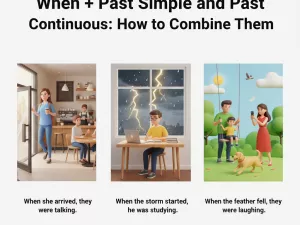
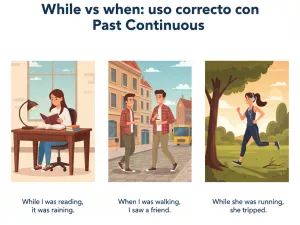
Past Continuous para dos acciones simultáneas

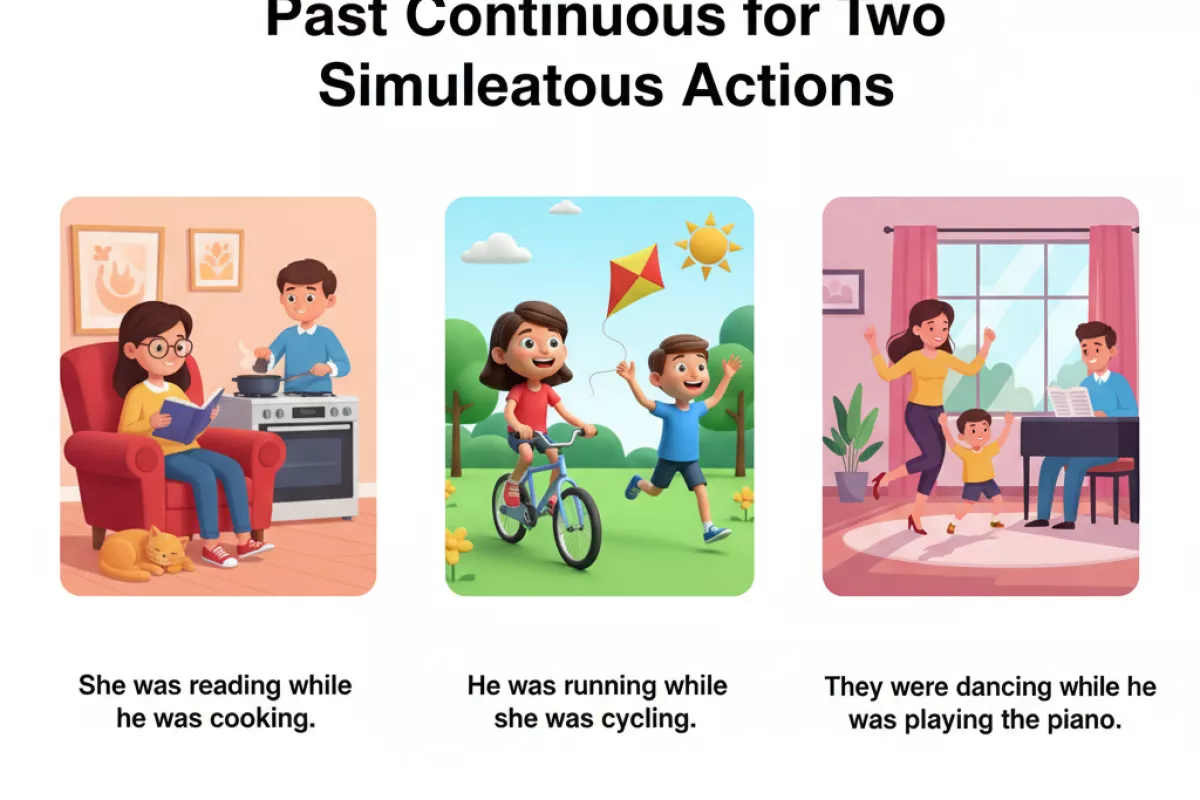 Aprende qué son las acciones simultáneas y cómo expresarlas en inglés usando el Past Continuous en paralelo. Verás las estructuras más comunes, ejemplos claros y naturales, diferencias con el Past Simple, errores frecuentes y un ejercicio práctico final.
Cuando quieres decir que dos cosas estaban ocurriendo al mismo tiempo en el pasado, necesitas una forma verbal que muestre acciones en desarrollo como fondo. En esta lección aprenderás a usarla para describir escenas y acciones paralelas de forma natural, como en conversaciones reales, sin sonar rígido. Practicarás con ejemplos cotidianos y marcadores de tiempo para elegir la estructura correcta al hablar o escribir.
Qué son acciones simultáneas
En gramática, hablamos de dos acciones que ocurren a la vez cuando se desarrollan en el mismo periodo de tiempo y ninguna “interrumpe” a la otra. La idea clave es que ambas están en progreso de forma paralela, como dos actividades que avanzan en la misma escena.
En inglés, este tipo de situación se expresa con mucha frecuencia usando Past Continuous en las dos acciones: was/were + verbo en -ing. Este patrón ayuda a mostrar “fondo” o “duración”, y es especialmente común cuando describimos lo que estaba pasando en un momento del pasado.
Cómo reconocerlas en una frase
Normalmente aparecen unidas por conectores que indican simultaneidad o contraste suave. También es habitual que el contexto sea una descripción (qué estaba ocurriendo) más que una secuencia de eventos terminados.
- Las dos acciones son durativas (no se perciben como “puntuales”).
- Comparten un marco temporal: “en ese momento”, “mientras”, “durante la tarde”, etc.
- No hay una acción principal que corte a la otra (eso sería más típico de Past Continuous + Past Simple).
- Ambas responden a la misma pregunta temporal: “¿qué estaba pasando?”
Patrón típico con Past Continuous
La estructura más común es: acción A (was/were + -ing) + while + acción B (was/were + -ing). En español suele equivaler a “mientras” + imperfecto (“yo leía mientras él cocinaba”), pero en inglés conviene mantener las dos en forma continua cuando las dos están en progreso.
Estos conectores son los más frecuentes para marcar que ocurren en paralelo: while (mientras) y, a veces, as (mientras / a medida que) cuando el énfasis está en el desarrollo simultáneo.
| Conector | Patrón | Ejemplo |
|---|---|---|
| while (mientras) | Past Continuous + while + Past Continuous | I was studying while my sister was watching TV. |
| as (mientras / a medida que) | Past Continuous + as + Past Continuous | We were talking as the bus was moving. |
| at the same time (al mismo tiempo) | Past Continuous. At the same time, Past Continuous. | He was cooking. At the same time, I was setting the table. |
| meanwhile (mientras tanto) | Past Continuous. Meanwhile, Past Continuous. | She was working. Meanwhile, they were waiting outside. |
Ejemplos listos para usar (dos acciones en progreso)
En los siguientes modelos, las dos actividades ocurren en paralelo y se presentan como procesos en desarrollo. Fíjate en was/were y en la forma -ing, que es la marca visible de la simultaneidad en curso.
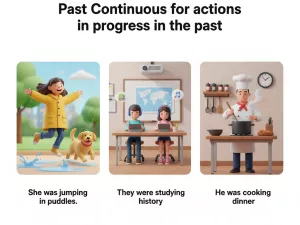
- I was reading while he was cooking.
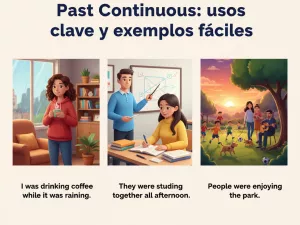
- They were walking while it was raining.
- We were having dinner while the kids were playing.
- She was taking notes while the teacher was explaining.
- My friends were chatting while I was working.
- He was driving while I was checking the map.
- The baby was sleeping while we were cleaning.
- I was listening to music while I was doing homework.
- They were waiting while the manager was talking.
- We were shopping while it was getting dark.
- She was practicing the piano while her brother was studying.
- I was texting while you were calling.
- He was painting while she was taking photos.
- We were discussing the plan while they were preparing the report.
- The students were working while the printer was making noise.
- I was learning English while I was living abroad (en el extranjero).
Errores comunes al expresarlas
El fallo más típico es mezclar tiempos como si una acción fuera un “evento” que corta a la otra, cuando en realidad las dos estaban ocurriendo a la vez. También es frecuente usar Past Simple en ambas y perder la idea de proceso.
- Usar Past Simple para acciones en progreso: “I read while he cooked” suele sonar a hábitos o a resumen, no a escena en desarrollo.
- Confundir simultaneidad con interrupción: si una acción sucede de golpe y cambia la situación, suele encajar mejor Past Simple para esa acción puntual.
- Olvidar el auxiliar: “She working” es incorrecto; debe ser “She was working”.
Uso del Past Continuous en paralelo
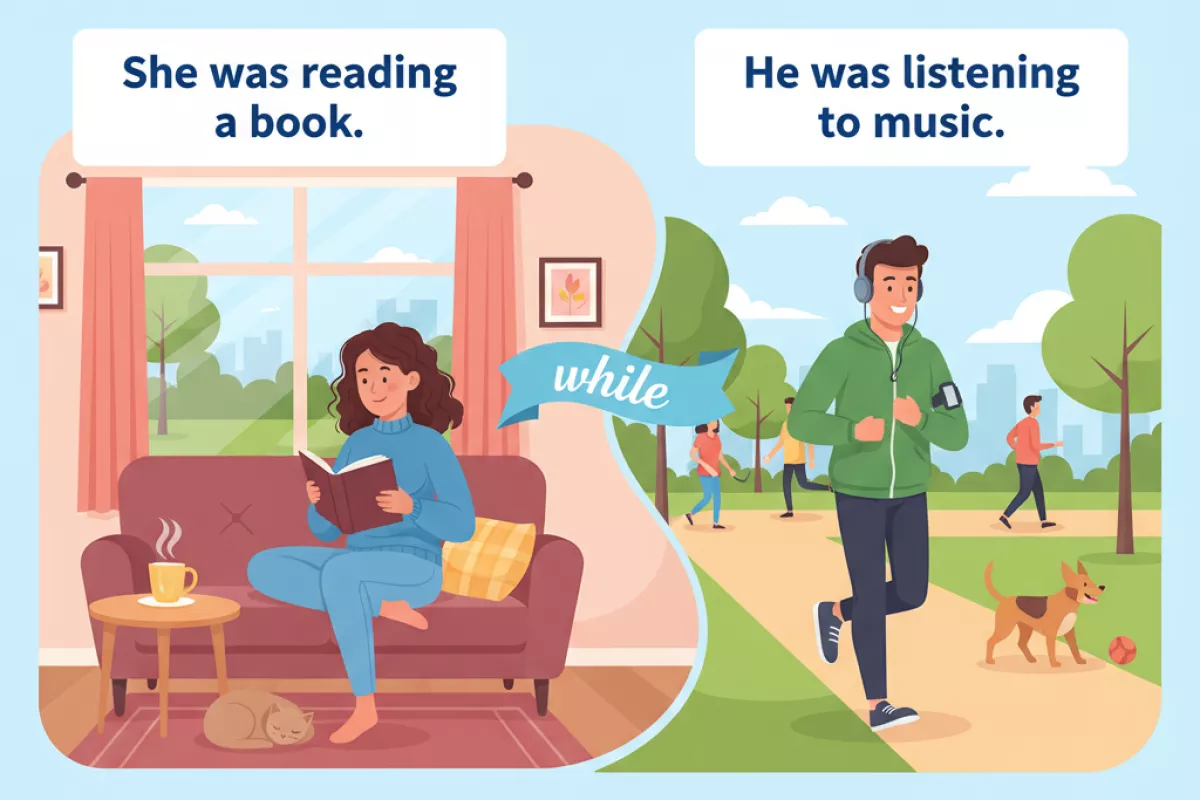
Cuando quieres describir dos actividades que estaban ocurriendo al mismo tiempo en el pasado, el Past Continuous permite mostrar esa simultaneidad de forma natural. La idea clave es que ambas acciones se entienden como procesos en curso, no como eventos puntuales ya terminados.
En la práctica, este patrón se usa para narrar escenas, explicar qué hacía cada persona en un momento concreto o dar contexto a una situación. Normalmente se conectan las dos acciones con while (mientras) o, en algunos casos, con as (mientras / a medida que), manteniendo el foco en que las dos actividades se solapan en el tiempo.
Estructura base y conectores frecuentes
- Sujeto + was/were + verbo-ing para cada acción: She was cooking (ella estaba cocinando).
- Conector típico: while para contrastar dos acciones en progreso.
- Conector alternativo: as cuando la simultaneidad se percibe como parte del desarrollo de la escena.
- Coma opcional según el orden: si empiezas con While + oración, suele ir coma antes de la segunda oración.
| Patrón | Ejemplo | Idea que transmite |
|---|---|---|
| While + Past Continuous, Past Continuous | While I was studying, my brother was playing video games. | Dos acciones largas ocurriendo a la vez |
| Past Continuous + while + Past Continuous | I was driving while it was raining heavily. | Escena simultánea; una acción acompaña a la otra |
| As + Past Continuous, Past Continuous | As we were walking home, we were talking about the exam. | Simultaneidad con sensación de “durante el trayecto” |
| Past Continuous + as + Past Continuous | She was smiling as she was reading the message. | Dos procesos paralelos con matiz descriptivo |
Ejemplos listos para reutilizar (acciones simultáneas)
- While I was working, my phone was ringing nonstop.
- While they were having dinner, the kids were arguing in the next room.
- She was taking notes while the teacher was explaining the grammar.
- We were waiting outside while it was getting darker.
- While he was fixing the bike, I was looking for the missing screw.
- I was listening to music while I was cleaning the kitchen.
- While the guests were arriving, we were setting the table.
- They were chatting while they were walking to the station.
- While I was trying to sleep, my neighbors were playing loud music.
- He was cooking while she was preparing dessert.
- While the team was practicing, the coach was watching quietly.
- We were discussing the plan while the manager was checking the budget.
- While the baby was crying, I was warming the bottle (biberón).
- She was painting the wall while he was moving the furniture.
- While I was reading, the wind was blowing hard outside.
- As I was leaving the office, it was starting to rain.
Errores típicos y cómo evitarlos
- Mezclar “acción en progreso” con “acción puntual” sin intención: si una acción interrumpe a la otra, suele encajar mejor Past Simple + Past Continuous (no dos continuos).
- Usar “when” como si fuera “while”: when a menudo introduce un hecho puntual; while enfatiza duración y simultaneidad.
- Olvidar la concordancia was/were: I/he/she/it was vs. you/we/they were.
- Verbos poco naturales en -ing: algunos verbos de estado suelen evitarse en continuo (por ejemplo, know, believe), salvo usos especiales.
Estructuras más comunes
Cuando dos acciones estaban ocurriendo al mismo tiempo en el pasado, lo más habitual es usar el pasado continuo para mostrar que ambas eran procesos en curso. La idea clave es que no se trata de eventos puntuales, sino de actividades “en desarrollo” que se solapan durante un intervalo.
En la práctica, estas combinaciones suelen aparecer con conectores como while (mientras) o con dos oraciones coordinadas con and (y). También es común que una acción sirva de “fondo” y la otra ocurra en paralelo, sin que una interrumpa a la otra.
Patrón base: dos acciones en progreso
- While + past continuous, past continuous
- Past continuous + while + past continuous
- Past continuous + and + past continuous
| Estructura | Cuándo se usa | Ejemplo |
|---|---|---|
| While + S + was/were + -ing, S + was/were + -ing | Dos procesos simultáneos; “while” marca claramente el solapamiento. | While I was cooking, my sister was setting the table (poniendo la mesa). |
| S + was/were + -ing + while + S + was/were + -ing | Mismo significado; cambia el foco al poner primero la acción principal del relato. | I was driving while it was raining heavily (lloviendo fuerte). |
| S + was/were + -ing + and + S + was/were + -ing | Dos acciones paralelas sin necesidad de enfatizar “mientras”. | They were talking and laughing at the same time (al mismo tiempo). |
| While + S + was/were + -ing, S + was/were + -ing + (at the same time) | Se añade un refuerzo temporal cuando puede haber ambigüedad. | While we were studying, our neighbors were playing music at the same time (a la vez). |
| S + was/were + -ing + as + S + was/were + -ing | “As” (mientras/a medida que) sugiere simultaneidad y, a veces, evolución paralela. | As I was walking home, I was thinking about the exam (el examen). |
Conectores y colocación: lo que cambia y lo que no
Con while y as, el orden de las dos oraciones puede invertirse sin cambiar el sentido básico: ambas acciones estaban ocurriendo a la vez. Lo que sí cambia es el énfasis narrativo: la primera parte suele percibirse como el “marco” desde el que se cuenta lo demás.
- While suele ser el más claro para “dos acciones simultáneas”.
- As puede sonar más descriptivo o gradual (“a medida que”).
- And coordina dos acciones paralelas; es frecuente en descripciones dinámicas.
Ejemplos listos para reutilizar (10–20 patrones)
- While I was working, he was listening to a podcast (un pódcast).
- She was reading while the kids were sleeping (durmiendo).
- We were having dinner and we were watching the news (las noticias).
- While they were waiting, they were chatting quietly (en voz baja).
- I was studying while my roommate was playing video games (videojuegos).
- As the sun was setting (poniéndose), we were walking along the beach (la playa).
- He was taking notes while the teacher was explaining the topic (el tema).
- They were dancing and they were singing at the same time (a la vez).
- While the train was moving, I was looking out the window (por la ventana).
- She was talking on the phone while she was cooking (cocinando).
- We were driving and we were discussing our plans (nuestros planes).
- While I was cleaning, my brother was organizing the files (los archivos).
- As I was falling asleep (quedándome dormido), it was starting to rain (empezando a llover).
- They were practicing (practicando) while the coach was timing them (cronometrándolos).
- While the baby was crying (llorando), the parents were trying to calm him down (calmarlo).
Errores típicos al formar estas oraciones
- Usar pasado simple para ambas acciones cuando se quiere expresar duración: “I cooked while she set the table” describe hechos más puntuales; si eran procesos en curso, conviene el continuo.
- Olvidar el auxiliar: debe ser was/were + verbo en -ing (no “I cooking”).
- Mezclar tiempos sin intención: si una acción interrumpe a la otra, suele encajar mejor “past continuous + past simple” (una estaba ocurriendo y la otra ocurrió).
Ejemplos claros y naturales
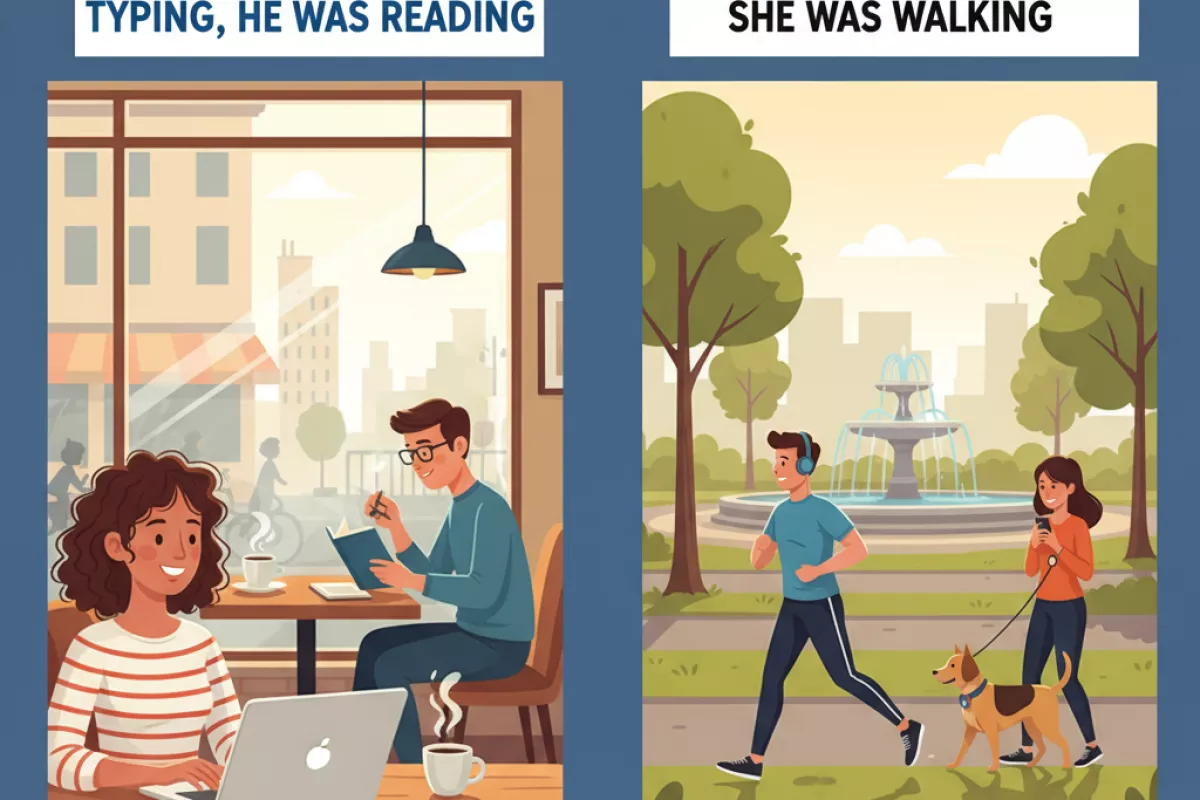
Cuando quieres describir dos actividades que estaban ocurriendo al mismo tiempo en el pasado, lo más natural es poner was/were + verbo en -ing en ambas partes de la frase. La idea clave es que no se trata de una acción “principal” y otra “secundaria”, sino de dos procesos paralelos que coincidían en un mismo momento.
En la práctica, suelen aparecer conectores como while (mientras) o as (mientras / a medida que), y también estructuras con when cuando “when” introduce un marco temporal amplio (no un evento puntual). Fíjate en el patrón y en cómo el contexto sugiere simultaneidad.
Frases modelo con “while” (simultaneidad clara)
- While I was cooking, my brother was setting the table.
- While they were studying, their neighbors were playing loud music.
- While we were waiting for the bus, it was getting colder.
- While she was driving, she was listening to a podcast.
- While the kids were sleeping, the adults were talking quietly.
- While I was working from home, my phone was ringing nonstop.
- While you were explaining the problem, I was taking notes.
- While he was learning English, he was watching videos every day.
- While the teacher was writing on the board, the students were whispering.
- While it was raining, we were walking through the park.
Ejemplos con “as” (dos acciones que avanzan en paralelo)
- As I was leaving the office, my manager was calling my name.
- As the movie was ending, people were standing up and were putting on their coats.
- As we were talking, the waiter was bringing our drinks.
- As the sun was setting, the sky was turning orange.
“When” también puede expresar simultaneidad (si no es un evento puntual)
Con when es común ver pasado continuo + pasado simple si “when” marca una interrupción. Pero si “when” se usa como “en ese momento en que…”, puede aparecer pasado continuo en ambos lados para indicar que dos cosas estaban en curso.
- When I was living in Madrid, I was commuting by train every day.
- When we were working on the project, we were meeting twice a week.
- When she was training for the race, she was eating very carefully.
- When they were traveling around Asia, they were posting photos constantly.
Tabla rápida: patrón y ejemplo (para reconocer la estructura)
| Patrón | Idea | Ejemplo |
|---|---|---|
| While + pasado continuo, pasado continuo | Dos acciones en progreso al mismo tiempo | While I was reading, she was watching TV. |
| As + pasado continuo, pasado continuo | Acciones paralelas (a medida que avanzan) | As we were walking, we were discussing the plan. |
| When + pasado continuo, pasado continuo | Contexto habitual/extendido en un periodo | When he was studying abroad, he was working part-time. |
| Pasado continuo + and + pasado continuo | Simultaneidad sin conector explícito | She was cooking and he was cleaning. |
Errores típicos y cómo ajustarlos
- Mezclar simultaneidad con “interrupción” sin querer: si una acción corta interrumpe otra, lo normal es pasado simple para la corta. Si ambas estaban en curso, mantén el continuo en las dos.
- Usar “while” con una acción puntual: “while” pide una acción en desarrollo; si es un evento instantáneo, suele sonar mejor con pasado simple y otro marco temporal.
- Olvidar “was/were”: en inglés no basta con el verbo en -ing; necesitas el auxiliar (I was running, they were running).
Diferencia con Past Simple
Cuando comparas estos dos tiempos, la idea clave es el enfoque: el pasado simple presenta hechos completos (acciones terminadas), mientras que el pasado continuo muestra acciones en desarrollo en un momento del pasado. En situaciones con dos acciones, esto cambia la “foto” que das: una secuencia de eventos cerrados vs. dos actividades que estaban ocurriendo a la vez.
En la práctica, usa pasado simple para contar qué pasó y en qué orden, y usa pasado continuo para describir el trasfondo o dos procesos paralelos. En narraciones, el simple suele empujar la historia hacia adelante; el continuo suele “pintar” la escena o indicar simultaneidad real.
Contraste rápido: hecho terminado vs. acción en progreso
| Qué quieres expresar | Past Simple | Past Continuous |
|---|---|---|
| Acción completa (inicio/fin implícitos) | I cooked dinner. | I was cooking dinner. |
| Dos acciones en secuencia (una después de otra) | I finished work and went home. | (No es la opción típica para secuencia cerrada) |
| Dos acciones simultáneas (dos procesos a la vez) | I listened to music and studied. (puede sonar a lista de hechos) | I was listening to music while I was studying. |
| Acción corta que interrumpe una acción en progreso | The phone rang. | The phone was ringing. (insiste en duración/repetición) |
Patrones típicos cuando comparas ambos tiempos
- Past Simple + Past Simple para acciones completas:
She opened the window and sat down. - Past Continuous + Past Continuous para dos acciones paralelas:
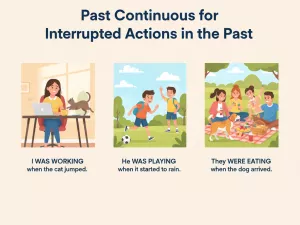
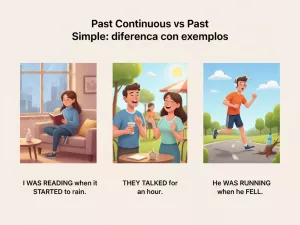
They were talking while we were waiting. - Past Continuous + Past Simple para “acción en progreso + interrupción”:
I was driving when I saw a dog. - Past Simple + Past Continuous es menos común, pero aparece si primero mencionas el hecho y luego describes el fondo:
I arrived and everyone was dancing.
Ejemplos guiados (qué cambia el significado)
- I read and I wrote. (dos acciones hechas; puede entenderse como lista de actividades)
- I was reading while I was writing. (simultaneidad clara; dos acciones en progreso)
- We talked and we ate. (hechos terminados; posible secuencia)
- We were talking while we were eating. (dos acciones ocurriendo a la vez)
- She watched TV and fell asleep. (primero TV, luego se durmió)
- She was watching TV when she fell asleep. (TV en progreso; “fall asleep” = quedarse dormida)
- He worked and listened to a podcast. (actividad doble, pero sin énfasis en duración)
- He was working while he was listening to a podcast. (enfatiza que ambas estaban en curso)
- I cleaned the kitchen and the kids played. (dos hechos; no necesariamente simultáneos)
- I was cleaning the kitchen while the kids were playing. (paralelo explícito)
- It rained and we stayed home. (hecho + consecuencia)
- It was raining and we stayed home. (lluvia como contexto; “stay home” = quedarse en casa)
Señales que suelen empujar hacia uno u otro
- Si quieres marcar duración o “estaba en medio de…”, elige el continuo: was/were + verbo en -ing.
- Si quieres marcar resultado o “se completó”, elige el simple: verbo en pasado (worked, went, saw).
- Con conectores de simultaneidad como while (mientras), el continuo suele ser la opción más natural para las dos acciones.
- Con when (cuando), es muy frecuente el patrón “en progreso + evento puntual”: was/were + -ing + when + pasado simple.
Errores frecuentes de uso
Cuando se describen dos actividades que ocurren al mismo tiempo en el pasado, la clave es que ambas se entiendan como procesos en curso durante el mismo intervalo. Los fallos más comunes aparecen al mezclar esta idea con acciones puntuales, al elegir conectores inadecuados o al construir mal la forma verbal.
Para evitar confusiones, conviene comprobar dos cosas: (1) si realmente hay simultaneidad (las dos acciones se solapan) y (2) si el verbo elegido encaja con una acción “en progreso” o si suena más natural en pasado simple. A partir de ahí, estos patrones suelen causar errores.
1) Usar Past Continuous cuando una acción es puntual
- Error: I was dropping the glass when it was breaking.
- Mejor: I was dropping the glass when it broke. (broke = acción puntual)
- Clave: si una acción “interrumpe” o sucede de golpe, suele ir en Past Simple con when.
2) Confundir while y when en la relación entre acciones
- Error: When I was studying, my brother was playing video games.
- Mejor: While I was studying, my brother was playing video games. (while = simultaneidad clara)
- Nota: when no siempre es incorrecto, pero a menudo sugiere “en el momento en que…” y puede sonar menos preciso para dos acciones paralelas.
3) Mezclar un proceso con un estado sin revisar si el verbo admite forma continua
Algunos verbos de estado suelen sonar raros en continuo (por ejemplo, know, believe, own). Si se usan para simultaneidad, normalmente se reformula o se pasa a Past Simple para el estado.
- Error: I was knowing the answer while the teacher was explaining.
- Mejor: I knew the answer while the teacher was explaining.
- Alternativa: I was thinking I knew the answer… (si se quiere enfatizar el proceso mental)
4) Formar mal el verbo: was/were + verbo base en lugar de -ing
- Error: They were watch TV while I was cooking.
- Mejor: They were watching TV while I was cooking.
- Recordatorio: estructura fija: was/were + verb-ing.
5) Errores de ortografía en -ing (doble consonante, quitar -e, etc.)
| Patrón | Incorrecto | Correcto |
|---|---|---|
| Verbo termina en -e: se elimina | makeing | making |
| CVC tónica: se duplica consonante | runing | running |
| -ie cambia a -y | lieing | lying |
| -y normalmente se mantiene | studing | studying |
6) Usar conectores que no expresan solapamiento real
- Error: I was cooking then she was setting the table. (then = secuencia, no simultaneidad)
- Mejor: I was cooking while she was setting the table.
- Consejo: si quieres “una cosa después de la otra”, el pasado simple suele encajar mejor.
7) Repetir sujetos o el auxiliar de forma innecesaria (o eliminarlo cuando hace falta)
- Demasiado cargado: While I was working, I was listening to music, and I was checking my phone.
- Más natural: While I was working, I was listening to music and checking my phone.
- Pero no omitirlo aquí: While I working… (falta was)
8) Elegir Past Continuous para hábitos en lugar de una escena concreta
- Error: When I was a child, I was playing football while my sister was reading every day.
- Mejor (hábito): When I was a child, I played football and my sister read every day.
- Mejor (escena específica): One afternoon, I was playing football while my sister was reading.
9) No marcar claramente que las dos acciones comparten el mismo marco temporal
- Confuso: I was driving while she was sleeping yesterday morning. (¿en el mismo coche? ¿misma situación?)
- Más claro: I was driving to Madrid while she was sleeping in the passenger seat. (passenger seat = asiento del copiloto)
- Idea: añade un detalle breve si la simultaneidad podría parecer “desconectada”.
10) Patrones útiles para comprobar si la frase “suena” a simultaneidad
- While + sujeto + was/were + -ing, sujeto + was/were + -ing.
- Sujeto + was/were + -ing while + sujeto + was/were + -ing.
- As + sujeto + was/were + -ing, sujeto + was/were + -ing. (as = “mientras”)
- Both actions ongoing: “At that time, X was -ing and Y was -ing.”
- Si una acción es el “evento”: “X was -ing when Y happened” (Y en Past Simple).
Ejercicios prácticos para casa
Para practicar dos acciones en progreso al mismo tiempo en el pasado, conviene fijarse en el patrón con while y en cómo se combinan dos verbos en was/were + -ing. La idea clave es que ambas actividades estaban ocurriendo de forma paralela durante un intervalo, no como eventos puntuales.
En los ejercicios verás que a veces se puede usar while (mientras) para marcar simultaneidad, y otras veces basta con unir dos acciones con and. Mantén la concordancia: I/he/she/it → was; you/we/they → were.
Ejercicio 1: Completa con la forma correcta
- I ______ (read) while my brother ______ (play) video games.
- They ______ (cook) dinner while we ______ (set) the table.
- She ______ (study) and her friends ______ (wait) outside.
- We ______ (walk) in the park while it ______ (rain).
- You ______ (talk) on the phone while I ______ (drive).
- My parents ______ (watch) TV while I ______ (do) my homework.
- The kids ______ (sleep) while the adults ______ (dance).
- He ______ (work) on his laptop while the train ______ (move).
- I ______ (listen) to music while I ______ (clean) my room.
- They ______ (argue) while the teacher ______ (write) on the board.
Mostrar respuestas
- I was reading while my brother was playing video games.
- They were cooking dinner while we were setting the table.
- She was studying and her friends were waiting outside.
- We were walking in the park while it was raining.
- You were talking on the phone while I was driving.
- My parents were watching TV while I was doing my homework.
- The kids were sleeping while the adults were dancing.
- He was working on his laptop while the train was moving.
- I was listening to music while I was cleaning my room.
- They were arguing while the teacher was writing on the board.
Ejercicio 2: Une dos acciones simultáneas en una sola frase
- I was cooking. My sister was studying.
- We were waiting at the bus stop. It was snowing.
- He was taking notes. The professor was explaining the topic.
- They were shopping. Their kids were running around.
- She was painting. Her friend was playing the guitar.
- You were working. I was looking for information online.
- The dog was barking. The neighbors were trying to sleep.
- We were having lunch. The phone was ringing.
Mostrar respuestas
- I was cooking while my sister was studying.
- We were waiting at the bus stop while it was snowing.
- He was taking notes while the professor was explaining the topic.
- They were shopping while their kids were running around.
- She was painting while her friend was playing the guitar.
- You were working while I was looking for information online.
- The dog was barking while the neighbors were trying to sleep.
- We were having lunch while the phone was ringing.
Ejercicio 3: Elige la opción correcta (A o B)
- While I ______, my friends ______.
A) studied / were chatting
B) was studying / were chatting - They ______ dinner while we ______ the dishes.
A) were having / were washing
B) had / washed - He ______ while she ______.
A) was driving / was texting
B) drove / texted - While it ______, we ______ a movie at home.
A) rained / watched
B) was raining / were watching - I ______ and my roommate ______ at the same time.
A) was calling / was answering emails
B) called / answered emails - While the baby ______, the parents ______ quietly.
A) slept / talked
B) was sleeping / were talking - They ______ attention while the coach ______ instructions.
A) were paying / was giving
B) paid / gave - While we ______, the lights ______.
A) were walking / were flickering
B) walked / flickered
Mostrar respuestas
- B
- A
- A
- B
- A
- B
- A
- A
Ejercicio 4: Corrige la frase (una corrección por oración)
- While I was study, my brother was playing chess.
- They was talking while the teacher was explaining.
- We were watch TV while our parents were cooking.
- While it raining, I was driving home.
- She were writing emails while she was listening to music.
- While I was walking, I was fall down.
- My friends were laugh while I was trying to concentrate.
- He was run while I was taking photos.
Mostrar respuestas
- While I was studying, my brother was playing chess.
- They were talking while the teacher was explaining.
- We were watching TV while our parents were cooking.
- While it was raining, I was driving home.
- She was writing emails while she was listening to music.
- While I was walking, I fell down.
- My friends were laughing while I was trying to concentrate.
- He was running while I was taking photos.