While vs when: uso correcto con Past Continuous

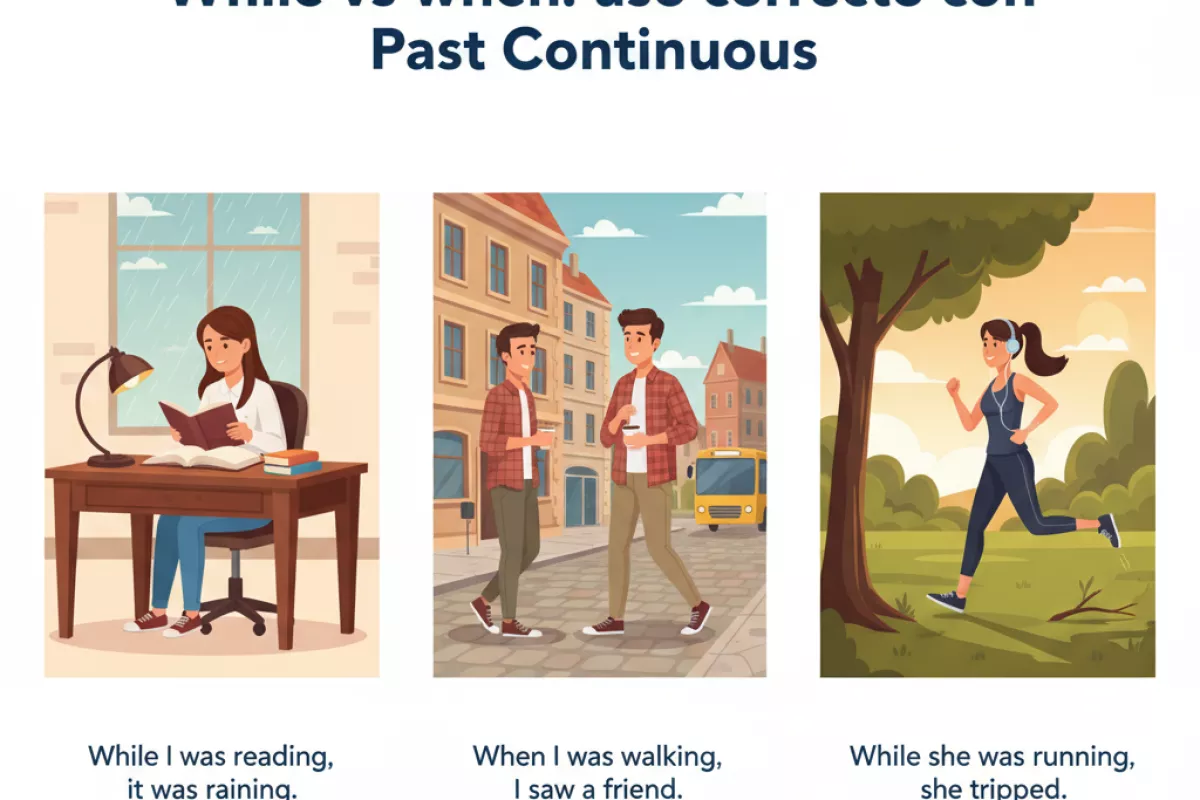 Aprende la diferencia básica entre while y when en Past Continuous: while para acciones largas en progreso y when para interrupciones. Verás cómo combinarlos con distintos tiempos, errores comunes al elegir, ejemplos comparados claros y un ejercicio práctico final.
Cuando describes dos acciones en el pasado y una estaba en curso mientras otra la interrumpe, elegir entre while y when cambia la imagen de la situación. Con el Past Continuous, normalmente usamos una parte de la frase para crear el contexto y otra para señalar el momento concreto. Aquí aprenderás cómo suenan en conversaciones reales, los errores más comunes de hispanohablantes y una forma rápida de elegir sin traducir palabra por palabra.
Diferencia básica entre while y when
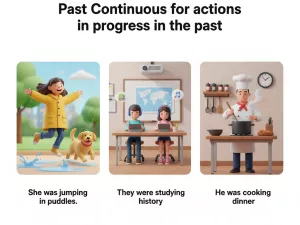
En pasado, while y when sirven para unir dos acciones y mostrar cómo se relacionan en el tiempo. La idea práctica es distinguir entre una acción que funciona como “fondo” (algo en progreso) y otra que entra como “evento” (algo puntual) o como “momento” que marca el inicio.
Con Past Continuous, lo más habitual es usar while para destacar una acción larga o en desarrollo, y when para introducir una acción corta en Past Simple que interrumpe o ocurre durante ese proceso. Aun así, when también puede usarse con acciones más largas si el foco está en el momento en que algo ocurre.
| Conector | Patrón típico | Qué enfatiza |
|---|---|---|
| while | Past Continuous + while + Past Continuous | Dos acciones simultáneas en progreso |
| while | Past Continuous + while + Past Simple | Una acción en progreso como contexto temporal |
| when | Past Continuous + when + Past Simple | Evento puntual que sucede durante/interrumpe el proceso |
| when | Past Simple + when + Past Simple | Secuencia de eventos o “en el momento en que…” |
Regla rápida para elegir
- Usa while si quieres subrayar duración o simultaneidad: “mientras (durante un rato)”.
- Usa when si quieres subrayar el momento en que algo ocurre: “cuando / en el momento en que”.
- Si una acción “entra” y cambia la situación, normalmente va con when + Past Simple.
Patrones frecuentes con ejemplos
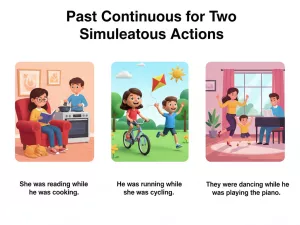
- Past Continuous + while + Past Continuous: I was cooking while he was setting the table (poner la mesa).
- Past Continuous + while + Past Continuous: They were studying while we were watching TV.
- Past Continuous + while + Past Simple: I was driving while it rained (llovía) heavily.
- Past Continuous + while + Past Simple: She was working while the kids played outside.
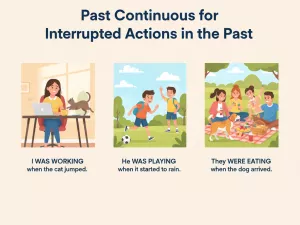
- Past Continuous + when + Past Simple: I was taking a shower when the phone rang (sonó).
- Past Continuous + when + Past Simple: We were having dinner when the lights went out (se apagaron).
- Past Continuous + when + Past Simple: He was walking home when he saw an accident (accidente).
- Past Continuous + when + Past Simple: I was sleeping when the alarm went off (se disparó/sonó).
- Past Simple + when + Past Simple: When I arrived, they started the meeting (empezaron).
- Past Simple + when + Past Simple: She called me when she got home (llegó a casa).
- When + Past Simple, Past Continuous: When the lesson started, I was still looking for my notebook (cuaderno).
- While + Past Continuous, Past Simple: While we were talking, someone knocked (llamó) at the door.
Errores típicos y cómo evitarlos
- Usar while con una acción puntual: While the phone rang… suena poco natural; mejor: When the phone rang…
- Olvidar el contraste de tiempos: si hay interrupción, suele ser Past Continuous (proceso) + when + Past Simple (evento).
- Confundir simultaneidad con secuencia: while suele implicar “al mismo tiempo”; when puede ser “justo en ese momento” o “después de que”.
While para acciones largas
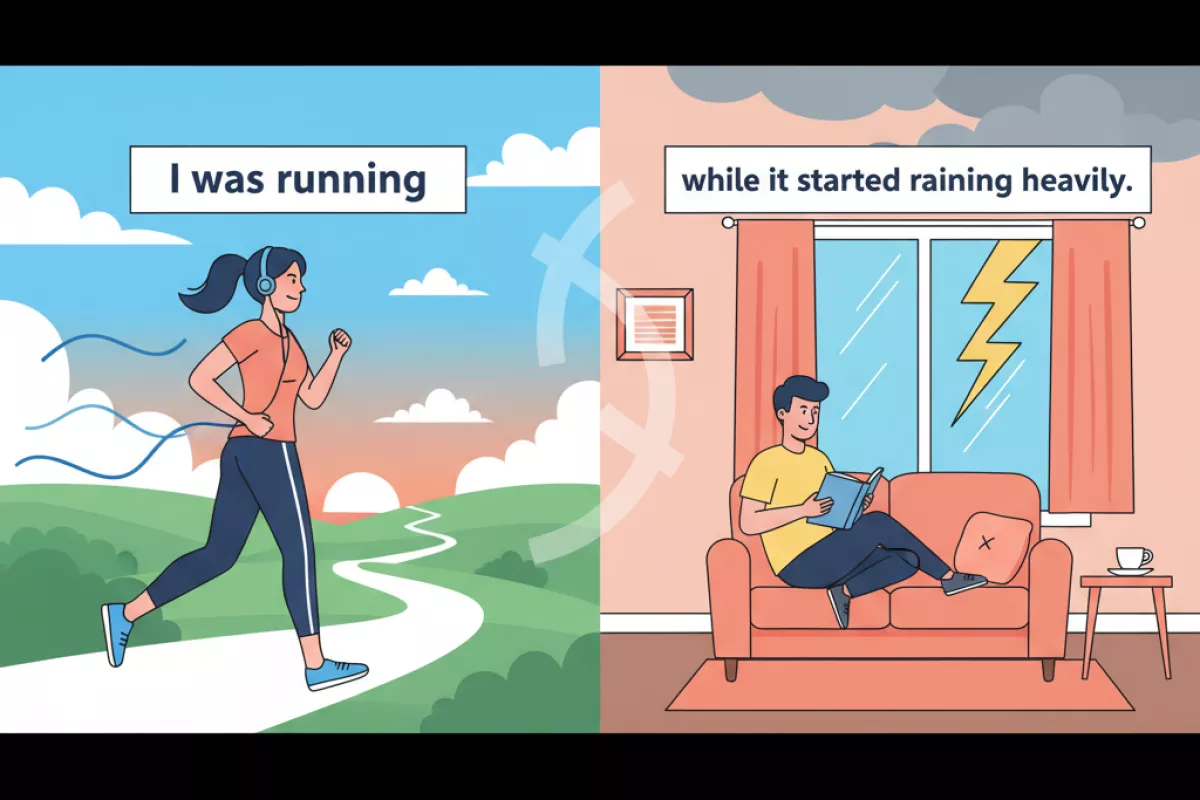
Se usa while para situar una acción en progreso como “marco temporal” de otra acción. La idea clave es que la acción introducida por while suele durar un tiempo y, por eso, encaja muy bien con el Past Continuous (was/were + verbo en -ing) cuando hablamos del pasado.
En la práctica, esta estructura ayuda a describir dos acciones que ocurren a la vez o una acción larga durante la cual sucede algo más. En español suele equivaler a “mientras” o “mientras que”, y normalmente se entiende como un intervalo, no como un instante.
Patrón típico con Past Continuous
El esquema más común es: While + Past Continuous para la acción larga, y luego otra acción que ocurre durante ese periodo (a menudo en Past Simple si es un evento puntual).
- While + was/were + -ing, + Past Simple (evento corto dentro de la acción larga).
- Past Simple + while + was/were + -ing (mismo significado, cambia el orden).
- While + was/were + -ing, + was/were + -ing (dos acciones simultáneas y duraderas).
Ejemplos claros (acción en progreso como contexto)
- While I was studying, my phone rang. (estaba estudiando / sonó)
- While she was driving, it started to rain. (estaba conduciendo / empezó a llover)
- While we were having dinner, the lights went out. (estábamos cenando / se apagaron)
- He fell asleep while he was watching TV. (se quedó dormido / estaba viendo)
- While they were walking home, they met an old friend. (estaban caminando / se encontraron)
- While I was talking to the teacher, the bell rang. (estaba hablando / sonó)
- She found her keys while she was cleaning the kitchen. (encontró / estaba limpiando)
- While the kids were playing, I was cooking. (jugaban / cocinaba)
- While we were waiting, someone knocked at the door. (esperábamos / llamaron)
- I hurt my ankle while I was running. (me lastimé / estaba corriendo)
- While he was explaining the problem, I took notes. (explicaba / tomé apuntes)
- While the train was leaving, she realized she forgot her bag. (salía / se dio cuenta)
Comparación útil: dos acciones largas vs. una larga + una puntual
| Tipo de situación | Estructura frecuente | Ejemplo |
|---|---|---|
| Acción larga + evento puntual | While + Past Continuous + Past Simple | While I was reading, the doorbell rang. (timbre) |
| Dos acciones largas simultáneas | While + Past Continuous + Past Continuous | While I was working, she was studying. (ella estaba estudiando) |
| Evento puntual primero, contexto después | Past Simple + while + Past Continuous | I met him while I was traveling. (viajaba) |
| Contexto con “mientras” al inicio | While + Past Continuous, + (resto) | While we were waiting, I checked my email. (revisé) |
Errores comunes y cómo evitarlos
- Tratar “while” como instante: si lo que quieres expresar es un momento puntual (“cuando ocurrió X”), suele funcionar mejor when con Past Simple.
- Usar Past Simple para la acción larga sin intención: “While I studied, …” suena más a hábito o a acción vista como completa; para énfasis en el proceso, prefiere “While I was studying, …”.
- Olvidar la coma: cuando la oración empieza con “While…”, es normal usar coma antes de la segunda parte: “While I was cooking, …”. Si “while” va en medio, normalmente no hace falta.
- Confundir “during” con “while”: “during” va con un sustantivo (“during the meeting” = durante la reunión), mientras que “while” introduce una oración con verbo (“while we were meeting” = mientras nos reuníamos).
When para interrupciones
En narraciones en pasado, when se usa a menudo para introducir un evento puntual que corta o cambia el curso de una acción en progreso. La acción “de fondo” suele ir en Past Continuous (was/were + -ing) y el evento que irrumpe se expresa normalmente en Past Simple.
La idea práctica es distinguir entre duración y punto de impacto: lo que estaba ocurriendo (actividad en desarrollo) frente a lo que ocurrió de repente (interrupción). Este patrón es especialmente común con verbos de acción breve (arrive, call, knock, stop) y con situaciones inesperadas.
Patrón básico: acción en progreso + evento que interrumpe
- Past Continuous + when + Past Simple: la acción larga estaba en curso y el evento puntual la interrumpe.
- When + Past Simple + Past Continuous: mismo significado, pero el foco empieza en el evento que irrumpe.
- En muchos casos, la “interrupción” no detiene físicamente la acción, pero sí marca un cambio relevante en la historia (por ejemplo, un descubrimiento o una noticia).
| Estructura | Qué enfatiza | Ejemplo |
|---|---|---|
| Past Continuous + when + Past Simple | La acción en progreso (contexto) | I was cooking when the phone rang. |
| When + Past Simple + Past Continuous | El evento puntual (impacto) | When the phone rang, I was cooking. |
| Past Continuous + when + Past Simple (cambio de situación) | Un giro en la narración | We were walking home when it started to rain. |
| Past Continuous + when + Past Simple (interrupción por persona) | Entrada inesperada | She was studying when her brother came in. |
Ejemplos útiles (interrupciones típicas)
- I was taking a shower when the doorbell rang.
- They were having dinner when the lights went out.
- We were talking when someone interrupted us.
- He was driving when he saw an accident.
- I was falling asleep when my phone buzzed.
- She was writing an email when her computer crashed.
- The kids were playing when it started raining.
- We were waiting for the bus when it arrived.
- I was reading when I heard a strange noise.
- He was explaining the plan when the manager walked in.
- They were watching a movie when the power went off.
- I was crossing the street when a car stopped suddenly.
- She was leaving when she realized she forgot her keys.
- We were working when the fire alarm went off.
- He was sleeping when the baby started crying.
Errores frecuentes y cómo evitarlos
- Usar Past Continuous en los dos verbos sin motivo: si el segundo hecho es puntual, suele ir en Past Simple. Correcto: I was studying when the phone rang (rang = sonó).
- Confundir “evento puntual” con “acción repetida”: si algo ocurrió varias veces, puede cambiar el enfoque. Ej.: I was studying when he kept calling (kept calling = “no paraba de llamar”).
- Elegir mal el verbo del evento: verbos como arrive, ring, knock, start, stop suelen funcionar bien como interrupción porque describen un punto claro.
- Olvidar la coma cuando se empieza por “When…”: When the phone rang, I was cooking. (coma tras la primera cláusula).
Cuándo no suena natural usar este patrón
- Si ambos hechos son largos y paralelos, suele encajar mejor while (dos acciones en desarrollo) en lugar de presentar uno como interrupción.
- Si el “evento” no es realmente un punto, sino un proceso, conviene revisar el tiempo verbal: “was happening” vs “happened” según si se entiende como proceso o como hecho puntual.
Combinación con tiempos verbales
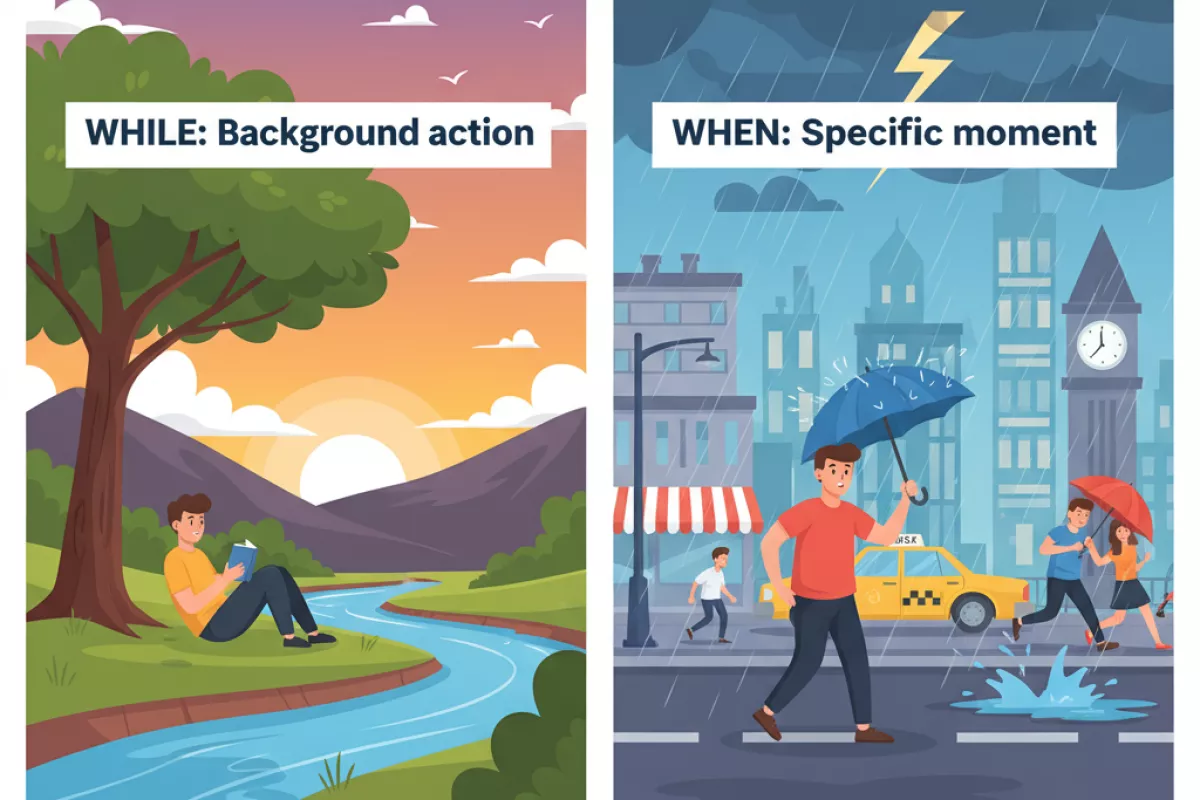
Para elegir bien entre while y when no basta con memorizar “uno es largo y el otro corto”: lo más útil es ver qué tiempo verbal aparece en cada parte de la oración y qué relación temporal se quiere expresar (acción en progreso, interrupción, simultaneidad o secuencia).
En términos prácticos, while suele introducir el “fondo” (una acción en desarrollo), y when suele marcar el “punto” (un momento concreto o un evento que ocurre y cambia la situación). Aun así, ambos pueden combinarse con varios tiempos si el significado encaja.
Patrones frecuentes con Past Continuous
| Patrón | Uso típico | Ejemplo |
|---|---|---|
| While + Past Continuous, Past Simple | Acción en progreso + interrupción o evento puntual | While I was driving, my phone rang (sonó). |
| When + Past Simple, Past Continuous | Evento puntual que enmarca lo que estaba ocurriendo | When the lights went out, we were having dinner (cenando). |
| While + Past Continuous, Past Continuous | Dos acciones simultáneas en progreso | While she was studying, I was working. |
| When + Past Simple, Past Simple | Secuencia de acciones (una ocurre y luego otra) | When I arrived, I called you. |
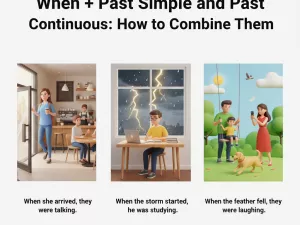
| When + Past Continuous, Past Simple | “Cuando” significa “en el momento en que” dentro de una acción en curso | When I was walking home, I saw an old friend. |
Cómo elegir según la idea temporal
Si la oración necesita un contraste claro entre “proceso” y “evento”, el Past Continuous suele aparecer en la parte que describe el proceso, y el Past Simple en la parte que describe el evento. Para simultaneidad real (dos procesos), es normal usar Past Continuous en ambos lados, especialmente con while.
- Interrupción: acción en progreso + hecho puntual. Ej.: While I was reading, the doorbell rang (sonó).
- Simultaneidad: dos acciones en desarrollo al mismo tiempo. Ej.: While they were talking, we were waiting.
- Marco temporal: un evento fija el momento y se describe lo que estaba ocurriendo. Ej.: When the teacher came in, we were chatting.
- Secuencia: una acción ocurre y después otra (a menudo con Past Simple en ambos). Ej.: When I finished, I went home.
Errores típicos y ajustes útiles
Un fallo común es usar while con un evento demasiado puntual en la cláusula de while. En general, si la acción no puede “durar”, suena más natural con when. Otro punto importante: en inglés, el Past Continuous no “traduce” automáticamente el imperfecto español; se usa cuando se quiere enfatizar el desarrollo de la acción.
- Preferible: When I arrived, she was sleeping (durmiendo). (Llegar es puntual.)
- Preferible: While she was sleeping, I cooked dinner. (Dormir puede durar.)
- Natural: While we were walking, it started to rain (empezó a llover).
- Natural: When it started to rain, we were walking.
- Si hay repetición/hábito en el pasado, suele encajar mejor con when + Past Simple: When I was a child, I played outside every day.
Banco de ejemplos (patrones listos para usar)
Estos modelos ayudan a fijar combinaciones típicas sin depender de una sola regla. Observa qué parte describe el proceso (a menudo Past Continuous) y cuál marca el evento o el cambio (a menudo Past Simple).
- While I was cooking, the smoke alarm went off (se activó).
- While he was explaining, nobody listened.
- While we were watching TV, the power went out (se fue la luz).
- While they were traveling, they met new people.
- While she was working, her computer crashed (se bloqueó).
- When I got home, my parents were waiting.
- When the meeting started, I was taking notes (tomando apuntes).
- When you called, I was in the shower (en la ducha).
- When the bus arrived, we were standing in line (haciendo cola).
- When I opened the door, I heard a strange noise (ruido extraño).
- When she finished, she sent the email.
- When we saw him, he was running.
- While I was studying, my friends were playing soccer (fútbol).
- While the kids were sleeping, we were cleaning the house.
- When the phone rang, I answered immediately (inmediatamente).
- While it was raining, the streets were getting empty (quedándose vacías).
Errores comunes al elegirlos
En Past Continuous, la elección entre while y when no depende solo de “qué suena mejor”, sino del tipo de acción que introduces: si es un proceso en curso (duración) o un evento puntual (interrupción o momento específico). Muchos fallos aparecen cuando se mezcla esa lógica y se termina usando una conjunción que no encaja con el tiempo verbal o con la idea temporal que se quiere expresar.
La clave práctica es fijarse en el patrón: while suele presentar el “fondo” (una acción en progreso), y when suele señalar el “punto” (el momento en que algo ocurre). A partir de ahí, conviene revisar si la oración necesita dos acciones largas, una larga y otra corta, o simplemente un marcador temporal sin énfasis en la duración.
Fallos típicos y cómo corregirlos
- Usar “while” con una acción puntual: “While the phone rang, I was cooking” suele sonar forzado si “rang” es un evento breve. Mejor: “When the phone rang, I was cooking”.
- Usar “when” para dos acciones largas simultáneas: si ambas acciones estaban en progreso, “when” puede perder la idea de simultaneidad. Mejor: “While I was studying, my brother was playing video games”.
- Mezclar Past Continuous en ambas cláusulas sin intención: “When I was driving, I was listening to music” es posible, pero normalmente se prefiere “While I was driving, I was listening to music” para enfatizar dos acciones en curso.
- Olvidar que “when” puede introducir un evento que interrumpe: “I was sleeping while the alarm went off” suele corregirse a “I was sleeping when the alarm went off” (went off = “sonó”/“se activó”, evento puntual).
- Elegir “while” cuando solo se quiere ubicar en el tiempo: “While I arrived, they were talking” es incorrecto porque “arrive” es puntual. Mejor: “When I arrived, they were talking”.
- Confundir “when” con “and”: “I was watching TV when I was eating” no expresa claramente relación temporal; si son simultáneas, mejor “while”, o reescribir: “I was watching TV while I was eating”.
- Usar “while” como si fuera “although”: “While I was tired, I went out” aquí “while” se entiende temporal, no de contraste. Para contraste sería “although” (aunque), no “while”.
- Omitir el verbo “to be” en Past Continuous: “When I driving, it started to rain” debe ser “When I was driving, it started to rain”.
- Combinar “while” con Present Simple al hablar del pasado: “While I study, he called me” debe ajustarse al pasado: “While I was studying, he called me”.
- Usar “when” con un estado prolongado sin matiz de “momento”: “When I was living in Madrid, I was working a lot” suele sonar mejor con “while” si se quiere simultaneidad de periodos: “While I was living in Madrid, I was working a lot”.
- Colocar “when/while” sin aclarar qué acción es el “fondo”: si el lector no identifica qué estaba en progreso y qué ocurrió, la frase pierde precisión. Reordena: “I was taking a shower when the doorbell rang” (doorbell rang = “sonó el timbre”).
- Usar “while” con “suddenly” en la cláusula equivocada: lo repentino suele ir con el evento puntual introducido por “when”: “I was walking home when suddenly I heard a scream” (scream = “grito”).
Patrones que se confunden con frecuencia
| Intención | Conector más natural | Ejemplo correcto |
|---|---|---|
| Acción en progreso + evento puntual | when | I was studying when the lights went out (se apagaron). |
| Dos acciones en progreso al mismo tiempo | while | While I was cooking, she was setting the table (poniendo la mesa). |
| “En el momento en que…” (marcar el instante) | when | When I opened the door, everyone was laughing. |
| “Durante el tiempo que…” (marcar duración) | while | While we were waiting, it was getting colder. |
Cómo evitar el error en 10 segundos
- Si puedes sustituir por “durante el tiempo que…”, normalmente encaja while.
- Si puedes sustituir por “en el momento en que…”, normalmente encaja when.
- Identifica el evento breve: suele ir en Past Simple y a menudo aparece tras when.
- Si ambas acciones son “de fondo” (en progreso), usa Past Continuous en ambas y elige while.
Ejemplos comparativos claros
La diferencia práctica se entiende mejor si piensas en dos tipos de acciones: una acción “de fondo” (más larga, en progreso) y una acción “puntual” (más corta, que irrumpe o marca un momento). En Past Continuous, while suele introducir la acción de fondo, y when suele introducir la acción puntual que ocurre en un punto concreto.
Además, fíjate en el patrón gramatical: while se usa con mucha frecuencia con una cláusula en Past Continuous (was/were + -ing), mientras que when aparece a menudo con Past Simple para señalar el “corte” temporal. Aun así, when también puede usarse con Past Continuous si ambas acciones estaban en progreso al mismo tiempo.
| Idea temporal | Conector típico | Patrón frecuente | Ejemplo |
|---|---|---|---|
| Acción larga interrumpida por una puntual | while + when | While + Past Continuous, when + Past Simple | While I was cooking, the phone rang (sonó el teléfono). |
| Dos acciones en progreso a la vez | while / when | Past Continuous + Past Continuous | While she was studying, I was working. |
| Momento específico en el que algo ocurría | when | When + Past Simple, Past Continuous en la otra cláusula | When I arrived, they were having dinner (cenando). |
| Contexto de fondo (marco temporal) | while | While + Past Continuous, Past Simple o Past Continuous en la otra cláusula | While we were in Paris, we visited the Louvre. |
| Acción puntual dentro de un periodo más largo | when | Past Continuous + when + Past Simple | I was driving when I saw an accident. |
Pares mínimos (cambia el conector y cambia el enfoque)
- While I was taking a shower, the doorbell rang (timbre). / When the doorbell rang, I was taking a shower.
- While he was reading, his glasses broke. / When his glasses broke, he was reading.
- While we were walking home, it started to rain. / When it started to rain, we were walking home.
- While she was talking to her boss, her phone buzzed (vibró). / When her phone buzzed, she was talking to her boss.
- While they were watching TV, the power went out (se fue la luz). / When the power went out, they were watching TV.
Patrones útiles para producir tus propias frases
- While + was/were + -ing +, Past Simple: While I was studying, my brother called.
- Past Continuous + when + Past Simple: I was leaving when you texted (me escribiste).
- While + Past Continuous +, Past Continuous: While we were waiting, they were looking for the tickets.
- When + Past Simple +, Past Continuous: When the teacher came in, the students were chatting (charlando).
- When + Past Continuous +, Past Continuous (dos acciones simultáneas, tono más narrativo): When I was living in London, I was commuting every day (yendo y viniendo al trabajo).
Ejemplos adicionales (situaciones comunes)
- While I was working, my laptop crashed (se colgó).
- I was working when my laptop crashed.
- While we were having lunch, someone knocked on the window (tocó la ventana).
- We were having lunch when someone knocked on the window.
- When I opened the door, the dog was sleeping.
- While the dog was sleeping, the cat was playing with a toy.
- When the movie started, we were still finding our seats (buscando nuestros asientos).
- While the movie was playing, people were whispering (susurrando).
- When I looked away, the child was climbing the chair (subiéndose a la silla).
- While I was explaining the exercise, the projector stopped working.
- When the alarm went off (sonó), I was getting dressed (vistiéndome).
- While she was driving, she was listening to a podcast.
- When I met him, he was wearing a suit (traje).
- While we were discussing the plan, the deadline changed.
Ejercicios prácticos para casa
La forma más rápida de afianzar la diferencia entre while y when con Past Continuous es practicar con escenas: una acción en progreso (fondo) y otra que irrumpe o marca un momento (evento). En los ejercicios, fíjate en dos señales: si la oración describe “durante un periodo” suele encajar while; si señala “en el momento en que ocurrió X”, suele encajar when.
Trabajarás con patrones típicos: while + Past Continuous para la acción larga, y when + Past Simple para el evento puntual. También verás casos donde when puede acompañar Past Continuous si el énfasis es el momento, no la duración.
Guía rápida de patrones (para revisar antes de practicar)
| Patrón | Uso típico | Ejemplo |
|---|---|---|
| while + Past Continuous | Acción en progreso (fondo) | While I was cooking, the phone rang. (mientras cocinaba) |
| when + Past Simple | Evento puntual que interrumpe o marca un momento | I was cooking when the phone rang. (cuando sonó) |
| when + Past Continuous | Momento/etapa en la que algo estaba ocurriendo | When I was living in Lima, I worked nights. (cuando vivía) |
| while + Past Continuous + Past Continuous | Dos acciones simultáneas en progreso | While she was studying, he was working. |
| Past Continuous + when + Past Simple | Acción larga primero; evento después | They were driving when it started to snow. (empezó a nevar) |
Ejercicio 1: Completa con while o when
- I was walking home ____ I saw an old friend.
- ____ we were having dinner, the lights went out.
- She was reading ____ the baby was sleeping.
- They were playing football ____ it started raining.
- ____ I was looking for my keys, I found an old photo.
- He called me ____ I was taking a shower.
- ____ the teacher was explaining, I was taking notes.
- We were waiting at the bus stop ____ the bus arrived.
- ____ I was working from home, I listened to podcasts.
- The dog barked ____ I was opening the door.
Mostrar respuestas
- when
- While
- while
- when
- While
- when
- While
- when
- When
- when
Ejercicio 2: Elige el tiempo verbal correcto (Past Simple o Past Continuous)
- While I ____ (drive), I ____ (see) a deer on the road.
- When the movie ____ (start), we ____ (look) for our seats.
- She ____ (not/listen) when the manager ____ (ask) her a question.
- While they ____ (study), their neighbors ____ (play) loud music.
- I ____ (cook) when the smoke alarm ____ (go off).
- When I ____ (live) in Madrid, I ____ (take) the metro every day.
- While he ____ (talk), his phone ____ (vibrate).
- We ____ (walk) in the park when it ____ (begin) to rain.
Mostrar respuestas
- was driving / saw
- started / were looking
- wasn’t listening / asked
- were studying / were playing
- was cooking / went off
- was living / took
- was talking / vibrated
- were walking / began
Ejercicio 3: Reescribe cambiando la estructura (sin cambiar el sentido)
- While I was studying, my brother called me.
- We were having lunch when the fire alarm rang.
- While they were traveling, they met a nice couple.
- She was driving when she heard a strange noise.
- While I was cleaning, I found my missing earring. (earring = pendiente)
- He was sleeping when the doorbell rang.
Mostrar respuestas
- I was studying when my brother called me.
- When the fire alarm rang, we were having lunch.
- They were traveling when they met a nice couple.
- When she heard a strange noise, she was driving.
- I was cleaning when I found my missing earring.
- When the doorbell rang, he was sleeping.
Ejercicio 4: Une dos ideas (acción en progreso + evento puntual)
- I / work on a report. The internet / stop.
- They / watch TV. Someone / knock on the door.
- She / run. She / twist her ankle. (twist = torcer)
- We / talk quietly. The baby / wake up.
- He / carry a box. He / drop it.
- I / read on the train. My station / arrive.
Mostrar respuestas
- I was working on a report when the internet stopped.
- They were watching TV when someone knocked on the door.
- She was running when she twisted her ankle.
- We were talking quietly when the baby woke up.
- He was carrying a box when he dropped it.
- I was reading on the train when my station arrived.
Ejercicio 5: Corrige el error (solo una corrección por frase)
- While I arrived, they were having a meeting.
- When we were walking, we saw a rainbow.
- I was sleeping while the alarm rang.
- While she cooked, the guests arrived.
- When I was doing my homework, my friend called me.
- They were arguing while the teacher entered the room.
Mostrar respuestas
- When I arrived, they were having a meeting.
- While we were walking, we saw a rainbow.
- I was sleeping when the alarm rang.
- While she was cooking, the guests arrived.
- I was doing my homework when my friend called me.
- They were arguing when the teacher entered the room.