Preguntas en Past Perfect: reglas y ejemplos claros

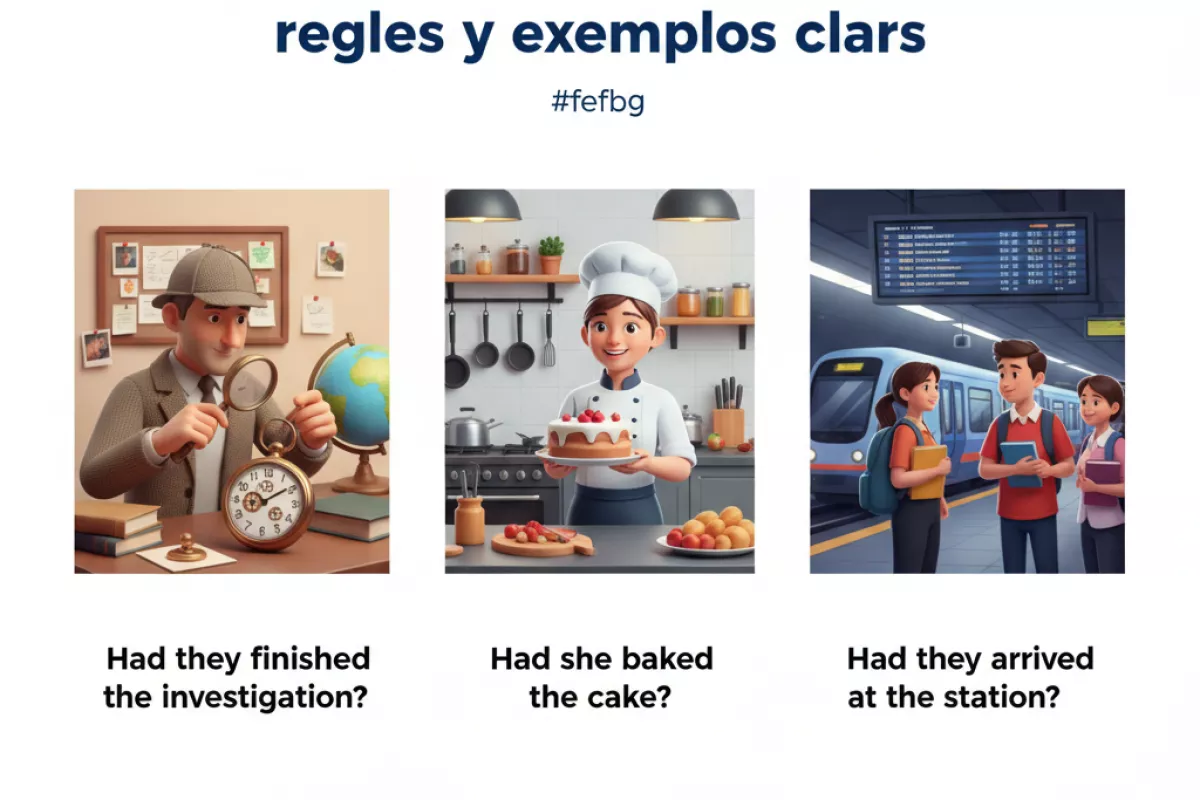 Aprende cómo formar preguntas con el orden correcto de palabras, la inversión con had y el uso adecuado de las partículas interrogativas. Verás la diferencia entre preguntas cortas y completas, errores comunes, ejemplos paso a paso y ejercicios prácticos para afianzar la estructura.
Cuando necesitas preguntar por una acción que ocurrió antes de otro momento en el pasado, el Past Perfect te ayuda a mantener clara la secuencia temporal. En esta guía aprenderás cómo formar preguntas con had, dónde colocar el sujeto y qué cambia entre preguntas breves y preguntas más largas. Con ejemplos cotidianos, te resultará más fácil sonar natural y entender mejor conversaciones reales.
Orden correcto en preguntas
Para formular interrogativas con este tiempo verbal, la clave es identificar dos piezas: el auxiliar y el participio pasado. En Past Perfect, el auxiliar es siempre had, y el verbo principal va en participio (por ejemplo, seen, finished, gone).
En la práctica, el orden cambia respecto a la afirmativa porque el auxiliar se coloca antes del sujeto. A partir de ahí, se mantienen los complementos (objeto, lugar, tiempo) en un orden natural, y solo se añade un elemento extra si la pregunta es de información (wh-).
Patrón base: preguntas de sí/no
Las preguntas cerradas se construyen invirtiendo had y el sujeto. El participio pasado no se mueve y no se conjuga.
- Had + sujeto + participio pasado + complemento + ?
- Had she left before the meeting started?
- Had they finished the report on time?
- Had you seen that movie (película) before?
Patrón con wh-: preguntas de información
Cuando preguntas por un dato concreto, el elemento interrogativo va al inicio. Después se mantiene la misma inversión: wh- + had + sujeto + participio.
- Wh- word + had + sujeto + participio pasado + complemento + ?
- Where had he put the keys?
- Why had they cancelled the trip?
- What had you done before you called me?
- How long had she worked there before she moved?
Tabla de orden: afirmativa vs. interrogativa
| Tipo | Estructura | Ejemplo |
|---|---|---|
| Afirmativa | Sujeto + had + participio + complemento | She had already eaten (ya) dinner. |
| Pregunta sí/no | Had + sujeto + participio + complemento? | Had she already eaten dinner? |
| Pregunta con wh- | Wh- + had + sujeto + participio + complemento? | What had she already eaten? |
| Negativa (pregunta) | Had + sujeto + not + participio + complemento? | Had she not eaten dinner yet? |
Colocación de “not”, “already”, “just” y “yet”
Los adverbios frecuentes suelen ir entre had y el participio, mientras que yet suele aparecer al final en contextos negativos o interrogativos. Mantener estas posiciones ayuda a que la pregunta suene natural.
- Had you already met him before?
- Had she just arrived when you called?
- Had they not heard the news yet?
- Why had he never told you about it?
Ejemplos listos para usar (con el orden correcto)
- Had you locked the door before you left?
- Had he sent the email before the deadline?
- Had they built the house before the storm?
- Had we made a mistake in the calculation?
- Where had she studied before moving here?
- What had they decided before the vote?
- Why had you forgotten my name?
- How had he learned English so fast?
- How long had you known her before you married?
- Which book had you chosen (elegido) before class?
- Had the train left when you arrived?
- Had she broken her phone before buying a new one?
- Had they ever been to London before that trip?
- What time had the store closed when you got there?
- Had you not finished your homework yet?
Inversión con had
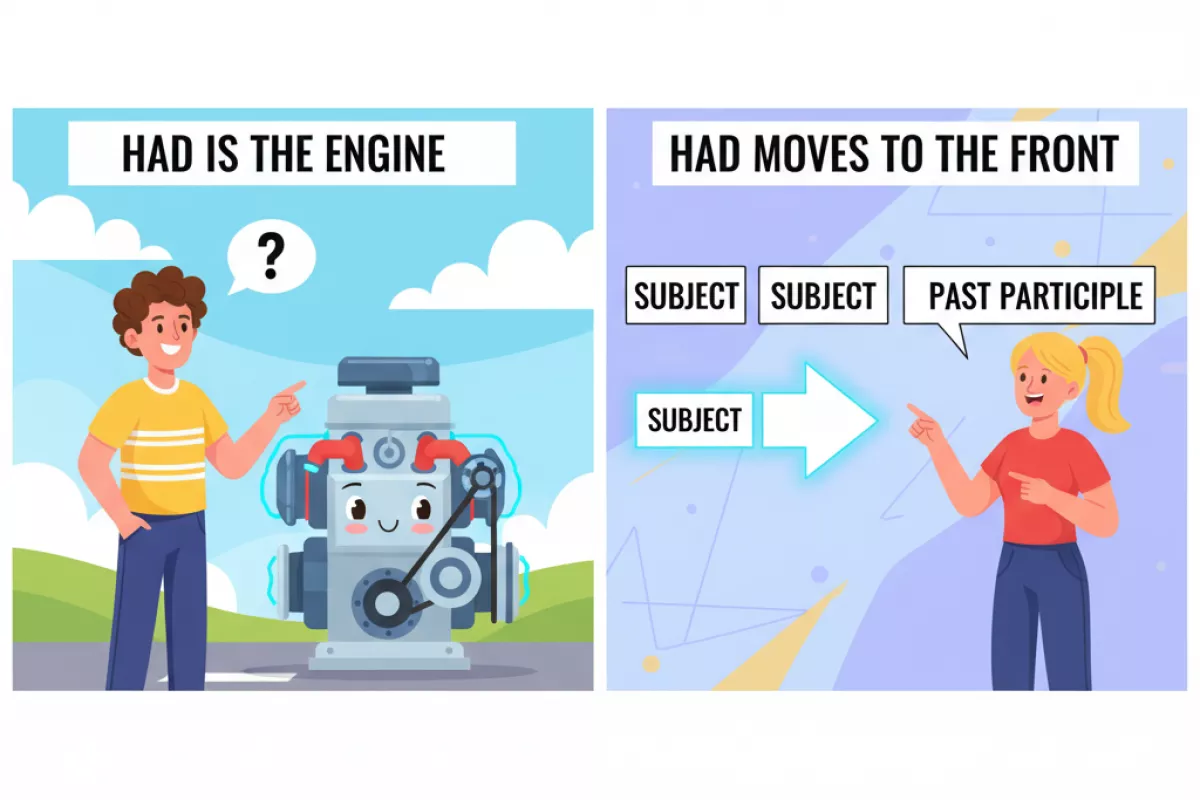
En Past Perfect, el auxiliar had puede colocarse antes del sujeto para formar preguntas de manera directa. Este cambio de orden (auxiliar + sujeto + participio) es el patrón más útil para reconocer y producir interrogativas, tanto en preguntas informativas como en preguntas de sí/no.
La idea clave es que had funciona como el “motor” del tiempo verbal: al preguntar, se mueve al inicio y el verbo principal se mantiene en participio pasado. No se añade did ni se cambia el participio por pasado simple.
Patrón básico y orden de palabras
- Yes/No question: Had + sujeto + participio + complemento + ?
- Wh-question: palabra interrogativa + had + sujeto + participio + complemento + ?
- Negativa en pregunta: Had + sujeto + not + participio + … ? / Hadn’t + sujeto + participio + … ?
Errores típicos que conviene evitar
- No usar did: incorrecto: “Did you had…?”; correcto: “Had you…?”
- No cambiar el participio por pasado simple: incorrecto: “Had you went…?”; correcto: “Had you gone…?”
- No duplicar auxiliares: incorrecto: “Had you had finished…?” solo es correcto si el verbo principal es have (tener).
- Recordar que el orden cambia solo en la pregunta; en afirmativa se mantiene: “You had finished…”
Ejemplos claros (sí/no y con Wh-)
- Had you finished your homework before dinner?
- Had she left when you arrived?
- Had they already eaten (ya) before the meeting started?
- Had he ever visited London before 2019?
- Had we met before that day?
- Had it stopped raining when you went out?
- Had the train departed when they got to the station?
- Had you heard the news before I told you?
- Had she studied enough to pass?
- Had they booked the tickets in advance?
- Where had you parked the car?
- Why had she called you so late?
- What had they decided before the vote?
- When had he last seen her?
- How had you learned about the job?
- Which document had you signed (firmado) earlier?
Contracciones y forma negativa en preguntas
En inglés hablado y en textos informales, es común usar la contracción hadn’t. En registros más formales, se prefiere separar not. Ambas opciones mantienen el mismo orden interrogativo.
- Hadn’t you told me about it before?
- Had she not seen the email?
- Hadn’t they arrived by the time the show began?
- Why hadn’t he answered earlier?
Tabla de referencia: estructuras y ejemplos
| Tipo de pregunta | Estructura | Ejemplo |
|---|---|---|
| Sí/No | Had + sujeto + participio + …? | Had you seen that movie before? |
| Con Wh- | Wh- + had + sujeto + participio + …? | Where had she gone? |
| Negativa (sin contracción) | Had + sujeto + not + participio + …? | Had they not finished the report? |
| Negativa (contracción) | Hadn’t + sujeto + participio + …? | Hadn’t he called you before? |
| Con “already / yet” | Had + sujeto + already/yet + participio + …? | Had she already left? |
Uso práctico: cuándo elegir esta forma
- Para preguntar por una acción anterior a otra en el pasado: “Had you locked the door before you left?”
- Para comprobar una condición previa: “Had they agreed before the announcement?”
- Para pedir detalles con Wh- cuando el orden temporal importa: “What had he done before the accident?”
- Para expresar sorpresa o contraste con already (ya) o ever (alguna vez): “Had you ever tried sushi before?”
Uso de palabras interrogativas
Cuando una pregunta en Past Perfect necesita un dato específico (persona, lugar, motivo, cantidad, etc.), se añade una palabra interrogativa al inicio. La estructura base no cambia: se mantiene el auxiliar had antes del sujeto, y el verbo principal va en participio pasado.
La idea clave es separar dos decisiones: (1) qué información quieres pedir (elige who/what/where/when/why/how y sus combinaciones) y (2) si preguntas por el sujeto o por el complemento. Si preguntas por el complemento, usas inversión (had + sujeto); si preguntas por el sujeto, normalmente no hay inversión porque la palabra interrogativa ya ocupa el lugar del sujeto.
Patrones básicos con inversión (preguntas por el complemento)
- Wh- word + had + sujeto + participio + (resto)?
- How + had + sujeto + participio + (resto)?
- How much / How many + had + sujeto + participio + (resto)?
Tabla de palabras interrogativas y ejemplos en Past Perfect
| Palabra interrogativa | Qué pide | Ejemplo |
|---|---|---|
| What | Cosa / acción | What had you decided before the meeting? |
| Where | Lugar | Where had they parked the car? |
| When | Momento | When had she left the office? |
| Why | Razón | Why had he called you earlier? |
| Who | Persona | Who had you met before you moved? |
| Which | Elección entre opciones | Which book had you recommended to her? |
| How | Manera / proceso | How had they solved the problem? |
| How long | Duración | How long had you lived there before 2019? |
| How many | Cantidad (contable) | How many emails had she sent before noon? |
| How much | Cantidad (no contable) | How much time had they spent on it? (tiempo) |
Cuando la palabra interrogativa es el sujeto (sin inversión)
Si preguntas quién o qué hizo la acción (es decir, la palabra interrogativa funciona como sujeto), lo habitual es mantener el orden afirmativo: Wh- word + had + participio. No aparece un sujeto después de had porque el sujeto ya es who/what.
- Who had called before you arrived?
- Who had taken my keys?
- What had caused the delay?
- What had changed since last week?
Combinaciones frecuentes y errores típicos
- What time para hora exacta: What time had the train left?
- How often para frecuencia: How often had you visited them before you moved?
- How far para distancia: How far had they traveled before they stopped?
- Which one cuando la elección es entre elementos concretos: Which one had you chosen?
- Evita duplicar el auxiliar: no uses “What did you had…?”; en este tiempo va had como auxiliar.
- Con how many usa sustantivo plural: How many tickets had you bought? (plural)
- Con how much usa no contable: How much information had they collected? (información)
Preguntas cortas y completas
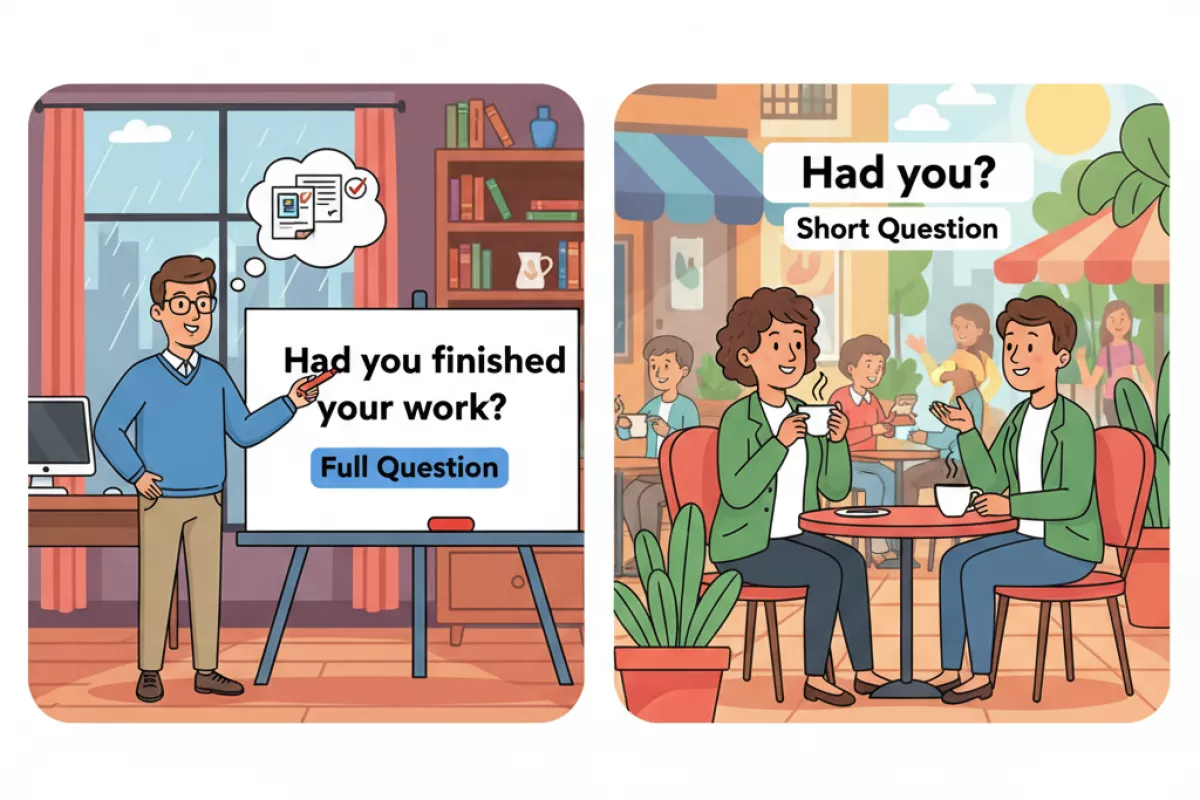
En pasado perfecto, la diferencia principal entre una pregunta completa y una corta no está en el tiempo verbal, sino en la cantidad de información que se expresa. La pregunta completa incluye el verbo principal (en participio) y, si hace falta, complementos; la corta se usa para confirmar o reaccionar, y normalmente se responde con “Yes/No” más un auxiliar.
El patrón base es estable: Had + sujeto + participio pasado. En preguntas cortas, ese mismo auxiliar (had) se mantiene y se evita repetir el resto de la oración, lo que hace la comunicación más natural y rápida.
Patrones esenciales
- Pregunta completa: Had + sujeto + past participle + (complemento)?
- Respuesta corta afirmativa: Yes, sujeto + had.
- Respuesta corta negativa: No, sujeto + hadn’t.
- Con palabra interrogativa (WH-): WH-word + had + sujeto + past participle + (complemento)?
| Tipo | Estructura | Ejemplo |
|---|---|---|
| Completa (sí/no) | Had + sujeto + participio + ...? | Had you finished the report? |
| Corta (respuesta “sí”) | Yes, sujeto + had. | Yes, I had. |
| Corta (respuesta “no”) | No, sujeto + hadn’t. | No, I hadn’t. |
| WH- (información) | WH + had + sujeto + participio + ...? | Why had they left early? |
| Negativa completa | Hadn’t + sujeto + participio + ...? | Hadn’t she met him before? |
Ejemplos listos para usar (completas + respuesta corta)
- Had you eaten already? — Yes, I had.
- Had she called you before the meeting? — No, she hadn’t.
- Had they arrived by 8 o’clock? — Yes, they had.
- Had he studied for the test? — No, he hadn’t.
- Had we met before? — Yes, we had.
- Had the train left when you got there? — Yes, it had.
- Had you ever seen snow (nieve) before that trip? — No, I hadn’t.
- Had Maria told you the truth? — Yes, she had.
- Had the children fallen asleep? — No, they hadn’t.
- Had your phone died before you called a taxi? — Yes, it had.
- Had he written the email before lunch? — No, he hadn’t.
- Had they booked the tickets in advance? — Yes, they had.
- Had she visited London (ciudad) before? — No, she hadn’t.
- Had you checked the address? — Yes, I had.
- Had the movie started when you entered? — Yes, it had.
Errores comunes y cómo evitarlos
- Usar “did” en lugar de “had”: Incorrecto: Did you finished...? / Correcto: Had you finished...?
- Olvidar el participio: Incorrecto: Had you finish...? / Correcto: Had you finished...?
- Responder con el tiempo equivocado: Had she left? — Incorrecto: Yes, she did. / Correcto: Yes, she had.
- Confundir “been” y “gone”: Where had he gone? (se fue) vs. He had been to Rome (ha estado).
Cuándo elegir una pregunta corta
Las formas breves se usan cuando el contexto ya deja claro el verbo principal y solo se necesita confirmar la información. Son típicas en conversaciones, comprobaciones rápidas y reacciones a lo que alguien acaba de decir.
- Para confirmar: “Had you seen it?” — “Yes, I had.”
- Para negar de forma simple: “Had they paid?” — “No, they hadn’t.”
- Para evitar repetir detalles ya mencionados: “Had he told you?” — “Yes, he had.”
Errores comunes en preguntas
Al formular interrogativas con este tiempo verbal, los fallos suelen venir de dos fuentes: el orden de palabras (auxiliar + sujeto) y la elección entre Past Perfect y Past Simple según la secuencia temporal. Tener claro el patrón base ayuda a evitar preguntas “casi correctas” que suenan poco naturales.
La estructura más estable es: Had + sujeto + participio pasado (y, si hace falta, complemento). En preguntas con partícula, la partícula va al inicio: Wh- + had + sujeto + participio. A partir de ahí, conviene vigilar negaciones, contracciones y el uso de been/gone, porque son focos frecuentes de confusión.
Fallos típicos de forma (orden y auxiliares)
- Usar “did” en lugar de “had”: Did you had finished? → Had you finished?
- No invertir auxiliar y sujeto: You had finished? → Had you finished?
- Duplicar el auxiliar: Had you had finished? (salvo casos muy específicos con have como verbo principal) → Had you finished?
- Confundir “had” con “has/have”: Have you left before he arrived? (si es pasado) → Had you left before he arrived?
- Olvidar el participio pasado: Had you finish? → Had you finished?
- Usar pasado simple en vez de participio: Had you went? → Had you gone?
- Colocar mal la partícula interrogativa: You had met her where? → Where had you met her?
- Mezclar el orden con adverbios: Had you already finished? (correcto) vs. Already had you finished? (poco natural en la mayoría de contextos)
Errores de uso (cuándo elegir Past Perfect)
- Usarlo sin una referencia clara a otro momento pasado: Had you eaten? (sin contexto) → mejor Did you eat? si solo preguntas por un hecho pasado.
- Elegirlo cuando el orden temporal ya es obvio: con conectores como after, muchas veces basta el pasado simple: After you arrived, did you call? (a menudo preferible) en lugar de forzar Had you arrived...
- No usarlo cuando sí hay “pasado del pasado”: Did you leave before he arrived? (posible, pero menos preciso) → Had you left before he arrived?
- Confundir duración con anterioridad: Had you lived there for years? funciona si se entiende “hasta ese punto del pasado”; si preguntas por un periodo terminado sin ancla, suele encajar mejor Did you live there for years?
Negación y contracciones en preguntas
En interrogativas negativas, el inglés suele preferir la contracción, pero el orden no cambia: el auxiliar sigue antes del sujeto. Además, conviene no mezclar la negación con formas que ya incluyen el auxiliar, porque aparecen duplicaciones.
- Orden incorrecto con “not”: Had not you seen it? → Had you not seen it? (formal) o Hadn’t you seen it?
- Negación mal contraída: Had’nt you... → Hadn’t you...
- Doblar negación/auxiliar: Didn’t you had gone? → Hadn’t you gone?
- Evitar “hadn’t” en preguntas retóricas sin intención: Hadn’t you called? suele implicar sorpresa o reproche; si solo pides información, Had you called? es más neutral.
Participios irregulares que causan tropiezos
| Verbo | Error frecuente | Forma correcta en la pregunta |
|---|---|---|
| go | Had you went? | Had you gone? |
| see | Had you saw it? | Had you seen it? |
| do | Had you did it? | Had you done it? |
| write | Had you wrote? | Had you written? |
| take | Had you took it? | Had you taken it? |
| eat | Had you ate? | Had you eaten? |
Matices que confunden a hispanohablantes (patrones útiles)
- Been vs gone: Had you been to London? (haber estado) pregunta por experiencia; Had you gone to London? sugiere “habías ido” (movimiento) y puede sonar incompleto sin contexto.
- How long + duración: How long had you known her? (cuánto tiempo) es más natural que intentar traducir literalmente “¿desde cuándo?” con estructuras poco idiomáticas.
- Before y el ancla temporal: Had you finished before he arrived? funciona porque he arrived fija el punto de referencia en el pasado.
- Evitar traducción literal de “ya”: Had you already eaten? (ya) es correcto; pero Had you eaten already? también es posible y el énfasis cambia ligeramente.
- Con verbos de estado (know, believe, like): suelen aparecer en preguntas de anterioridad con sentido de duración: Had you known about it for long?
Ejemplos paso a paso
Para formular preguntas con el pasado perfecto, conviene pensar en dos piezas: el auxiliar had y el participio pasado del verbo principal. La pregunta se construye invirtiendo el orden típico de la afirmación: en lugar de “Sujeto + had + participio”, pasas a “Had + sujeto + participio…?”.
La idea práctica es ubicar dos momentos en el pasado: uno “más antiguo” (past perfect) y otro “más reciente” (past simple u otro marcador temporal). En las preguntas, ese contraste suele aparecer con expresiones como before (antes), by the time (para cuando) o already (ya), que ayudan a aclarar qué acción ocurrió primero.
1) De afirmación a pregunta (mismo significado)
-
Afirmación: She had finished the report.
Paso 1: Identifica el auxiliar: had.
Paso 2: Coloca had al inicio.
Pregunta: Had she finished the report?
-
Afirmación: They had left.
Paso 1: Auxiliar: had.
Paso 2: Inversión: Had + sujeto.
Pregunta: Had they left?
-
Afirmación: You had seen that movie.
Paso 1: Verbo principal en participio: seen (visto).
Paso 2: Inversión con had.
Pregunta: Had you seen that movie?
-
Afirmación: Mark had written to her.
Paso 1: Participio: written (escrito).
Paso 2: Inversión del auxiliar.
Pregunta: Had Mark written to her?
-
Afirmación: The train had arrived.
Paso 1: Participio: arrived.
Paso 2: Had al inicio.
Pregunta: Had the train arrived?
2) Preguntas con “antes de” y “para cuando” (dos acciones en el pasado)
Cuando añades un segundo evento pasado, la pregunta suele comprobar si la acción “más antigua” ya estaba completada antes de que ocurriera la otra. En estos casos, el pasado perfecto aparece en la parte que quieres “anclar” como anterior.
- Had you eaten before you went to the party?
- Had she called you before she left?
- Had they met him before the conference started?
- Had he saved the file before the computer crashed?
- Had we locked the door before we went out?
- Had she finished her degree by the time she moved abroad?
- Had the movie started by the time you arrived?
- Had they already agreed by the time the meeting began?
3) “Wh- questions”: qué, cuándo, por qué, dónde, quién
En preguntas con palabra interrogativa, la estructura mantiene la inversión: Wh- + had + sujeto + participio. Lo que cambia es el inicio (what/when/why/where/who/how) y, a veces, el complemento final.
| Tipo | Estructura | Ejemplo |
|---|---|---|
| What | What + had + sujeto + participio…? | What had you decided before the call? |
| When | When + had + sujeto + participio…? | When had she last seen him? |
| Why | Why + had + sujeto + participio…? | Why had they cancelled the trip? |
| Where | Where + had + sujeto + participio…? | Where had he parked the car? |
| Who | Who + had + participio…? | Who had taken my keys? |
| How | How + had + sujeto + participio…? | How had you learned about the job? |
4) Negativas en forma de pregunta (para confirmar una sospecha)
Para preguntar en negativo, colocas not después de had (o usas la contracción hadn’t). Este formato es común cuando esperas que la respuesta sea “sí” y buscas confirmación.
- Hadn’t you told me about the change?
- Had she not booked the tickets?
- Hadn’t they already paid?
- Had he not heard the news?
- Hadn’t we met before?
5) Errores típicos y corrección rápida
- Error: Did you had finished? Corrección: Had you finished? (no se combina did con had)
- Error: Had you finish? Corrección: Had you finished? (falta el participio)
- Error: Had she went? Corrección: Had she gone? (go → participio irregular gone)
- Error: When you had arrived? Corrección: When had you arrived? (en pregunta, el auxiliar va antes del sujeto)
- Error: Had they already went? Corrección: Had they already gone? (participio correcto)
Ejercicios prácticos para casa
La forma más rápida de dominar las interrogativas con Past Perfect es automatizar el patrón Had + sujeto + participio y practicar cuándo se usa: para preguntar por una acción anterior a otra en el pasado. En estas actividades, céntrate en mantener el orden correcto y en elegir el participio adecuado.
También conviene fijarse en los marcadores de tiempo y en el contexto: a menudo aparece una segunda referencia en pasado (por ejemplo, before (antes), by the time (para cuando), when (cuando)). Eso te ayuda a decidir si la pregunta necesita Past Perfect o basta con Past Simple.
Ejercicio 1: Ordena las palabras (preguntas)
- you / had / finished / before / dinner / ?
- she / had / ever / seen / that film / before / ?
- they / had / left / when / you / arrived / ?
- what / he / had / said / ?
- where / you / had / put / the keys / ?
- why / she / had / called / him / ?
- how long / they / had / lived / there / before / moving / ?
- had / we / met / before / ?
Mostrar respuestas
- Had you finished before dinner?
- Had she ever seen that film before?
- Had they left when you arrived?
- What had he said?
- Where had you put the keys?
- Why had she called him?
- How long had they lived there before moving?
- Had we met before?
Ejercicio 2: Completa con had + participio (preguntas)
- _____ you _____ (eat) before you went to the gym?
- What _____ she _____ (choose) in the end?
- _____ they _____ (book) the tickets before the prices went up?
- Where _____ he _____ (hide) the letter?
- Why _____ you _____ (not tell) me earlier?
- How many times _____ we _____ (try) before it worked?
- _____ Maria _____ (take) the wrong bus? (nombre propio)
- What time _____ the meeting _____ (start) before you joined?
- _____ the kids _____ (fall) asleep before the movie ended?
- How long _____ you _____ (know) him before you trusted him?
Mostrar respuestas
- Had you eaten before you went to the gym?
- What had she chosen in the end?
- Had they booked the tickets before the prices went up?
- Where had he hidden the letter?
- Why had you not told me earlier?
- How many times had we tried before it worked?
- Had Maria taken the wrong bus?
- What time had the meeting started before you joined?
- Had the kids fallen asleep before the movie ended?
- How long had you known him before you trusted him?
Ejercicio 3: Elige la forma correcta (Past Perfect vs. Past Simple) en preguntas
- _____ you (did you go / had you gone) to bed before midnight?
- What _____ he (said / had said) when you asked him?
- _____ they (did they finish / had they finished) the report before the deadline?
- Where _____ she (left / had left) her phone when she lost it?
- Why _____ you (didn’t you call / hadn’t you called) me before you left?
- _____ the train (arrived / had arrived) when you got to the station?
- How long _____ you (lived / had lived) there before you moved?
- What time _____ the store (closed / had closed) that day?
- _____ he (did he meet / had he met) her before the conference?
- When _____ you (did you realize / had you realized) the mistake?
Mostrar respuestas
- Had you gone
- had said
- Had they finished
- had left
- hadn’t you called
- Had the train arrived
- had you lived
- did the store close
- Had he met
- did you realize
Ejercicio 4: Convierte a pregunta (mantén el significado)
- You had already started when I got there.
- She had never flown before that trip.
- They had finished the exam before the bell rang.
- He had forgotten my name.
- We had met at Anna’s party. (nombre propio)
- I had locked the door before I left.
- The show had ended when we arrived.
- You had seen this message before.
Mostrar respuestas
- Had you already started when I got there?
- Had she ever flown before that trip?
- Had they finished the exam before the bell rang?
- Had he forgotten my name?
- Had we met at Anna’s party?
- Had I locked the door before I left?
- Had the show ended when we arrived?
- Had you seen this message before?
Ejercicio 5: Respuestas cortas (Yes/No) y coherencia
- Had you eaten anything before the meeting?
- Had she finished her homework by 8 p.m.?
- Had they ever visited London before 2019? (ciudad)
- Had he called you before he sent the email?
- Had we saved the file before the computer crashed?
- Had the baby fallen asleep before you got home?
- Had you read the instructions before you started?
- Had Maria already left when you arrived?
Mostrar respuestas
- Yes, I had. / No, I hadn’t.
- Yes, she had. / No, she hadn’t.
- Yes, they had. / No, they hadn’t.
- Yes, he had. / No, he hadn’t.
- Yes, we had. / No, we hadn’t.
- Yes, the baby had. / No, the baby hadn’t.
- Yes, I had. / No, I hadn’t.
- Yes, Maria had. / No, Maria hadn’t.