Preguntas en Past Continuous: reglas con ejemplos claros

 Aprende cómo formar preguntas en Past Continuous con el orden correcto de las palabras, incluyendo la inversión del verbo to be y el uso de what, when y why. Verás la diferencia entre preguntas cortas y completas, errores comunes, ejemplos claros paso a paso y un ejercicio práctico final.
¿Te cuesta formar preguntas cuando hablas de acciones que estaban en progreso en un momento concreto del pasado? En esta guía aprenderás a construirlas con was o were + forma en -ing, cuándo usar el verbo auxiliar y cómo cambiar el orden de las palabras sin que suene forzado. Con ejemplos cotidianos, practicarás desde dudas sencillas hasta preguntas más completas para hablar con más fluidez en conversaciones reales.
Orden correcto en preguntas
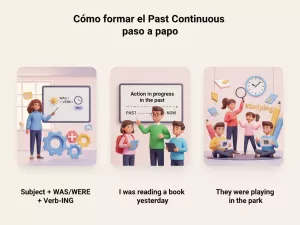
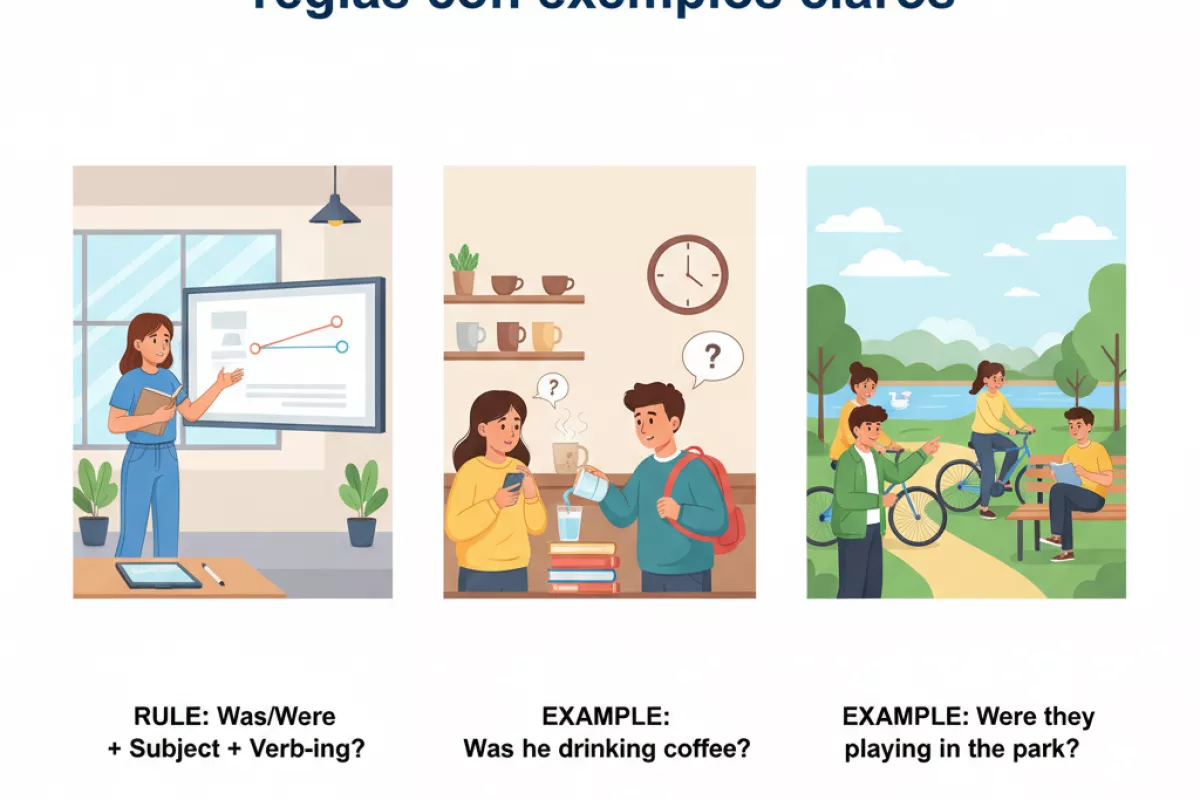
Para formular preguntas en Past Continuous, la clave es mover el auxiliar was/were al inicio y mantener el verbo principal en -ing. Este patrón ayuda a preguntar por acciones en progreso en un momento del pasado, a menudo para dar contexto o para verificar qué ocurría “mientras” sucedía otra cosa.
El orden cambia según el tipo de pregunta: sí/no (solo inviertes auxiliar y sujeto) o con palabra interrogativa (añades wh- al principio y luego sigues el mismo esquema). También conviene distinguir entre sujeto singular/plural para elegir correctamente was o were.
Patrones básicos (estructura)
- Yes/No: Was/Were + sujeto + verbo en -ing + complemento + ?
- Wh-: Wh-word + was/were + sujeto + verbo en -ing + complemento + ?
- Negativa (menos común, pero posible): Was/Were + sujeto + not + verbo en -ing + complemento + ?
| Tipo | Estructura | Ejemplo |
|---|---|---|
| Yes/No | Was/Were + S + V-ing + ...? | Were you studying at 9? (¿estabas estudiando a las 9?) |
| Wh- (información) | Wh- + was/were + S + V-ing + ...? | What were they doing? (¿qué estaban haciendo?) |
| Con negación | Was/Were + S + not + V-ing + ...? | Was she not listening? (¿no estaba escuchando?) |
| Wh- sobre el sujeto | Who + was/were + V-ing + ...? | Who was calling you? (¿quién te estaba llamando?) |
Detalles que suelen causar errores
- Elección de was/were: was con I/he/she/it; were con you/we/they.
- Inversión obligatoria: en preguntas, el auxiliar va antes del sujeto: Were you…? (no: “You were…?” salvo en habla muy informal).
- Wh- al inicio: la palabra interrogativa va primero: Where were you going? (¿a dónde ibas?).
- Pregunta por el sujeto: con who como sujeto, no se añade “do/does/did” y el orden cambia: Who was talking? (¿quién estaba hablando?).
- Complementos de tiempo: suelen ir al final: … at 8, … yesterday (ayer), … last night (anoche).
Ejemplos listos para usar (variados)
- Was he working late? (¿estaba trabajando hasta tarde?)
- Were they waiting outside? (¿estaban esperando afuera?)
- Were you sleeping when I called? (¿estabas durmiendo cuando llamé?)
- What was she reading? (¿qué estaba leyendo?)
- Where were you living in 2019? (¿dónde vivías en 2019?)
- Why were they laughing? (¿por qué se estaban riendo?)
- Who was using my laptop? (¿quién estaba usando mi portátil?)
- Who were you talking to? (¿con quién estabas hablando?)
- Was it raining at noon? (¿estaba lloviendo al mediodía?)
- Were we going too fast? (¿íbamos demasiado rápido?)
- What were you thinking about? (¿en qué estabas pensando?)
- Were they not listening to the instructions? (¿no estaban escuchando las instrucciones?)
- When were you leaving? (¿cuándo te ibas?)
- Was she wearing a coat? (¿llevaba un abrigo?)
- Were the kids playing in the yard? (¿estaban jugando los niños en el patio?)
- What was happening when the lights went out? (¿qué estaba pasando cuando se apagaron las luces?)
Inversión del verbo to be
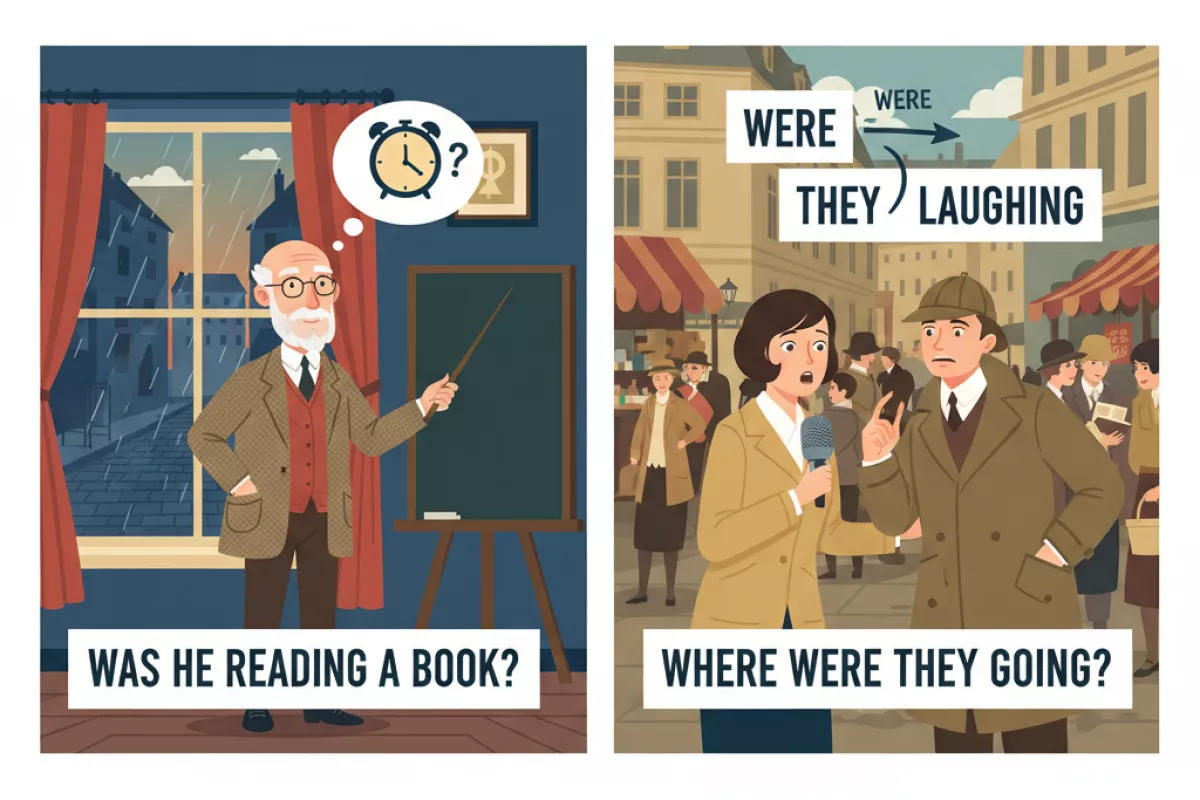
Para formar preguntas en Past Continuous, el cambio clave es el orden: el auxiliar was/were pasa delante del sujeto. Esta inversión te permite preguntar por una acción en progreso en un momento del pasado, sin añadir do/does/did.
La idea práctica es simple: mantienes el verbo en -ing y solo mueves was/were al inicio. Después, puedes completar la pregunta con complementos de tiempo, lugar o con una palabra interrogativa (what, where, why, etc.).
Patrón básico (sí/no)
En las preguntas cerradas, el esquema es:
- Was/Were + sujeto + verbo -ing + complemento?
Recuerda elegir was con I/he/she/it y were con you/we/they.
| Tipo | Estructura | Ejemplo |
|---|---|---|
| Pregunta sí/no | Was/Were + sujeto + verbo -ing + …? | Were they waiting outside (afuera)? |
| Con palabra interrogativa | Wh- + was/were + sujeto + verbo -ing + …? | What was she doing at 8 pm? |
| Negativa (sí/no) | Was/Were + sujeto + not + verbo -ing + …? | Was he not listening? |
| Negativa contraída | Wasn’t/Weren’t + sujeto + verbo -ing + …? | Weren’t you studying? |
Ejemplos variados de preguntas sí/no
- Was I speaking too fast?
- Was she working late?
- Was he driving carefully?
- Was it raining again?
- Were you waiting for me?
- Were we sitting in the right place?
- Were they talking about the exam?
- Were your friends staying at home?
- Was the dog barking (ladrando) all night?
- Were the kids sleeping?
- Was your phone charging?
- Were you wearing a coat?
Preguntas con palabra interrogativa (Wh-)
Cuando necesitas información específica, colocas la palabra interrogativa al principio y mantienes el auxiliar antes del sujeto. El orden no cambia: la inversión sigue siendo was/were + sujeto.
- What were they discussing?
- Where was he going?
- Why were you laughing?
- When was she leaving?
- Who was calling you? (who = quién)
- Which bus were you taking? (which = cuál)
- How were they feeling?
- What time were you arriving?
- Where were we meeting?
- Why was it taking so long?
Errores típicos y cómo evitarlos
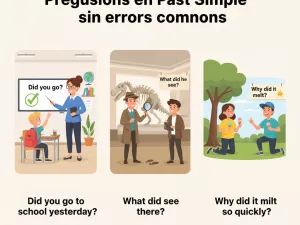
- No uses did: no es Did you were studying?; es Were you studying?.
- No inviertas el -ing: el verbo principal se queda igual; solo se mueve was/were.
- Cuidado con la concordancia: Was they…? es incorrecto; debe ser Were they…?.
- Negación bien colocada: Was not va antes del verbo en -ing: Was he not paying attention?.
Uso de what, when y why
En preguntas con Past Continuous, los interrogativos what, when y why ayudan a precisar información distinta: qué acción estaba en progreso, en qué momento ocurría o cuál era la razón. Se combinan con la estructura interrogativa típica del tiempo: Wh- + was/were + sujeto + verbo en -ing.
La idea clave es que el Past Continuous enfoca una acción “en desarrollo” en el pasado; por eso, estas preguntas suelen pedir contexto alrededor de un momento, una interrupción o una situación temporal. En muchos casos, la respuesta natural también usa Past Continuous, aunque a veces se responde con Past Simple si se menciona un evento puntual.
Patrones básicos con estructura
| Interrogativo | Patrón en Past Continuous | Qué busca |
|---|---|---|
| What | What was/were + sujeto + verbo-ing? | La acción en progreso (qué estaba haciendo) |
| When | When was/were + sujeto + verbo-ing? | El momento o tramo temporal (cuándo) |
| Why | Why was/were + sujeto + verbo-ing? | La causa o intención (por qué) |
| What + complemento | What + sustantivo + was/were + sujeto + verbo-ing? | Detalle del contexto (qué + cosa/situación) |
What: preguntar por la acción en desarrollo
What se usa para identificar la actividad que estaba ocurriendo en ese momento del pasado. Es frecuente cuando el hablante no vio el inicio o necesita aclarar qué estaba pasando.
- What were you doing at 8 p.m.?
- What was she cooking when you arrived?
- What were they talking about? (about = sobre)
- What was he looking for?
- What were we waiting for?
- What was the dog barking at? (bark = ladrar)
- What were you thinking about?
- What was I saying when you interrupted me?
- What were your friends doing during the storm?
- What was happening outside?
- What were you working on? (work on = trabajar en)
- What was she wearing?
When: ubicar el momento o el periodo
When sirve para situar la acción en una franja temporal. A menudo aparece con referencias como yesterday, last night o con otra acción que funciona como “marco” (por ejemplo, when I called).
- When were you studying for the exam?
- When was he leaving the office?
- When were they staying at that hotel?
- When were you driving on that road?
- When was she meeting him?
- When were we having that conversation?
- When were you feeling sick?
- When was it raining the most?
- When were you living in Madrid?
- When were they planning the trip?
Why: preguntar por la razón o la intención
Why se usa para pedir la causa de una acción en progreso. En respuestas, es común añadir because (porque) o explicar el objetivo con to + verbo (para + infinitivo).
- Why were you shouting? (shout = gritar)
- Why was she crying?
- Why were they arguing?
- Why was he running?
- Why were you calling me so late?
- Why were we waiting outside?
- Why was she ignoring him?
- Why were they laughing?
- Why were you looking at my phone?
- Why was he wearing a suit?
Errores típicos y ajustes útiles
- Orden incorrecto: no es “What you were doing?”, sino “What were you doing?”.
- Confundir was/were: “What was he doing?” vs. “What were they doing?”
- Mezclar tiempos sin intención: si preguntas por una acción en progreso, usa -ing; si preguntas por un hecho puntual, suele encajar mejor Past Simple.
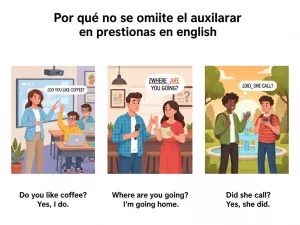
- Omitir el verbo auxiliar: en interrogativas es obligatorio incluir was/were.
Preguntas cortas y completas
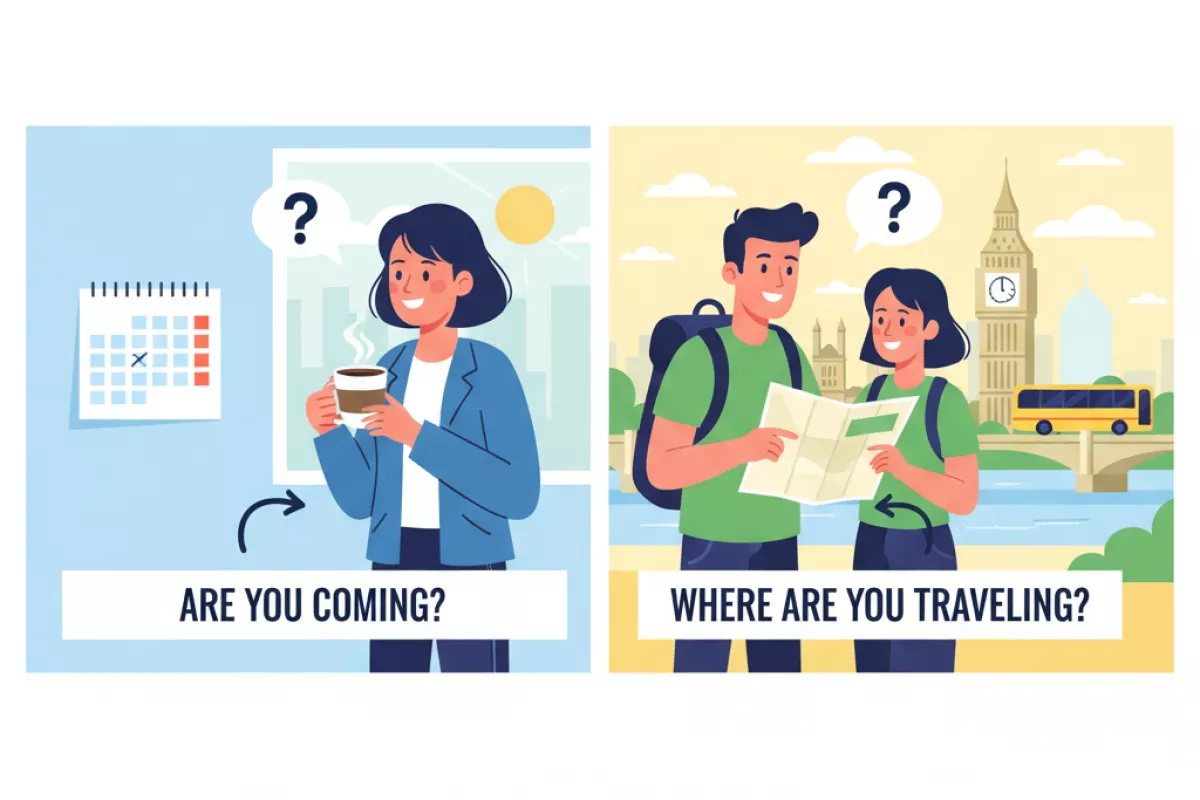
En este tiempo verbal, las preguntas pueden aparecer en dos formatos muy usados: la pregunta corta (tipo “sí/no”, para confirmar una situación) y la pregunta completa (con más información, normalmente con un verbo principal y complementos). La diferencia no es de “gramática nueva”, sino de cuánto contenido añades después del auxiliar.
La idea clave es que el orden se mantiene: auxiliar en pasado + sujeto + verbo en -ing. En las versiones cortas, se omite casi todo lo que no sea imprescindible; en las completas, se añade el resto del mensaje (objeto, lugar, tiempo, motivo, etc.).
Patrones básicos (qué cambia y qué se mantiene)
- Pregunta corta (sí/no): Was/Were + sujeto + verbo en -ing?
- Pregunta completa (sí/no): Was/Were + sujeto + verbo en -ing + complemento?
- Con palabra interrogativa (WH-): WH- + was/were + sujeto + verbo en -ing + complemento?
Tabla comparativa: corta vs completa vs con WH-
| Tipo | Estructura | Ejemplo |
|---|---|---|
| Corta (sí/no) | Was/Were + sujeto + -ing? | Were you studying? |
| Completa (sí/no) | Was/Were + sujeto + -ing + complemento? | Were you studying for the exam (para el examen)? |
| Con WH- | WH- + was/were + sujeto + -ing + complemento? | What were you studying? |
| Corta negativa | Wasn’t/Weren’t + sujeto + -ing? | Weren’t they waiting? |
| Completa negativa | Wasn’t/Weren’t + sujeto + -ing + complemento? | Wasn’t he working yesterday? |
Ejemplos listos para usar (cortas y completas)
- Was she sleeping?
- Was she sleeping on the sofa (en el sofá)?
- Were they talking?
- Were they talking about the project (sobre el proyecto)?
- Was I making noise (ruido)?
- Were you waiting?
- Were you waiting for the bus?
- Was he driving?
- Was he driving too fast (demasiado rápido)?
- Were we having dinner (cena)?
- Were we having dinner at eight?
- Was it raining?
- Was it raining when you arrived?
- Weren’t you listening?
- Weren’t you listening to the instructions (las instrucciones)?
- What were they doing?
- Where was she going?
- Why were you smiling?
Errores típicos al pasar de corta a completa
- No invertir el auxiliar: Incorrecto: “You were studying?” → Correcto: “Were you studying?”
- Olvidar el -ing: Incorrecto: “Was he work?” → Correcto: “Was he working?”
- Confundir was/were: “I/he/she/it” → was; “you/we/they” → were.
- Duplicar el auxiliar: Incorrecto: “Was did he working?” → Correcto: “Was he working?”
- WH- sin estructura de pregunta: Incorrecto: “What you were doing?” → Correcto: “What were you doing?”
Cómo elegir entre una forma u otra
- Usa la versión corta cuando solo necesitas confirmar el hecho: “Were you studying?”
- Usa la completa cuando el contexto exige precisión (lugar, momento, motivo): “Were you studying in the library (en la biblioteca)?”
- Usa WH- cuando falta una pieza de información: “Where were you studying?”
Errores comunes en preguntas
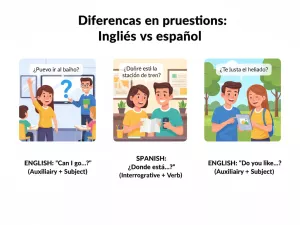
Al formular interrogativas en past continuous, los fallos suelen venir de dos fuentes: el orden de las palabras (auxiliar + sujeto + verbo en -ing) y la elección del auxiliar correcto (was/were). Como en español no movemos un auxiliar al inicio, es fácil mantener el orden de frase afirmativa y que la pregunta suene “traducida”.
La idea clave es comprobar dos cosas antes de dar la frase por buena: 1) que el auxiliar esté delante del sujeto y 2) que el verbo principal esté en forma -ing. A partir de ahí, los problemas típicos se repiten con patrones muy reconocibles.
Fallos de estructura (orden y piezas obligatorias)
- Dejar el orden afirmativo: “You were studying?” en lugar de “Were you studying?” (en preguntas completas, el auxiliar va primero).
- Omitir el auxiliar: “What you doing?” en lugar de “What were you doing?”
- Usar “did” con past continuous: “Did you were working?” en lugar de “Were you working?”
- Mezclar dos auxiliares: “Were you did working?” en lugar de “Were you working?”
- Olvidar el -ing: “Were you work?” en lugar de “Were you working?”
- Confundir “be” con “do”: “Do you working?” en lugar de “Are you working?” (presente) o “Were you working?” (pasado).
- Colocar la palabra interrogativa en posición incorrecta: “You were doing what?” (posible en habla informal con énfasis) vs. “What were you doing?” (forma estándar).
- Negación mal colocada: “Were not you studying?” en lugar de “Weren’t you studying?” o “Were you not studying?” (esta última es correcta pero más formal).
- Duplicar el sujeto: “Were you you waiting?” en lugar de “Were you waiting?”
Elección incorrecta de “was” / “were”
| Sujeto | Auxiliar correcto | Ejemplo de pregunta |
|---|---|---|
| I / he / she / it | was | Was she sleeping? |
| you / we / they | were | Were they talking? |
| nombre singular (John) | was | Was John driving? |
| nombre plural (John and Mary) | were | Were John and Mary arguing? |
- Usar “was” con sujeto plural: “Was they playing?” en lugar de “Were they playing?”
- Usar “were” con tercera persona singular: “Were he working?” en lugar de “Was he working?”
- Confundir “you”: “Was you waiting?” en lugar de “Were you waiting?” (aunque “you” se refiere a una persona, lleva “were”).
Errores con respuestas cortas y coherencia temporal
- Respuesta corta con auxiliar equivocado: “Yes, I was” / “No, I wasn’t” para “Were you…?” debería ser “Yes, I was” (si el sujeto es I) pero la pregunta sería “Were you…?” y la respuesta “Yes, I was” es correcta; el error típico es responder “Yes, I were”.
- Responder con “did”: “Yes, I did” en lugar de “Yes, I was/were”.
- Cambiar de tiempo sin motivo: “Were you studying when I called?” y responder “Yes, I studied” en lugar de “Yes, I was.”
- Confundir past continuous con past simple en la pregunta: “What did you doing?” en lugar de “What were you doing?”
Problemas frecuentes con “when” y “while” en preguntas
En interrogativas con dos acciones, suele haber una acción en progreso (past continuous) y otra que la interrumpe o la sitúa (past simple). El error común es poner ambos verbos en la misma forma sin atender a la función de cada parte.
- Dos acciones en progreso mal planteadas: si ambas estaban ocurriendo a la vez, suele funcionar “while” + past continuous en ambas: “What were you doing while I was cooking?”
- Interrupción sin past simple: “What were you doing when I was arrived?” en lugar de “What were you doing when I arrived?”
- “When” con acción larga y acción corta invertidas sin intención: “When were you calling, I was studying?” en lugar de “What were you doing when I called?”
Microdetalles que confunden a hispanohablantes
- Capitalización de “I”: “were i working?” en lugar de “Were I working?” (la “I” siempre va en mayúscula).
- Contracciones mal formadas: “Weren’t she…?” en lugar de “Wasn’t she…?”
- Verbos que cambian al añadir -ing: “Were you makeing dinner?” en lugar de “Were you making dinner?”
- Ortografía con consonante doble: “Were they runing?” en lugar de “Were they running?”
- Confundir “being”: “Were you be late?” en lugar de “Were you being late?” (si se quiere enfatizar comportamiento temporal) o “Were you late?” (estado, sin -ing).
Ejemplos claros paso a paso
Para formular preguntas con past continuous, la idea central es mantener el orden de “auxiliar + sujeto + verbo en -ing”. En la práctica, casi siempre empiezas moviendo was/were al inicio y dejando el resto de la oración igual.
En estas muestras verás el patrón en tres situaciones frecuentes: preguntas de sí/no, preguntas con palabra interrogativa (what, where, why, etc.) y preguntas negativas. Fíjate también en los marcadores de tiempo típicos: at 7 pm (a las 7), when (cuando), while (mientras).
1) Preguntas de sí/no (Yes/No questions)
Se usan para confirmar si una acción estaba en progreso en un momento del pasado. La estructura es muy estable: Was/Were + sujeto + verbo -ing + complemento?
- Enunciado: You were studying at 9.
Pregunta: Were you studying at 9? - Enunciado: She was driving home.
Pregunta: Was she driving home? - Enunciado: They were waiting outside.
Pregunta: Were they waiting outside? - Enunciado: It was raining.
Pregunta: Was it raining?
2) Preguntas con palabra interrogativa (Wh- questions)
Cuando necesitas información (no solo “sí/no”), colocas la palabra interrogativa delante. El resto mantiene el mismo orden del pasado continuo: Wh- + was/were + sujeto + verbo -ing...?
| Tipo | Estructura | Ejemplo |
|---|---|---|
| Qué | What + was/were + sujeto + -ing...? | What were you doing? |
| Dónde | Where + was/were + sujeto + -ing...? | Where was he going? |
| Por qué | Why + was/were + sujeto + -ing...? | Why were they laughing? |
| Con quién | Who + was/were + sujeto + -ing with...? | Who were you talking with? (con quién) |
| A qué hora | What time + was/were + sujeto + -ing...? | What time was she leaving? |
| Cuál (de varias opciones) | Which + sustantivo + was/were + sujeto + -ing...? | Which movie were you watching? |
- When were you coming back? (cuándo)
- How was he feeling that day? (cómo)
- Where were we sitting? (dónde)
- Why was the baby crying? (bebé)
- What were they discussing at the meeting? (reunión)
- Which bus were you taking? (autobús)
3) Preguntas negativas (para confirmar que NO ocurría)
Sirven para comprobar una suposición negativa: “¿No estabas…?”. La negación va pegada al auxiliar (wasn’t/weren’t) o en forma larga (was not/were not).
- Weren’t you listening? (¿no estabas escuchando?)
- Wasn’t she working today? (¿no estaba trabajando hoy?)
- Were they not staying at the hotel? (hotel)
- Was he not wearing a jacket? (chaqueta)
4) Errores típicos y cómo corregirlos
- Error: Why you were crying?
Correcto: Why were you crying? - Error: Was she drive home?
Correcto: Was she driving home? - Error: Were they waiting? outside
Correcto: Were they waiting outside? - Error: What time did you leaving?
Correcto: What time were you leaving?
5) Mini-guía rápida para crear tu propia pregunta
- Elige el sujeto: I, you, he, she, it, we, they.
- Selecciona el auxiliar correcto: was (I/he/she/it) o were (you/we/they).
- Usa el verbo en -ing: working, studying, waiting, etc.
- Si es una pregunta informativa, añade al inicio: what/where/why/when/how/which.
- Comprueba el orden final: (Wh-) + was/were + sujeto + -ing + complemento + ?
Ejercicios prácticos para casa
Para dominar las preguntas en pasado continuo, conviene practicar tres patrones: Yes/No (Was/Were + sujeto + verbo-ing), Wh- (What/Where/Why/Who + was/were + sujeto + verbo-ing) y las preguntas cortas de confirmación (tag questions). La clave es mantener el orden del auxiliar y vigilar la concordancia: was con I/he/she/it y were con you/we/they.
En los ejercicios siguientes verás situaciones típicas (acciones en progreso en un momento del pasado) y preguntas para pedir información o confirmar. Fíjate en detalles que suelen confundir: “at 7 pm” (a las 7), “while” (mientras) y el uso de mayúsculas en días/meses en inglés (Monday, April).
Ejercicio 1: Ordena las palabras para formar preguntas
- you / were / what / doing / at 9 pm?
- was / she / studying / where?
- they / were / not / listening / were?
- who / was / talking / to / he?
- were / we / waiting / for / the bus?
- why / was / it / raining / so hard?
- your parents / were / watching / what / on TV?
- was / I / speaking / too fast?
- where / were / you / going / when I called?
- were / the kids / sleeping / at midnight?
Mostrar respuestas
- What were you doing at 9 pm?
- Where was she studying?
- They were not listening, were they?
- Who was he talking to?
- Were we waiting for the bus?
- Why was it raining so hard?
- What were your parents watching on TV?
- Was I speaking too fast?
- Where were you going when I called?
- Were the kids sleeping at midnight?
Ejercicio 2: Completa con was / were y el verbo en -ing
- _____ you _____ (work) at 6 yesterday?
- What _____ she _____ (cook) when you arrived?
- _____ it _____ (snow) in April (abril)?
- Why _____ they _____ (argue) outside?
- _____ we _____ (sit) in the right place?
- Who _____ he _____ (wait) for?
- _____ your brother _____ (drive) too fast?
- Where _____ I _____ (stand) in the photo?
- _____ the students _____ (take) a test during the fire alarm?
- What time _____ you _____ (leave) the party?
- _____ she not _____ (listen) to the instructions?
- _____ they _____ (wear) uniforms at that school?
Mostrar respuestas
- Were you working at 6 yesterday?
- What was she cooking when you arrived?
- Was it snowing in April?
- Why were they arguing outside?
- Were we sitting in the right place?
- Who was he waiting for?
- Was your brother driving too fast?
- Where was I standing in the photo?
- Were the students taking a test during the fire alarm?
- What time were you leaving the party?
- Was she not listening to the instructions?
- Were they wearing uniforms at that school?
Ejercicio 3: Convierte en pregunta (Yes/No y Wh-)
- You were reading in the library. (Yes/No)
- He was fixing the computer. (What)
- They were staying at a hotel. (Where)
- She was crying because of the movie. (Why)
- I was talking to the manager. (Who)
- We were having dinner at 8. (Yes/No)
- It was getting dark. (Yes/No)
- Your friends were playing basketball. (What)
- Tom was sitting next to Anna. (Who)
- You were driving on Monday (lunes). (When)
Mostrar respuestas
- Were you reading in the library?
- What was he fixing?
- Where were they staying?
- Why was she crying?
- Who was I talking to?
- Were we having dinner at 8?
- Was it getting dark?
- What were your friends playing?
- Who was Tom sitting next to?
- When were you driving?
Ejercicio 4: Tag questions (preguntas de confirmación)
- You were studying, _____ _____?
- She wasn’t sleeping, _____ _____?
- They were waiting for us, _____ _____?
- He wasn’t listening, _____ _____?
- We were talking too loudly, _____ _____?
- It was raining, _____ _____?
- I wasn’t interrupting, _____ _____?
- Your sister was working late, _____ _____?
- The dogs were barking, _____ _____?
- You weren’t joking, _____ _____?
Mostrar respuestas
- You were studying, weren’t you?
- She wasn’t sleeping, was she?
- They were waiting for us, weren’t they?
- He wasn’t listening, was he?
- We were talking too loudly, weren’t we?
- It was raining, wasn’t it?
- I wasn’t interrupting, was I?
- Your sister was working late, wasn’t she?
- The dogs were barking, weren’t they?
- You weren’t joking, were you?
Ejercicio 5: Elige la pregunta más natural para la respuesta dada
- Respuesta: “I was looking for my keys.”
- Respuesta: “They were arguing because of money (dinero).”
- Respuesta: “She was sitting near the window.”
- Respuesta: “We were leaving at 10.”
- Respuesta: “He was talking to his boss.”
- Respuesta: “It was snowing.”
- Respuesta: “I was studying at home.”
- Respuesta: “The kids were playing in the garden.”
Mostrar respuestas
- What were you looking for?
- Why were they arguing?
- Where was she sitting?
- What time were you leaving?
- Who was he talking to?
- Was it snowing?
- Where were you studying?
- Where were the kids playing?