Past Perfect en negativo: estructura correcta

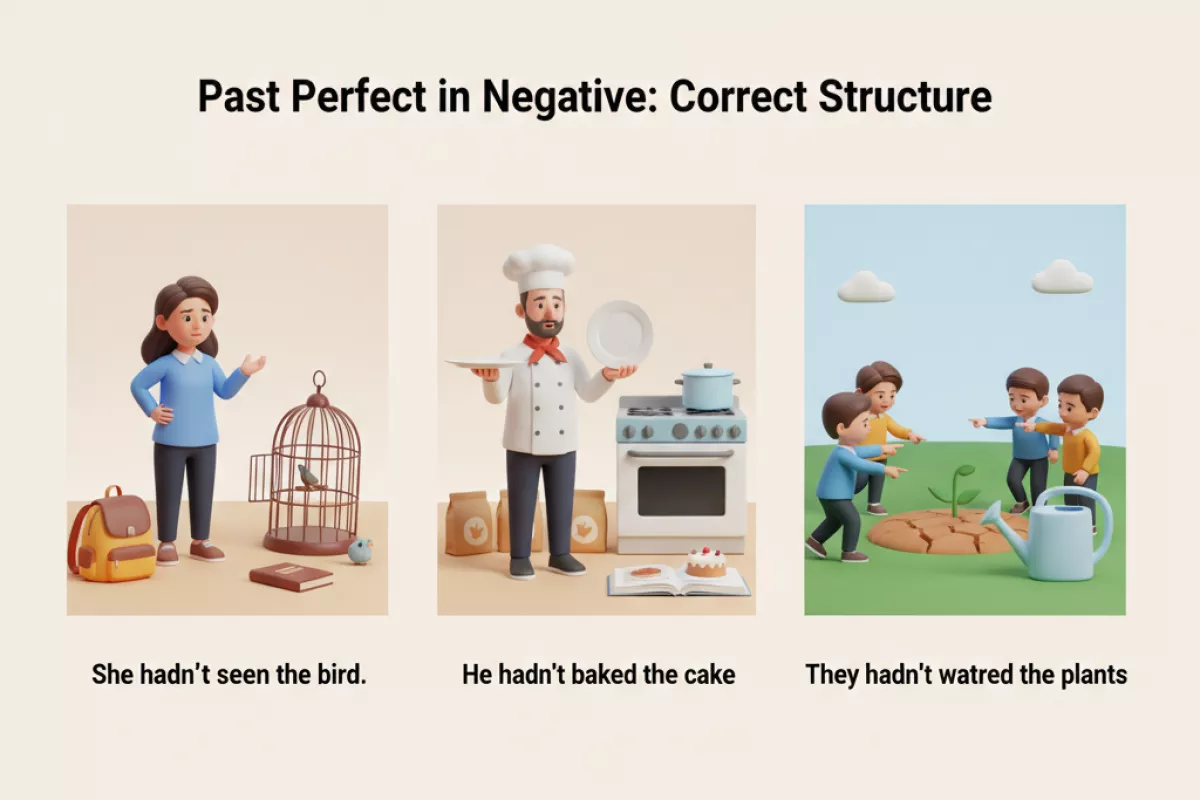 Aprende cómo formar negativas en Past Perfect: cuándo usar had not o hadn’t, dónde colocar not en la oración y cómo se usan en ejemplos reales. También verás errores frecuentes, diferencias con otros tiempos pasados y un ejercicio práctico para consolidar lo aprendido.
Negar una acción que ocurrió antes de otro momento en el pasado puede parecer sencillo, pero muchos estudiantes se confunden con el orden de las palabras. En esta guía aprenderás a formar negativas de manera natural, dónde colocar not y cómo suenan en conversaciones reales. Además, aclararemos errores comunes como usar did not en lugar del Past Perfect o mezclar tiempos verbales, para que tu inglés sea claro y preciso.
Cómo negar en Past Perfect
Para expresar que una acción anterior a otra en el pasado no ocurrió, se coloca la negación en el auxiliar, no en el verbo principal. La idea clave es que el tiempo perfecto se construye con had + participio, y al negar se transforma en had not (o su contracción hadn't) + participio.
En la práctica, este patrón se usa para aclarar “hasta ese momento” qué cosas no habían pasado todavía. También es frecuente en narraciones, explicaciones de causas y consecuencias, y al contrastar expectativas con lo que realmente ocurrió.
Estructura básica de la negación
- Sujeto + had not (hadn't) + participio + complemento
- Ejemplo: I hadn't finished the report when the meeting started. (informe)
- Ejemplo: She had not seen that movie before 2019. (antes)
Formas completas vs. contracciones
La forma completa (had not) suele aparecer en escritura formal o cuando se quiere enfatizar la negación. La contracción (hadn't) es la opción más común en conversación y textos informales.
- Formal/enfática: They had not agreed on the plan.
- Neutra/coloquial: They hadn't agreed on the plan.
Tabla de patrones frecuentes (negativo)
| Función | Estructura | Ejemplo |
|---|---|---|
| Negación simple | S + had not + participio | He hadn't called me. |
| Con “yet” (todavía) | S + had not + participio + yet | We hadn't left yet. |
| Con “ever” (alguna vez) | S + had not + ever + participio | She hadn't ever traveled alone. |
| Con “before” (antes) | S + had not + participio + before + referencia | I hadn't met him before that day. |
| Con “until” (hasta) | S + had not + participio + until + momento | They hadn't noticed until it was too late. |
Ejemplos listos para usar (variando verbos)
En estos modelos, fíjate en que el participio puede ser regular (-ed) o irregular (por ejemplo, gone, seen, written). La negación siempre se mantiene en hadn't, sin cambiar el participio.
- I hadn't heard the news when you called. (noticia)
- She hadn't done her homework before dinner.
- They hadn't arrived by 8 p.m.
- We hadn't found the address yet. (dirección)
- He hadn't paid the bill on time. (factura)
- You hadn't told me the truth.
- The train hadn't left when we got to the station.
- Maria hadn't spoken to him since July.
- I hadn't taken any photos before the battery died. (batería)
- They hadn't seen snow until they moved north. (norte)
- We hadn't decided what to do when the boss asked.
- He hadn't written the email before the deadline.
- The kids hadn't slept well the night before.
- She hadn't known about the change.
- I hadn't been there before. (antes)
Errores típicos al negar y cómo evitarlos
- Negar el verbo principal: “I had finished not” es incorrecto; la negación va en hadn't: I hadn't finished.
- Usar “didn't” en lugar de “hadn't”: “I didn't had” es incorrecto; debe ser I hadn't had (cuando el verbo es “have”).
- Confundir participio con pasado simple: “hadn't went” es incorrecto; debe ser hadn't gone.
- Olvidar el participio: “She hadn't” queda incompleto si falta el verbo: She hadn't answered.
- Duplicar la negación: evitar “hadn't never” en inglés estándar; mejor “had never” o “hadn't ever”.
Uso de had not y contracciones
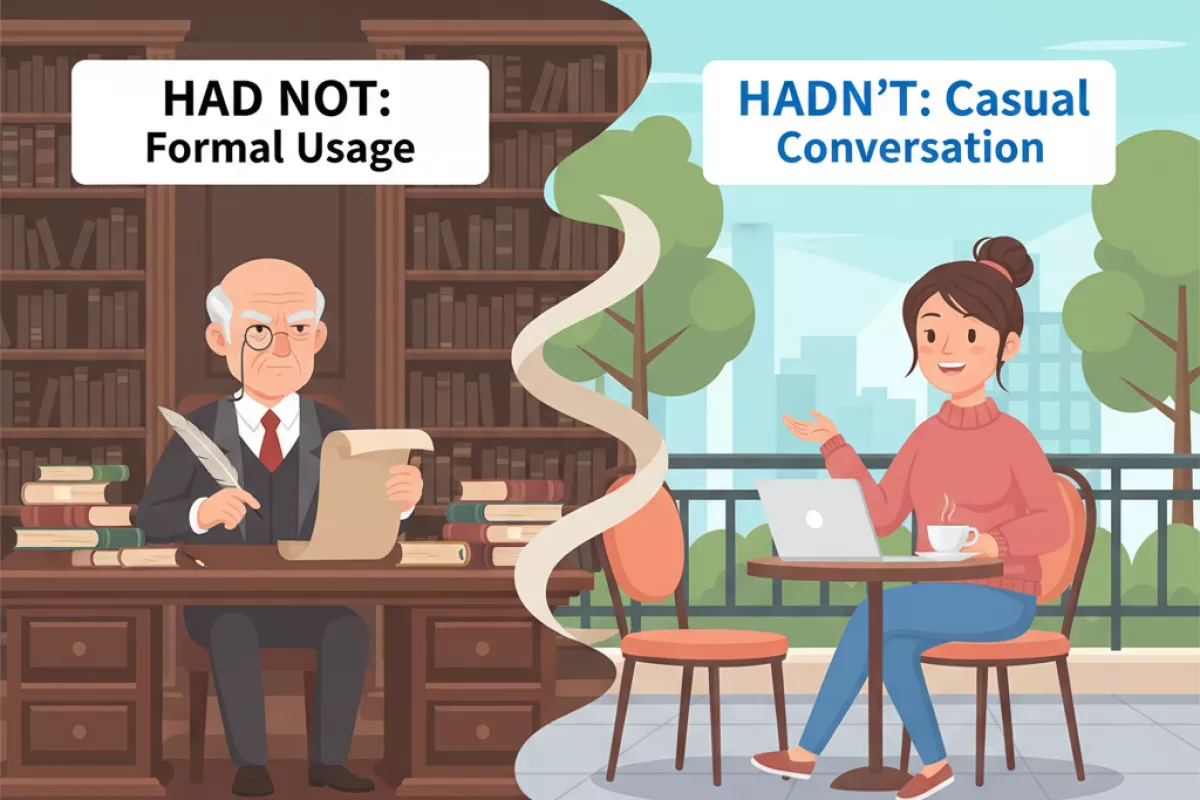
En el pasado perfecto negativo, la negación se construye colocando not después del auxiliar had. Esta combinación expresa que una acción no se había completado antes de otro punto del pasado, y es frecuente en narraciones, explicaciones de causa y efecto y reportes de experiencias.
En la práctica, puedes elegir entre la forma completa (had not) y la forma contraída (hadn’t). La diferencia principal no es de significado, sino de registro: la forma completa suena más formal o enfática, mientras que la contracción es la opción más natural en conversación y en escritura informal.
Forma completa vs. contracción: cuándo elegir cada una
- had not: útil en textos formales, redacciones académicas o cuando quieres dar énfasis a la negación.
- hadn’t: preferida en habla cotidiana, diálogos y narración fluida; mantiene el ritmo de la frase.
- En ambos casos, el verbo principal va en participio pasado (V3): had not + past participle / hadn’t + past participle.
- En respuestas cortas, es común usar la contracción: No, I hadn’t.
Patrones frecuentes con ejemplos
Para evitar errores típicos, conviene memorizar estructuras repetibles: sujeto + auxiliar en pasado + negación + participio. También aparecen a menudo marcadores temporales como yet (todavía), before (antes) o until (hasta), que ayudan a ubicar la acción no realizada.
- I hadn’t finished the report before the meeting started.
- She had not seen that movie yet (todavía).
- We hadn’t met him before that day.
- They had not decided what to do when the call came.
- He hadn’t heard the news until the evening (hasta).
- The train had not left when we arrived.
- I hadn’t saved the file, so I lost the changes.
- She had not told anyone about the plan.
- We hadn’t realized the mistake until later.
- They had not been to London before (antes).
- He hadn’t eaten anything all day.
- I had not spoken to her since Monday (desde).
- The team hadn’t practiced enough, so they struggled.
- She had not checked the address, and she got lost.
- We hadn’t expected such a quick response.
Errores comunes con la contracción
La contracción puede llevar a confusiones de forma, sobre todo en escritura rápida o al escuchar. La clave es recordar que hadn’t siempre equivale a had not y debe ir seguido de participio pasado, no de pasado simple.
- Incorrecto: I hadn’t went → Correcto: I hadn’t gone (participio).
- Incorrecto: She hadn’t saw → Correcto: She hadn’t seen.
- Incorrecto: They hadn’t did → Correcto: They hadn’t done.
- Evita confundir hadn’t con hasn’t/haven’t: esos se usan para presente perfecto, no para una referencia anterior en el pasado.
Comparación rápida de registro y uso
| Forma | Registro típico | Ejemplo |
|---|---|---|
| had not + participio | Más formal / énfasis | He had not completed the task. |
| hadn’t + participio | Conversación / narración natural | He hadn’t completed the task. |
| Hadn’t + sujeto + participio...? | Pregunta en pasado con tono informal | Hadn’t you seen it before (antes)? |
| Yes/No + sujeto + had/hadn’t | Respuestas cortas | No, I hadn’t. |
Posición correcta de not
En el pasado perfecto negativo, la negación se forma colocando not después del auxiliar had. La idea clave es que not niega el auxiliar (no el verbo principal), por eso su lugar es fijo: entre had y el participio pasado.
En el uso real, esta estructura aparece tanto en afirmaciones como en preguntas y en contracciones. Dominar el orden ayuda a evitar errores típicos de hispanohablantes, como intentar poner not después del participio o duplicar auxiliares.
Estructura base y contracción
- Forma completa: Subject + had + not + past participle
- Contracción: Subject + hadn’t + past participle
Patrones frecuentes (orden correcto)
| Tipo | Patrón | Ejemplo |
|---|---|---|
| Enunciado | S + had not + PP | She had not finished the report. (informe) |
| Enunciado (contracción) | S + hadn’t + PP | They hadn’t seen the message. (mensaje) |
| Con adverbio | S + had not + adv + PP | I had not yet decided. (todavía) |
| Negación con “ever” | S + had not + ever + PP | He had not ever traveled alone. (solo) |
| Pregunta | Had + S + not + PP? | Had you not heard the news? (noticias) |
| Pregunta (contracción) | Hadn’t + S + PP? | Hadn’t she called before? (antes) |
| Negativa con “until” | S + had not + PP + until… | We had not met until 2019. |
| Con “already” (negativo) | S + had not + already + PP | She had not already paid. (pagado) |
Errores habituales y cómo corregirlos
Los fallos más comunes vienen de trasladar el orden del español o de confundir el papel del participio. Recuerda: el verbo principal va en participio pasado y no “recibe” la negación; la negación se coloca junto al auxiliar.
- Incorrecto: She had finished not the report. → Correcto: She had not finished the report.
- Incorrecto: She didn’t had finished the report. → Correcto: She hadn’t finished the report.
- Incorrecto: Had you heard not the news? → Correcto: Had you not heard the news?
- Incorrecto: She had not finish the report. → Correcto: She had not finished the report.
Ejemplos listos para usar (variando el orden con complementos)
- I had not seen him before. (antes)
- She hadn’t checked her email. (correo)
- They had not arrived yet. (todavía)
- We hadn’t booked the tickets. (entradas)
- He had not told me the truth. (verdad)
- The team hadn’t practiced enough. (equipo)
- I had not realized the mistake. (error)
- She hadn’t met his parents. (padres)
- They had not completed the form. (formulario)
- We hadn’t heard that song. (canción)
- He had not spoken to her since Monday. (desde)
- I hadn’t saved the file. (archivo)
- She had not learned the rules. (reglas)
- They hadn’t visited the museum. (museo)
- We had not noticed the sign. (señal)
Ejemplos negativos comunes
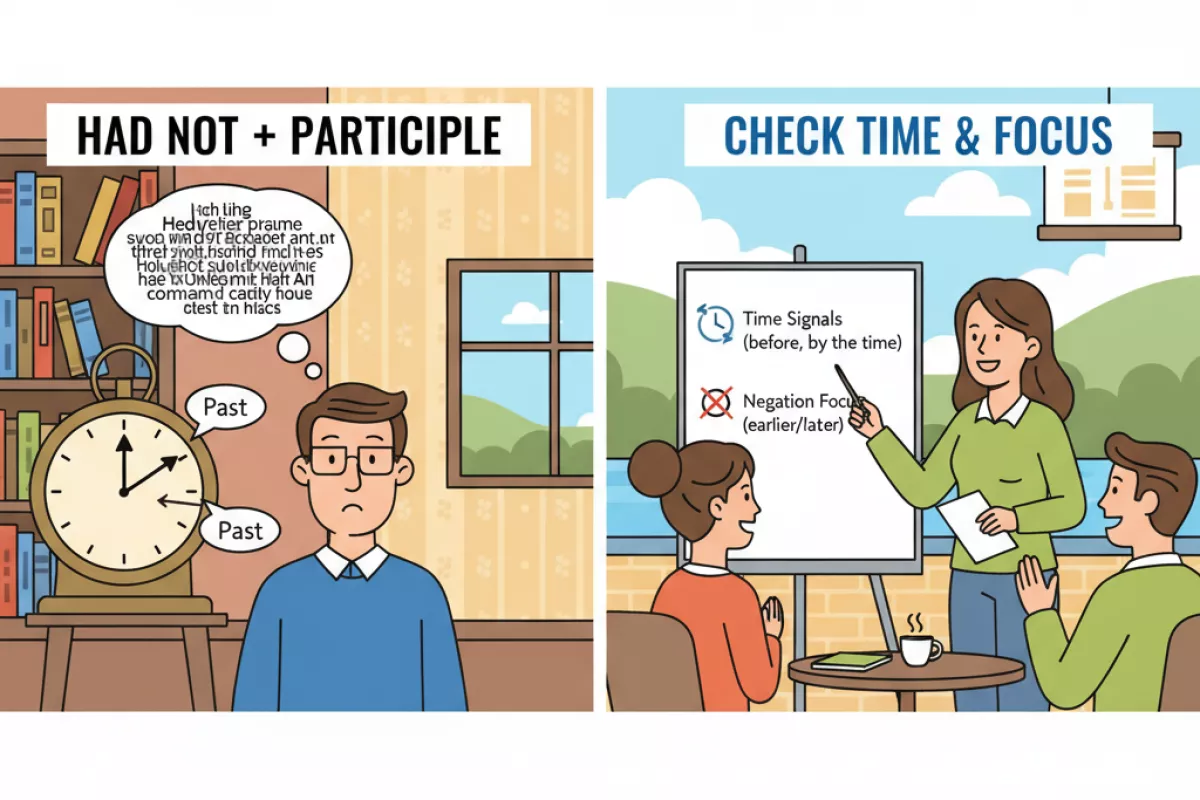
Para negar acciones anteriores a otro momento del pasado, lo más importante es respetar el orden: sujeto + had not (hadn’t) + participio. Muchos errores aparecen por mezclar esta estructura con el pasado simple, por colocar mal not o por elegir un participio incorrecto.
En la práctica, conviene fijarse en dos señales: 1) si hay un “pasado del pasado” (before, by the time, already, yet), y 2) si la negación afecta a la acción anterior (no había ocurrido) o a la posterior (no ocurrió). Con esas dos ideas, se evitan la mayoría de confusiones.
Errores típicos de forma (orden, auxiliar y contracción)
- Incorrecto: I hadn’t went to the meeting. / Correcto: I hadn’t gone to the meeting. (participio irregular)
- Incorrecto: She didn’t had finished. / Correcto: She hadn’t finished. (no se combina did + had)
- Incorrecto: We had not to pay. / Correcto: We didn’t have to pay / We hadn’t had to pay. (obligación: “have to”)
- Incorrecto: Hadn’t they not arrived? / Correcto: Hadn’t they arrived? (doble negación innecesaria)
- Incorrecto: He hadn’t already left. / Correcto: He hadn’t left yet. (posición natural con “yet”)
- Incorrecto: I hadn’t seen him since two days. / Correcto: I hadn’t seen him for two days. (“for” duración)
- Incorrecto: They hadn’t knew the answer. / Correcto: They hadn’t known the answer. (participio de “know”)
- Incorrecto: You hadn’t to call me. / Correcto: You didn’t have to call me. (no obligación; no es “hadn’t to”)
Confusión con pasado simple (cuándo NO usarlo)
| Situación | Incorrecto | Correcto |
|---|---|---|
| Acción anterior negada antes de otra en pasado | When I arrived, they didn’t leave. | When I arrived, they hadn’t left. |
| Resultado no conseguido antes de un punto pasado | By 8 p.m., she didn’t finish the report. | By 8 p.m., she hadn’t finished the report. |
| Experiencia no ocurrida hasta entonces | He didn’t see snow before that trip. | He hadn’t seen snow before that trip. |
| Preparación incompleta antes de un evento pasado | They didn’t pack when the taxi arrived. | They hadn’t packed when the taxi arrived. |
| Acción pendiente hasta “then” | I didn’t call him yet. | I hadn’t called him yet. |
Patrones con “yet”, “already”, “ever” y “never” (colocación y sentido)
- Incorrecto: She hadn’t already eaten. / Correcto: She hadn’t eaten yet. (“yet” en negativas)
- Incorrecto: Had you hadn’t ever been there? / Correcto: Had you ever been there? / You hadn’t ever been there. (pregunta vs negación)
- Incorrecto: I hadn’t never met him. / Correcto: I had never met him. (evitar doble negación)
- Incorrecto: They hadn’t finished already? / Correcto: Had they finished already? / They hadn’t finished yet. (ya vs todavía)
Participios que suelen fallar (irregulares frecuentes)
- Incorrecto: hadn’t ate / Correcto: hadn’t eaten (eat)
- Incorrecto: hadn’t broke / Correcto: hadn’t broken (break)
- Incorrecto: hadn’t took / Correcto: hadn’t taken (take)
- Incorrecto: hadn’t wrote / Correcto: hadn’t written (write)
- Incorrecto: hadn’t did / Correcto: hadn’t done (do)
- Incorrecto: hadn’t saw / Correcto: hadn’t seen (see)
- Incorrecto: hadn’t spoke / Correcto: hadn’t spoken (speak)
- Incorrecto: hadn’t began / Correcto: hadn’t begun (begin)
Negación aplicada al tramo equivocado (qué acción se niega)
- Incorrecto: I didn’t recognize her because I hadn’t worn my glasses. / Correcto: I didn’t recognize her because I wasn’t wearing my glasses. (acción en progreso)
- Incorrecto: He hadn’t arrived, so we didn’t start, but he arrived later. / Correcto: He hadn’t arrived, so we didn’t start. (la negación afecta a la llegada previa)
- Incorrecto: When the movie started, we hadn’t bought popcorn. (si lo compraron después) / Correcto: When the movie started, we hadn’t bought popcorn yet. (todavía no)
Errores frecuentes en negativas
En las oraciones negativas con este tiempo verbal, la dificultad suele estar menos en el significado y más en la mecánica: colocar had en el sitio correcto, añadir not sin romper el orden, y mantener el participio pasado (V3) del verbo principal. Cuando una pieza falla, el resultado suena “a medio camino” entre pasado simple, present perfect o una estructura afirmativa mal negada.
La idea clave es que la negación afecta al auxiliar, no al verbo principal: se niega con had not (o hadn’t) y después se mantiene el participio pasado. A partir de ahí, los errores típicos se repiten por patrones muy concretos.
Confundir el participio pasado (V3) con el pasado simple (V2)
- Incorrecto: I hadn’t went to the meeting. / Correcto: I hadn’t gone to the meeting.
- Incorrecto: She hadn’t wrote the email. / Correcto: She hadn’t written the email.
- Incorrecto: They hadn’t did the homework. / Correcto: They hadn’t done the homework.
- Incorrecto: We hadn’t ate yet. / Correcto: We hadn’t eaten yet.
- Incorrecto: He hadn’t saw it. / Correcto: He hadn’t seen it.
Negar el verbo principal en lugar del auxiliar
- Incorrecto: I had didn’t finished the report. / Correcto: I hadn’t finished the report.
- Incorrecto: She had not didn’t call. / Correcto: She hadn’t called.
- Incorrecto: They hadn’t didn’t know. / Correcto: They hadn’t known.
Usar “didn’t” por influencia del pasado simple
Cuando se piensa en “pasado = didn’t”, es fácil arrastrar didn’t a un tiempo que ya tiene auxiliar propio. En esta estructura, el auxiliar es had, así que didn’t no aparece.
- Incorrecto: He didn’t had left. / Correcto: He hadn’t left.
- Incorrecto: We didn’t had seen the message. / Correcto: We hadn’t seen the message.
- Incorrecto: Didn’t you had finished? / Correcto: Hadn’t you finished?
Orden de palabras incorrecto con “not” y adverbios
En negativo, not va pegado al auxiliar (had not). Si añades adverbios como already (ya) o yet (todavía), su posición cambia el énfasis, pero no debe separar de forma incorrecta el auxiliar y el participio.
- Incorrecto: She had finished not the task. / Correcto: She hadn’t finished the task.
- Incorrecto: They had not already left (posible, pero suele sonar más natural como abajo). / Mejor: They hadn’t left yet (todavía).
- Incorrecto: I hadn’t already seen him (posible, pero cambia el foco). / Alternativa frecuente: I hadn’t seen him yet.
Elegir el tiempo equivocado: pasado simple vs. anterioridad
Este tiempo se usa para marcar una acción anterior a otra referencia en el pasado. Si no hay “pasado de referencia” claro, a menudo el pasado simple es suficiente. El error no es gramatical en forma, sino de selección del tiempo.
| Situación | Forma más natural | Ejemplo |
|---|---|---|
| Secuencia: una acción ocurre antes de otra en el pasado | Past perfect negativo | She was upset because she hadn’t received the email. |
| Hecho aislado en el pasado sin “antes de” implícito | Pasado simple negativo | She didn’t receive the email. |
| En estilo narrativo, el “antes” ya está claro por el contexto | Pasado simple o past perfect (según énfasis) | He didn’t recognize her (the last time they met). |
| Resultado relevante “hasta ahora” (presente como referencia) | Present perfect negativo | I haven’t received the email yet (todavía). |
Contracciones y registro: “hadn’t” vs. “had not”
- hadn’t es lo más común en conversación y escritura informal: We hadn’t met before.
- had not se usa para énfasis o tono más formal: We had not met before.
- Error típico: mezclar contracción con “not” duplicado: hadn’t not (incorrecto).
Omisión del auxiliar “had”
- Incorrecto: She not finished when I arrived. / Correcto: She hadn’t finished when I arrived.
- Incorrecto: They never seen it before. / Correcto: They had never seen it before.
Diferencia con otras formas pasadas
Para elegir bien un tiempo verbal en pasado, conviene fijarse en la relación entre dos momentos: qué ocurrió primero y qué pasó después. La forma negativa con had suele aparecer cuando se niega una acción anterior a otra referencia pasada, no simplemente “algo que no pasó”.
La idea práctica es esta: si en tu frase hay un “antes de ese momento” (explícito o implícito), la negación con had encaja mejor. Si solo describes un hecho pasado aislado o una secuencia simple, normalmente bastan el pasado simple o el pasado continuo.
Comparación rápida: cuándo usar cada una
| Forma | En qué se centra | Ejemplo en negativo |
|---|---|---|
| Past Perfect negativo | Acción anterior a otra referencia en el pasado | I hadn’t finished (terminado) the report when she called. |
| Past Simple negativo | Hecho pasado cerrado, sin énfasis en “un pasado anterior” | I didn’t finish the report yesterday. |
| Past Continuous negativo | Acción en progreso en un momento del pasado (o “no estaba ocurriendo”) | I wasn’t working when she called. |
| Present Perfect negativo | Experiencia o resultado conectado con el presente | I haven’t finished the report yet. |
Señales típicas para distinguirlos
- Referencia pasada clara (por ejemplo, when, by the time, “para entonces”): suele favorecer la negación con had.
- Marcadores de tiempo cerrados (yesterday, last week, in 2019): suelen ir con pasado simple en negativo.
- Acción en desarrollo en un punto del pasado (at 8 pm, while): suele ir con pasado continuo en negativo.
- Conexión con “ahora” (yet, already, ever): suele pedir presente perfecto en negativo.
- Dos eventos en pasado: si necesitas dejar claro cuál ocurrió primero, la forma con hadn’t + past participle ayuda a ordenar la cronología.
Pares mínimos: cómo cambia el significado
- I didn’t call her. (no la llamé; hecho pasado) vs I hadn’t called her before the meeting. (no la había llamado antes de la reunión).
- They didn’t arrive on time. (no llegaron a tiempo) vs They hadn’t arrived when the movie started. (no habían llegado cuando empezó la película).
- She didn’t know the answer. (no lo sabía) vs She hadn’t known about the change until Monday. (no se había enterado hasta el lunes).
- We weren’t talking. (no estábamos hablando en ese momento) vs We hadn’t talked since June. (no habíamos hablado desde junio).
- He didn’t see it. (no lo vio) vs He hadn’t seen it before. (no lo había visto antes).
- I wasn’t waiting outside. (no estaba esperando fuera) vs I hadn’t waited long when she arrived. (no había esperado mucho cuando llegó).
Patrones frecuentes que suelen pedir la forma con “had” en negativo
- hadn’t + past participle + when + Past Simple: She hadn’t left when I arrived.
- hadn’t + past participle + by the time + Past Simple: We hadn’t eaten by the time he got home.
- hadn’t + past participle + before + Past Simple: I hadn’t met him before I joined the team.
- hadn’t + past participle + until + punto pasado: They hadn’t noticed (notado) the mistake until later.
- hadn’t + past participle + for/since (duración hasta un momento pasado): He hadn’t slept for two days.
- never + had + past participle (énfasis): I had never seen that place before.
- hardly/scarcely + had + past participle + when (registro más formal): Hardly had we started when it stopped.
- No + past participle + yet (en pasado): She hadn’t replied yet.
Errores comunes al compararlo con otros pasados
- Usar hadn’t sin una referencia pasada clara: si no hay “antes de X”, suele sonar innecesario o forzado.
- Confundir I didn’t con I hadn’t: el primero niega un hecho; el segundo niega que algo hubiera ocurrido hasta un punto del pasado.
- Mezclar marcadores de presente con tiempos pasados: yet puede aparecer en ambos, pero el contexto manda (presente perfecto si el marco es “ahora”; con hadn’t si el marco es “entonces”).
- Olvidar el participio: hadn’t went es incorrecto; debe ser hadn’t gone (go es irregular).
Ejercicios prácticos para casa
La forma negativa del pasado perfecto se usa para marcar que una acción no había ocurrido antes de otra referencia pasada. La clave práctica es mantener el orden: primero el auxiliar en pasado (had), luego not (o la contracción hadn’t) y después el participio pasado.
En los ejercicios siguientes, fíjate en patrones que suelen dar problemas: participios irregulares (go → gone), el uso de yet (todavía) en negativas, y la diferencia entre never (nunca) y not. Mantén la puntuación y la capitalización cuando aparezcan nombres propios (por ejemplo, Monday).
Ejercicio 1: Completa con la forma negativa correcta
- By the time the movie started, we _____ (not / find) our seats.
- She _____ (not / finish) the report before the meeting began.
- They _____ (not / eat) anything when the taxi arrived.
- I _____ (not / see) that email before you mentioned it.
- He _____ (not / go) to London before 2019.
- We _____ (not / decide) what to do when the teacher asked.
- The train _____ (not / leave) when I got to the platform.
- You _____ (not / tell) me about the change before yesterday.
- The kids _____ (not / do) their homework when dinner was ready.
- Maria _____ (not / meet) the new manager before that day.
Mostrar respuestas
- hadn’t found
- hadn’t finished
- hadn’t eaten
- hadn’t seen
- hadn’t gone
- hadn’t decided
- hadn’t left
- hadn’t told
- hadn’t done
- hadn’t met
Ejercicio 2: Reescribe en negativo sin cambiar el significado temporal
- By 8 p.m., they had arrived.
- She had spoken to him before the interview.
- We had booked the hotel when we found a cheaper option.
- He had read the instructions before he started.
- I had heard the news when you called.
- The class had started when I entered.
- They had chosen a date before the venue confirmed availability.
- Laura had paid the bill before the waiter returned.
Mostrar respuestas
- By 8 p.m., they hadn’t arrived.
- She hadn’t spoken to him before the interview.
- We hadn’t booked the hotel when we found a cheaper option.
- He hadn’t read the instructions before he started.
- I hadn’t heard the news when you called.
- The class hadn’t started when I entered.
- They hadn’t chosen a date before the venue confirmed availability.
- Laura hadn’t paid the bill before the waiter returned.
Ejercicio 3: Ordena las palabras para formar oraciones correctas
- had / before / I / not / seen / that / photo
- they / yet / had / not / left
- had / he / never / tried / sushi
- we / had / not / finished / when / she / arrived
- the / had / not / started / meeting / the / at / time
- had / not / she / been / to / Mexico / before
- had / not / I / remembered / his / name
- the / had / not / been / delivered / package
Mostrar respuestas
- I had not seen that photo before.
- They had not left yet.
- He had never tried sushi.
- We had not finished when she arrived.
- The meeting had not started at the time.
- She had not been to Mexico before.
- I had not remembered his name.
- The package had not been delivered.
Ejercicio 4: Elige la opción correcta (hadn’t + participio vs. didn’t + infinitivo)
- When I arrived, they (hadn’t started / didn’t start) dinner yet (todavía).
- She (hadn’t seen / didn’t see) the message before the call.
- We (hadn’t met / didn’t meet) him until last week.
- By the time the lesson began, I (hadn’t opened / didn’t open) the book.
- He (hadn’t finished / didn’t finish) the test when the bell rang.
- They (hadn’t known / didn’t know) about the delay before the announcement.
- When the lights went out, I (hadn’t saved / didn’t save) the file.
- By noon, the courier (hadn’t arrived / didn’t arrive).
Mostrar respuestas
- hadn’t started
- hadn’t seen
- didn’t meet
- hadn’t opened
- hadn’t finished
- hadn’t known
- hadn’t saved
- hadn’t arrived
Ejercicio 5: Detecta y corrige el error
- She hadn’t went to the office before 9 a.m.
- They hadn’t to pay in advance.
- I hadn’t saw him before the conference.
- We didn’t had finished when you arrived.
- He hadn’t never visited Rome.
- The train hadn’t lefted when we got there.
- By the time I called, you hadn’t answer.
- Maria had not ate anything before the exam.
Mostrar respuestas
- She hadn’t gone to the office before 9 a.m.
- They hadn’t paid in advance.
- I hadn’t seen him before the conference.
- We hadn’t finished when you arrived.
- He had never visited Rome.
- The train hadn’t left when we got there.
- By the time I called, you hadn’t answered.
- Maria had not eaten anything before the exam.