Errores con much, many y a lot of en inglés

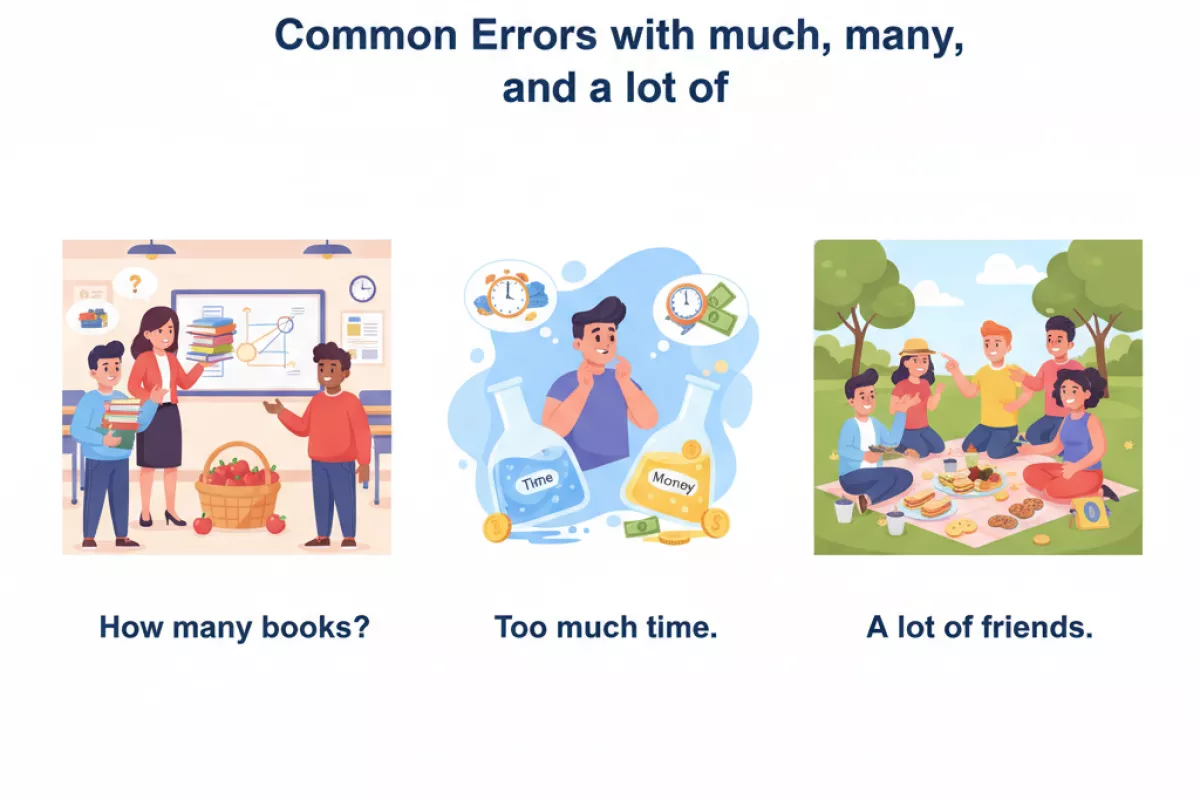 Aprende la diferencia básica entre much, many y a lot of, y cómo usar cada uno con sustantivos contables e incontables. Verás errores comunes influenciados por el español, cómo corregirlos en preguntas y negativas, cuándo usar a lot of, comparaciones claras y un ejercicio práctico final.
Si alguna vez has dudado entre usar much, many o a lot of, no eres el único: es uno de los errores más comunes al intentar sonar natural en inglés. En clase veo que el problema no es memorizar reglas, sino elegir la opción adecuada según el tipo de sustantivo y la situación. Aquí aprenderás a diferenciarlos con ejemplos reales y a evitar errores típicos en preguntas, negativas y expresiones cotidianas.
Diferencia básica entre much, many y a lot of
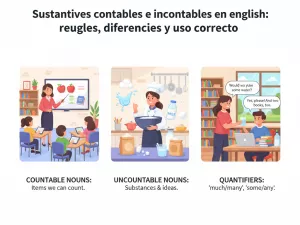
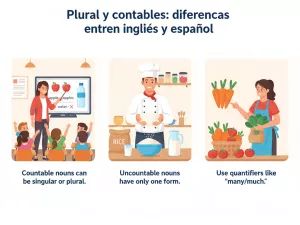
La elección depende de dos ideas prácticas: el tipo de sustantivo (contable vs. incontable) y el registro (más formal o más neutro). En inglés, los sustantivos contables se pueden contar y van en plural (books), mientras que los incontables se tratan como “masa” y no suelen ir en plural (water, advice).
Además, much y many aparecen con más frecuencia en negativas y preguntas, mientras que a lot of es muy común en afirmativas y en un registro cotidiano. Con esto en mente, la regla base se vuelve bastante predecible.
| Expresión | Tipo de sustantivo | Uso típico + ejemplo correcto |
|---|---|---|
| much | Incontable (uncountable) | Frecuente en negativas/preguntas; más formal en afirmativa. How much time do we have? (¿Cuánto tiempo tenemos?) |
| many | Contable plural | Frecuente en negativas/preguntas; correcto en afirmativa, a veces más formal. We don’t have many options. (No tenemos muchas opciones.) |
| a lot of | Contable plural e incontable | Muy común en afirmativas; neutro en conversación. She has a lot of friends. (Ella tiene muchos amigos.) |
| lots of | Contable plural e incontable | Similar a a lot of, algo más informal. There’s lots of traffic today. (Hay mucho tráfico hoy.) |
Notas rápidas para evitar confusiones frecuentes
-
Con much y many, el patrón más natural es en preguntas y negativas:
- Do you have many emails to answer? (¿Tienes muchos correos que responder?)
- I don’t drink much coffee. (No bebo mucho café.)
-
En afirmativas, a lot of suele sonar más natural que much/many en conversación:
- We have a lot of work today. (Tenemos mucho trabajo hoy.)
- There are a lot of people here. (Hay mucha gente aquí.)
-
Si usas many, el sustantivo debe ir en plural; con much, evita el plural porque va con incontables:
- Many information
- Much informations
-
Algunos sustantivos que suelen confundir por ser incontables en inglés: advice (consejo), information (información), furniture (muebles), homework (deberes).
Uso con sustantivos contables e incontables
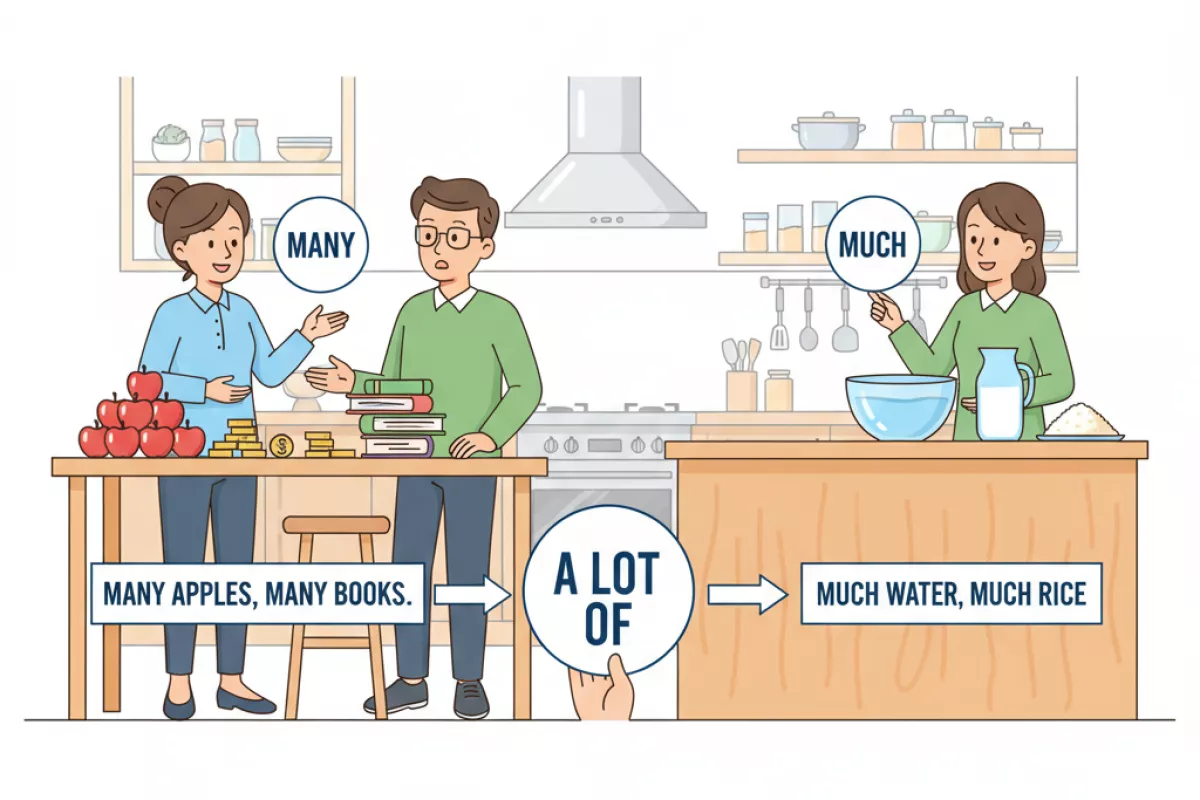
La elección entre many, much y a lot of depende primero del tipo de sustantivo: si es contable (se puede contar en unidades) o incontable (se mide como “masa” o cantidad). Este paso evita errores típicos como usar much con plurales contables o many con nombres de “sustancia” (por ejemplo, water).
Como regla práctica: many va con contables en plural, much con incontables, y a lot of funciona con ambos. A partir de ahí, el registro (más formal o más neutro) y el tipo de frase (afirmación, negación o pregunta) afinan la elección.
| Tipo de sustantivo | Cuantificador correcto | Ejemplo correcto | Error frecuente |
|---|---|---|---|
| Contable (plural) | many | Many students are absent today. (Muchos estudiantes faltan hoy.) | Much students are absent today. |
| Incontable | much | I don’t have much time. (No tengo mucho tiempo.) | I don’t have many time. |
| Contable (plural) | a lot of | We have a lot of meetings this week. (Tenemos muchas reuniones esta semana.) | We have a lot of meeting this week. |
| Incontable | a lot of | She drinks a lot of water. (Ella bebe mucha agua.) | She drinks a lot of waters. |
| Contable (plural irregular) | many | How many children do you have? (¿Cuántos hijos tienes?) | How much children do you have? |
| Incontable (abstracto) | much | There isn’t much information available. (No hay mucha información disponible.) | There isn’t many information available. |
| Contable (plural) | many | I’ve read many books on this topic. (He leído muchos libros sobre este tema.) | I’ve read much books on this topic. |
| Incontable (comida/material) | much | We don’t need much rice. (No necesitamos mucho arroz.) | We don’t need many rice. |
Patrones rápidos para identificar el tipo de sustantivo
Si dudas, mira la forma del nombre y cómo se usa: los contables suelen tener plural y pueden llevar números; los incontables normalmente no se pluralizan y aparecen con unidades de medida. Ojo con nombres “engañosos”: algunos terminan en -s pero son incontables (por ejemplo, news), y otros cambian de significado según se cuenten o no (por ejemplo, chicken como comida vs animal).
- Señales de contable: admite a/an (un/una), números y plural.
- a car, two cars, many cars
- Plural irregular (irregular): child → children, person → people
- Señales de incontable: no suele ir en plural y se cuantifica con “medidas”.
- much water, much advice, much furniture
- Con unidades: a glass of water, two pieces of advice (piece = “pieza”)
- Casos que confunden: palabras que parecen plurales o “contables” por la forma.
- news es incontable: much news (no many news)
- furniture es incontable: much furniture (no many furnitures)
- work suele ser incontable: much work (pero many jobs si hablas de empleos)
- Un mismo sustantivo, dos usos: cambia el cuantificador según el significado.
- chicken (comida, incontable): much chicken
- a chicken (animal, contable): many chickens
- paper (material, incontable): much paper; a paper (documento): many papers
Errores frecuentes por influencia del español
Muchos fallos con cuantificadores aparecen por “calcar” estructuras del español: en español decimos “mucho” con casi cualquier sustantivo, pero en inglés la elección depende sobre todo de si el nombre es contable o incontable (countable/uncountable). Además, el registro (formal/informal) y el tipo de frase (afirmativa/negativa/pregunta) influyen en qué suena natural.
La idea clave es separar tres decisiones: (1) tipo de sustantivo (contable vs incontable), (2) estructura (afirmación, negación, pregunta) y (3) naturalidad (por ejemplo, much en afirmativas suele sonar forzado si no hay énfasis). Con eso, se evitan traducciones literales que en inglés resultan extrañas.
| Calco del español (incorrecto) | Por qué falla | Forma natural en inglés (correcta) | Traducción (solo correctos) |
|---|---|---|---|
| There is much people in the room. | People es contable plural; much va con incontables. | There are many people in the room. | (Hay muchas personas en la habitación.) |
| I have many money. | Money es incontable; con incontables se usa much o a lot of. | I have a lot of money. | (Tengo mucho dinero.) |
| I have much friends. | Friends es plural contable; se prefiere many / a lot of. | I have a lot of friends. | (Tengo muchos amigos.) |
| Do you have much books? | En preguntas con contables plurales se usa many. | Do you have many books? | (¿Tienes muchos libros?) |
| How much people came? | Con people (plural) la pregunta va con many. | How many people came? | (¿Cuánta gente vino?) |
| How many water do you drink? | Water es incontable; la pregunta va con much. | How much water do you drink? | (¿Cuánta agua bebes?) |
| I eat much chocolate. | Aunque chocolate puede ser incontable, much en afirmativa suena poco natural sin énfasis. | I eat a lot of chocolate. | (Como mucho chocolate.) |
| She has much time. | Much en afirmativa suele reservarse para énfasis o estilo formal. | She has a lot of time. | (Ella tiene mucho tiempo.) |
| We saw much cars. | Cars es contable plural; corresponde many / a lot of. | We saw a lot of cars. | (Vimos muchos coches.) |
| There are a lot people here. | Falta of: la estructura fija es a lot of. | There are a lot of people here. | (Hay mucha gente aquí.) |
| I don’t have a lot money. | Con a lot of también se mantiene of antes del sustantivo. | I don’t have a lot of money. | (No tengo mucho dinero.) |
| I have a lot of informations. | Information es incontable; no lleva plural en este sentido. | I have a lot of information. | (Tengo mucha información.) |
| There isn’t many milk. | Milk es incontable; en negativa va much. | There isn’t much milk. | (No hay mucha leche.) |
| There aren’t much chairs. | Chairs es contable plural; en negativa va many. | There aren’t many chairs. | (No hay muchas sillas.) |
| I have much homework(s). | Homework es incontable; no se pluraliza en inglés. | I have a lot of homework. | (Tengo muchos deberes/tarea.) |
| We need many advice. | Advice es incontable; se usa much o a lot of. | We need a lot of advice. | (Necesitamos muchos consejos.) |
| She gave me many help. | Help suele funcionar como incontable en este uso. | She gave me a lot of help. | (Ella me dio mucha ayuda.) |
| There is much things to do. | Things es plural contable; corresponde many. | There are many things to do. | (Hay muchas cosas que hacer.) |
Patrones para corregir rápido
Si dudas, aplica estos atajos: con contables en plural (por ejemplo, books, cars, people) piensa en many para preguntas/negativas y en a lot of para afirmativas neutrales. Con incontables (por ejemplo, money, water, information), usa much sobre todo en preguntas/negativas, y a lot of cuando quieras una afirmación natural.
Cuándo a lot of es la mejor opción

En inglés, a lot of funciona como cuantificador “comodín”: sirve tanto con sustantivos contables (countable) como incontables (uncountable). Por eso es especialmente útil cuando no quieres pararte a decidir si el nombre va en plural o si se trata de una cantidad no contable, o cuando el sustantivo puede usarse de las dos formas según el significado.
Además, es una elección muy natural en registros neutros e informales. En textos formales suele preferirse many (contables) o much (incontables), pero en conversación y escritura cotidiana a lot of evita sonar rígido y reduce errores típicos con much en afirmativas.
Situaciones típicas en las que conviene usarlo
-
Cuando el sustantivo puede ser contable o incontable según el contexto (y no quieres arriesgarte).
- Experience puede ser “experiencia” (incontable) o “experiencias” (contable).
- Time suele ser incontable, pero puede aparecer en usos más “contables” (p. ej., times = “veces”).
-
En afirmativas, porque suena más natural que much con incontables en estilo neutro.
- I drink a lot of water. (Bebo mucha agua.)
- She has a lot of patience. (Ella tiene mucha paciencia.)
-
Cuando el sustantivo es claramente contable en plural y quieres un tono cotidiano.
- We made a lot of mistakes. (Cometimos muchos errores.)
- There are a lot of people here. (Hay mucha gente aquí.)
-
Cuando el sustantivo “parece plural” para hispanohablantes pero en inglés es incontable (microrecordatorio: information = “información”, no lleva -s).
- They gave me a lot of information. (Me dieron mucha información.)
- We don’t have a lot of advice. (No tenemos mucho consejo.)
-
Con cuantificadores de “cantidad general” cuando lo importante es la magnitud, no el número exacto.
- He spends a lot of money on coffee. (Gasta mucho dinero en café.)
- It takes a lot of time. (Toma mucho tiempo.)
-
En negativas y preguntas como alternativa muy segura a many/much si dudas del tipo de sustantivo.
- Do you have a lot of homework? (¿Tienes mucha tarea?)
- We didn’t see a lot of progress. (No vimos mucho progreso.)
Patrones rápidos (y errores que evita)
-
Estructura base: a lot of + noun. El sustantivo manda:
- Contable plural: a lot of books (libros).
- Incontable: a lot of water (agua).
-
No lo confundas con a lot (sin of): a lot modifica al verbo, no al sustantivo.
- I travel a lot. (Viajo mucho.)
- Incorrecto: I have a lot money
- I have a lot of money. (Tengo mucho dinero.)
-
Con “gente”: en inglés suele ser people (plural). Por eso el verbo va en plural.
- A lot of people are waiting. (Mucha gente está esperando.)
- Incorrecto: A lot of people is waiting
-
Con nombres incontables frecuentes (para evitar el típico plural en -s):
- a lot of information (información)
- a lot of advice (consejo)
- a lot of furniture (muebles)
- a lot of luggage (equipaje)
Errores en preguntas y negativas
En frases negativas y preguntas, el inglés suele cambiar la estructura con auxiliares (do/does/did) y eso afecta a dónde colocas los cuantificadores. El fallo más frecuente es intentar traducir el orden del español palabra por palabra y terminar poniendo much, many o a lot of en una posición poco natural.
La idea clave: en negativo y pregunta, much y many encajan muy bien (sobre todo en estilo neutral), mientras que a lot of es común en afirmativas y también posible en preguntas/negativas, pero suena más informal y suele preferirse cuando no quieres un tono tan “de ejercicio”. Además, recuerda el patrón de base: many + plural (countable: contable) y much + singular no contable (uncountable: incontable).
| Patrón | Error típico | Forma correcta | Traducción (solo correcta) |
|---|---|---|---|
| Pregunta con many + plural | How much books do you have? | How many books do you have? | (¿Cuántos libros tienes?) |
| Pregunta con much + incontable | How many water do you drink? | How much water do you drink? | (¿Cuánta agua bebes?) |
| Negativa con many + plural | I don’t have much friends. | I don’t have many friends. | (No tengo muchos amigos.) |
| Negativa con much + incontable | She doesn’t have many time. | She doesn’t have much time. | (Ella no tiene mucho tiempo.) |
| Pregunta con a lot of (informal) | Do you have lot of money? | Do you have a lot of money? | (¿Tienes mucho dinero?) |
| Negativa con a lot of (informal) | We don’t have a lot money. | We don’t have a lot of money. | (No tenemos mucho dinero.) |
| Auxiliar correcto en presente | Does you have many questions? | Do you have many questions? | (¿Tienes muchas preguntas?) |
| Auxiliar correcto con he/she/it | Do she have much patience? | Does she have much patience? | (¿Tiene ella mucha paciencia?) |
| Pasado: auxiliar + verbo base | Did you had much work? | Did you have much work? | (¿Tuviste mucho trabajo?) |
| Negativa en pasado: didn’t + verbo base | They didn’t had many options. | They didn’t have many options. | (No tuvieron muchas opciones.) |
| Orden en pregunta: cuantificador + sustantivo | How many do you have books? | How many books do you have? | (¿Cuántos libros tienes?) |
| Orden en negativa: cuantificador dentro del objeto | I don’t much like it. | I don’t like it much. | (No me gusta mucho.) |
Detalles que suelen causar confusión
- Much y many se llevan bien con not y con preguntas, pero elige según el tipo de sustantivo:
- many + plural: many cars, many ideas.
- much + incontable: much information, much traffic.
- En preguntas, respeta el patrón con auxiliar: Do/Does/Did + sujeto + verbo base. El cuantificador va con el sustantivo, no separado en medio.
- A lot of necesita of. Si lo omites, la frase suena incompleta o directamente incorrecta.
- No confundas much (cantidad) con very (grado). En inglés natural, para “me gusta mucho” se usa a menudo a lot o very much según la estructura, pero much no suele ir pegado al verbo en afirmativa.
- Ojo con sustantivos que parecen contables en español pero suelen ser incontables en inglés: advice (consejo), information (información), furniture (muebles). En preguntas/negativas, tienden a ir con much.
- En registros más formales, much en afirmativa puede sonar rígido; en preguntas y negativas es totalmente normal: Do you have much time? / I don’t have much time.
Ejemplos comparativos claros
La forma más rápida de evitar confusiones es fijarse en dos cosas: si el sustantivo es contable (se puede contar) o incontable (no se cuenta como unidades), y si la frase es afirmativa, negativa o pregunta. Con eso, el reparto suele quedar así: many para contables en plural, much para incontables y a lot of como opción muy flexible en afirmativas (y también posible en negativas/preguntas, según el registro).
En los ejemplos de abajo verás patrones paralelos. Los ejemplos marcados como incorrectos muestran errores típicos (por ejemplo, usar much con plurales o many con incontables). Solo las frases correctas incluyen traducción al español.
| Contexto / patrón | Correcto (con traducción) | Incorrecto |
|---|---|---|
| Afirmativa + contable plural | I have many books. (Tengo muchos libros.) | I have much books. |
| Afirmativa + incontable | We have a lot of time. (Tenemos mucho tiempo.) | We have many time. |
| Negativa + contable plural | She doesn’t have many friends. (Ella no tiene muchos amigos.) | She doesn’t have much friends. |
| Negativa + incontable | I don’t have much money. (No tengo mucho dinero.) | I don’t have many money. |
| Pregunta + contable plural | How many emails do you get? (¿Cuántos correos recibes?) | How much emails do you get? |
| Pregunta + incontable | How much water do we need? (¿Cuánta agua necesitamos?) | How many water do we need? |
| Afirmativa natural en conversación | They eat a lot of vegetables. (Ellos comen muchas verduras.) | They eat much vegetables. |
| Negativa con a lot of (posible, tono neutro) | We don’t have a lot of space. (No tenemos mucho espacio.) | We don’t have many space. |
| Pregunta con a lot of (posible, tono informal) | Do you have a lot of homework? (¿Tienes mucha tarea?) | Do you have many homework? |
| Incontable frecuente: advice (consejo/s, incontable) | He doesn’t have much advice for us. (Él no tiene muchos consejos para nosotros.) | He doesn’t have many advices for us. |
| Incontable frecuente: information (información) | There isn’t much information here. (No hay mucha información aquí.) | There aren’t many informations here. |
| Contable plural: people (plural irregular) | How many people are coming? (¿Cuánta gente viene?) | How much people are coming? |
Lectura rápida de los patrones
Si dudas, prueba a sustituir mentalmente el sustantivo por algo claramente contable (books) o claramente incontable (water). Si encaja con unidades, suele pedir many; si es una masa o cantidad sin unidades, suele pedir much. En afirmativas, a lot of suele sonar más natural que much, salvo en expresiones fijas o contextos más formales.
Ejercicio práctico para casa
La práctica más útil aquí es automatizar dos decisiones: (1) si el sustantivo es contable o incontable (countable/uncountable) y (2) si la frase es afirmativa, negativa o pregunta. Con eso, suele salir de forma natural si conviene many, much o a lot of.
En los ejercicios encontrarás también casos típicos que confunden: sustantivos incontables como advice (consejo) o information (información), y el uso de any en negativas/preguntas. Responde fijándote en el patrón, no solo en “si suena bien”.
Ejercicio 1: Completa con much / many / a lot of
- There isn’t ____ milk left.
- How ____ people were at the meeting?
- We have ____ homework tonight.
- She doesn’t have ____ time this week.
- I don’t eat ____ vegetables.
- There are ____ reasons to be careful.
- Do you have ____ friends in this city?
- He spends ____ money on coffee.
- How ____ water should I drink?
- They made ____ mistakes in the report.
- We don’t have ____ information.
- She has ____ patience with rude customers.
Mostrar respuestas
- much (No queda mucha leche.)
- many (¿Cuánta gente había en la reunión?)
- a lot of (Tenemos muchos deberes esta noche.)
- much (No tiene mucho tiempo esta semana.)
- many (No como muchas verduras.)
- a lot of (Hay muchas razones para tener cuidado.)
- many (¿Tienes muchos amigos en esta ciudad?)
- a lot of (Gasta mucho dinero en café.)
- much (¿Cuánta agua debería beber?)
- many (Cometieron muchos errores en el informe.)
- much (No tenemos mucha información.)
- a lot of (Tiene mucha paciencia con los clientes groseros.)
Ejercicio 2: Corrige la frase si es necesario
- How much books do you read every month?
- I don’t have many money.
- There are a lot of traffic today.
- She has much friends at work.
- Do you have much time right now?
- We didn’t buy many food.
- There isn’t much chairs in the room.
- He doesn’t have a lot of experience.
- How many sugar do you want in your tea?
- They have a lot of problems lately.
Mostrar respuestas
- How many books do you read every month? (¿Cuántos libros lees cada mes?)
- I don’t have much money. (No tengo mucho dinero.)
- There is a lot of traffic today. (Hay mucho tráfico hoy.)
- She has many friends at work. (Tiene muchos amigos en el trabajo.)
- Do you have much time right now? (¿Tienes mucho tiempo ahora mismo?)
- We didn’t buy much food. (No compramos mucha comida.)
- There aren’t many chairs in the room. (No hay muchas sillas en la habitación.)
- He doesn’t have a lot of experience. (No tiene mucha experiencia.)
- How much sugar do you want in your tea? (¿Cuánto azúcar quieres en tu té?)
- They have a lot of problems lately. (Han tenido muchos problemas últimamente.)
Ejercicio 3: Reescribe usando la alternativa indicada
- There are many students in the library. (reescribe con a lot of)
- She doesn’t have much free time. (reescribe con a lot of)
- Do you have many questions? (reescribe con a lot of)
- We don’t have much luck today. (reescribe con a lot of)
- He has a lot of work this week. (reescribe con much)
- They have a lot of friends here. (reescribe con many)
- How much information do we need? (reescribe con a lot of)
- There isn’t much noise at night. (reescribe con a lot of)
Mostrar respuestas
- There are a lot of students in the library. (Hay muchos estudiantes en la biblioteca.)
- She doesn’t have a lot of free time. (No tiene mucho tiempo libre.)
- Do you have a lot of questions? (¿Tienes muchas preguntas?)
- We don’t have a lot of luck today. (No tenemos mucha suerte hoy.)
- He has much work this week. (Tiene mucho trabajo esta semana.)
- They have many friends here. (Tienen muchos amigos aquí.)
- How a lot of information do we need?
- There isn’t a lot of noise at night. (No hay mucho ruido por la noche.)