Uso de there is y there are en inglés explicado

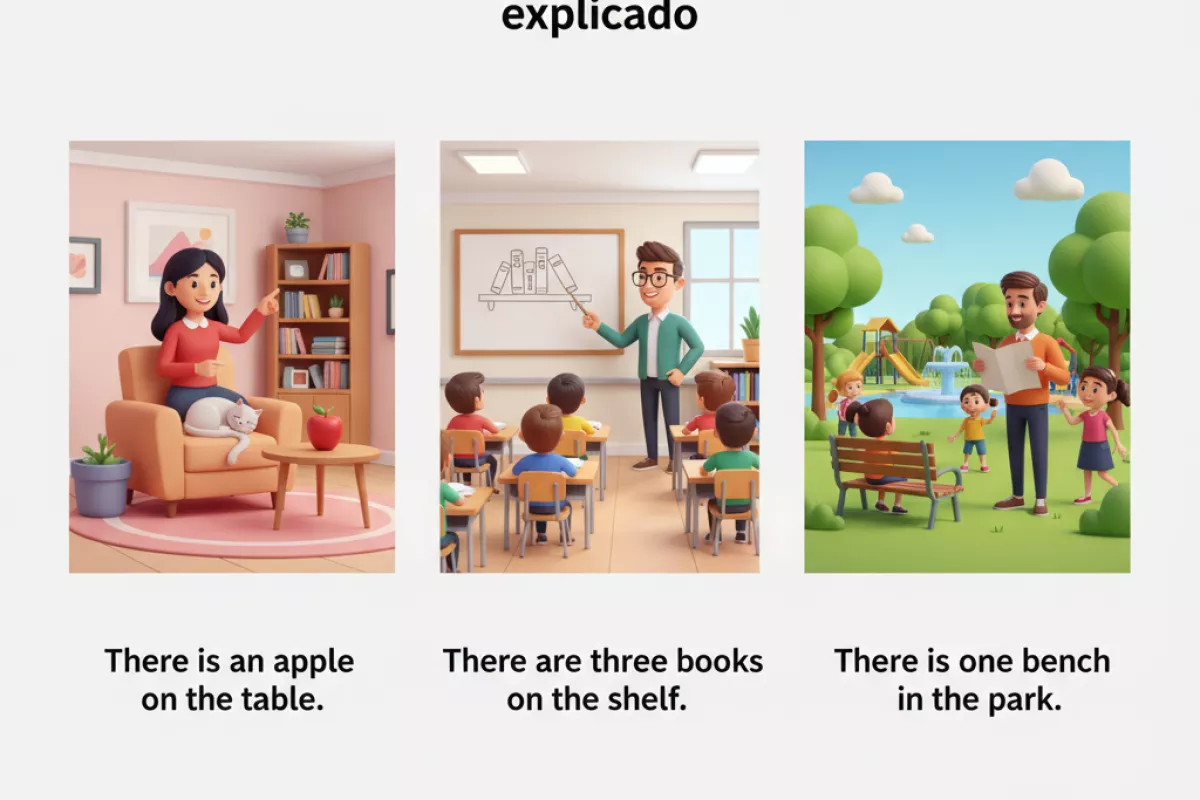 Este contenido explica cómo el español expresa existencia y por qué el inglés usa there is/there are. Incluye la estructura básica, diferencia entre existencia y acción, errores comunes con is o exists y un ejercicio práctico.
Para decir que algo existe o está en un lugar, el inglés usa una estructura simple que conviene dominar desde el inicio. Aquí aprenderás a elegir singular o plural, cómo suena en conversaciones reales y qué errores evitar. Con ejemplos cotidianos, hablarás con más naturalidad.
Cómo se expresa la existencia en español
En español, la idea de “existencia” o “presencia” suele expresarse con hay (del verbo haber) y, según el contexto, con estar o tener. Esto no se traduce palabra por palabra desde el inglés: mientras there is/there are usa un sujeto “vacío” (there), en español normalmente se usa una forma verbal impersonal o un verbo de ubicación/posesión.
La clave práctica es distinguir si hablas de existencia (“hay algo”) o de ubicación (“está en un lugar”) o posesión (“tengo/tiene”). Esa elección determina el patrón, los artículos y si el sustantivo va en singular o plural.
| Idea que quieres expresar | Patrón típico en español | Ejemplo en inglés | Equivalente natural en español |
|---|---|---|---|
| Existencia / disponibilidad general | Hay + (artículo/cuantificador) + sustantivo | There is a problem. | Hay un problema. |
| Existencia en plural | Hay + sustantivo plural | There are two options. | Hay dos opciones. |
| Negación de existencia | No hay + sustantivo | There isn’t any milk. (uncountable: “no contable”) | No hay leche. |
| Pregunta por existencia | ¿Hay + sustantivo + ...? | Is there a bathroom? | ¿Hay un baño? |
| Ubicación de algo conocido/específico | Está/están + lugar | The keys are on the table. | Las llaves están en la mesa. |
| Presentación/introducción de algo en un lugar | Hay + sustantivo + lugar | There’s a book on the table. | Hay un libro en la mesa. |
| Posesión (alguien “tiene” algo) | Tener + objeto | I have a question. | Tengo una pregunta. |
| Eventos o planes (“hay” en el sentido de “se celebra”) | Hay + evento + (tiempo/lugar) | There is a meeting tomorrow. | Hay una reunión mañana. |
| Cantidad/medida (tiempo, distancia) | Hay + cantidad + de + sustantivo | There are 10 kilometers to the city. | Hay 10 kilómetros hasta la ciudad. |
| Contraste con “ser” (identidad, no existencia) | Ser + atributo (no equivale a there is) | There is my brother. (uso poco natural) | Ahí está mi hermano. |
Detalles que suelen causar errores al pasar del inglés al español
-
“Hay” no cambia en singular/plural: en español no dices “hayn” ni “hays”. Por eso sirve tanto para “uno” como para “varios”.
-
Artículo y “algún/ningún”: el inglés usa a/an o any; en español es común alternar entre un/una, algún/alguna y nada/ningún según la intención.
-
No contables (uncountable: “no contable”): en español muchos van sin artículo en frases existenciales: “No hay agua/leche/tiempo”, donde el inglés suele usar any.
-
“Hay” vs “está/están”: si introduces algo nuevo en la escena, “hay” suele sonar más natural; si localizas algo ya conocido, “está/están” encaja mejor.
-
Orden de la información: en español es frecuente añadir el lugar al final (“Hay un libro en la mesa”), mientras que en inglés el patrón con there ya fija el inicio de la frase.
Por qué el inglés usa there is y there are
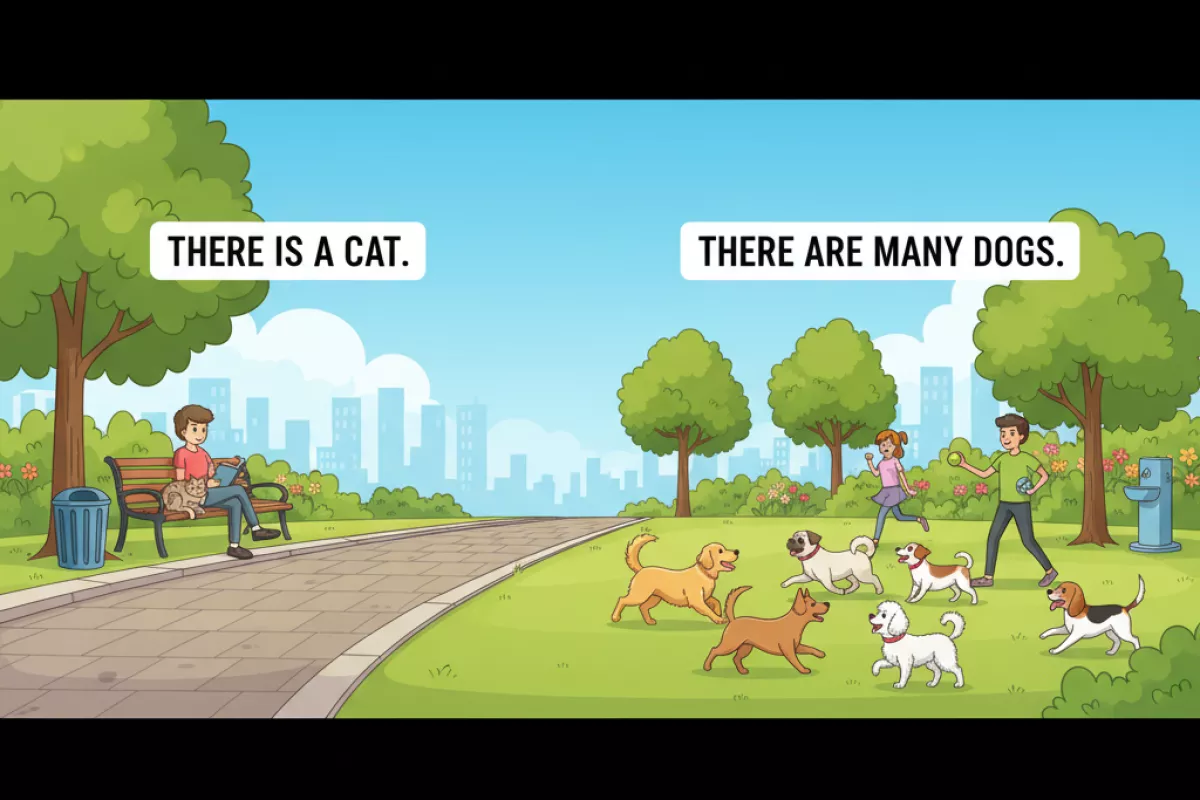
En inglés, la idea de “haber/existir” se expresa con una estructura especial que coloca primero el contexto y después lo que aparece en ese contexto. Por eso se usa there como “marcador” de existencia (no como “allí”), y el verbo be se ajusta en singular o plural según el sustantivo que viene después.
En la práctica, esta construcción sirve para introducir información nueva o señalar que algo está presente: primero se prepara el escenario (lugar, situación, momento) y luego se menciona el elemento. Esto explica por qué a menudo verás complementos de lugar/tiempo al final: se prioriza “qué hay” antes que “dónde está”, aunque ambos pueden aparecer.
Idea clave: “there” no es un lugar
Un error frecuente es interpretar there como “allí”. En estas frases, there funciona como un sujeto “vacío” (introductorio): el contenido real llega después del verbo. Por eso el acuerdo (is/are) depende del sustantivo posterior, no de there.
| Patrón | Uso típico | Ejemplo correcto | Ejemplo incorrecto |
|---|---|---|---|
| There is + singular / uncountable (no contable) | Presentar una cosa o una idea general | There is a problem. (Hay un problema.) | There are a problem. |
| There are + plural | Presentar varias cosas | There are two chairs. (Hay dos sillas.) | There is two chairs. |
| There is/are + nuevo elemento + lugar/tiempo | Introducir algo y luego ubicarlo | There is a bank near my house. (Hay un banco cerca de mi casa.) | A bank is there near my house. |
| It is/They are + elemento conocido | Hablar de algo ya identificado (no “introducir”) | It is on the table. (Está en la mesa.) | There is on the table. |
| There is/are + existencia (en general) | Decir que algo existe/ocurre, sin señalar un “allí” literal | There is a chance we’ll be late. (Hay una posibilidad de que lleguemos tarde.) | There is there a chance we’ll be late. |
| There is/are + lista (acuerdo con el primer elemento) | Enumerar; el verbo suele concordar con lo primero | There is a pen and two notebooks on the desk. (Hay un bolígrafo y dos cuadernos en el escritorio.) | There are a pen and two notebooks on the desk. |
Cómo se conecta con “información nueva” vs “información conocida”
Esta construcción es muy útil cuando el oyente todavía no sabe qué elemento vas a mencionar. Si el objeto ya está en la conversación (información conocida), el inglés prefiere estructuras con it/they u otras formas más directas. En otras palabras: con there sueles “presentar”; con it/they sueles “ubicar o describir”.
También ayuda a entender por qué aparece tanto en descripciones de escenas, anuncios y avisos: “hay X” funciona como una forma natural de añadir elementos al discurso sin asumir que el lector ya los tiene en mente.
Estructura básica de there is / there are
Estas formas se usan para presentar la existencia o presencia de algo en un lugar o situación. La idea clave es que el verbo concuerda con lo que viene después: singular con there is y plural con there are.
En la práctica, fíjate en el sustantivo que sigue (contable / incontable) y en si es uno o varios. También es común que aparezcan expresiones de lugar al final (por ejemplo, in the room), pero no son obligatorias.
| Forma | Singular / incontable | Plural |
|---|---|---|
| Afirmativa | There is + a/an/the + singular There is + uncountable |
There are + (some/the) + plural |
| Negativa | There isn’t + singular/uncountable There is not + singular/uncountable |
There aren’t + plural There are not + plural |
| Pregunta | Is there + singular/uncountable? | Are there + plural? |
| Respuesta corta | Yes, there is. / No, there isn’t. | Yes, there are. / No, there aren’t. |
| Con cantidad | There is + one + singular There is + some + uncountable |
There are + two/three/many + plural There are + some + plural |
Ejemplos correctos (y errores típicos)
- There is a book on the table. (Hay un libro sobre la mesa.)
- There are two books on the table. (Hay dos libros sobre la mesa.)
- There is some water in the glass. (Hay algo de agua en el vaso.)
- There are some chairs in the room. (Hay algunas sillas en la habitación.)
- Is there a bathroom near here? (¿Hay un baño cerca de aquí?)
- Are there any questions? (¿Hay alguna pregunta?)
- There isn’t any milk left. (No queda leche.)
- There aren’t many people today. (No hay mucha gente hoy.)
- There is an apple in my bag. (Hay una manzana en mi bolso.)
- There are children in the park. (Hay niños en el parque.)
- There are a book on the table.
- There is two books on the table.
Notas rápidas para no equivocarse
-
La concordancia depende del sustantivo que viene después: a book (singular) pide there is; two books (plural) pide there are.
-
Con incontables (uncountable), usa normalmente there is: money, water, information.
-
En preguntas y negativas es frecuente any (algún/ningún): Are there any…?, There isn’t any….
-
En plural, recuerda plurales irregulares comunes: child → children, person → people; siguen contando como plural y van con there are.
Diferencia entre existencia y acción
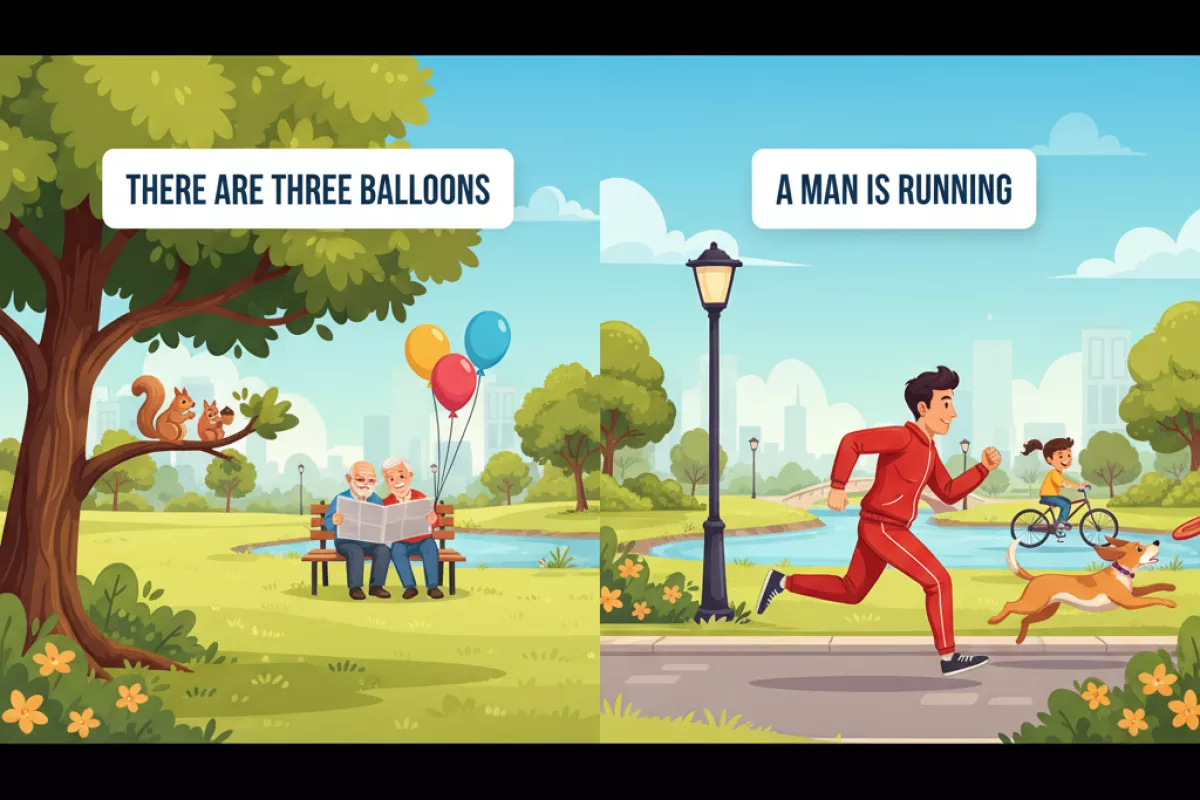
En inglés, there is y there are se usan para presentar la existencia o presencia de algo: introducen una cosa, una persona o un hecho como “hay / existe”. No describen lo que ese sujeto hace, sino que lo ponen en escena, a menudo con información de lugar o cantidad.
Cuando lo importante es la acción, el inglés normalmente prefiere una estructura con un sujeto real y un verbo principal (por ejemplo, A man is running). Esta diferencia ayuda a evitar frases poco naturales como usar there is para contar actividades en curso.
| Idea | Estructura natural | Ejemplo correcto (EN + ES) |
|---|---|---|
| Existencia/presencia (introducir algo) | There is/There are + (a/an/the/some) + nombre (countable/uncountable) | There is a problem. (Hay un problema.) |
| Existencia con ubicación | There is/are + nombre + lugar | There are two chairs in the kitchen. (Hay dos sillas en la cocina.) |
| Acción (lo que alguien hace) | Sujeto + verbo | A man is running. (Un hombre está corriendo.) |
| Acción en progreso en un lugar (enfoque en la actividad) | Sujeto + be + -ing + lugar | People are waiting outside. (La gente está esperando afuera.) |
| “Hay alguien” + acción (primero presentas, luego describes) | There is/are + nombre + who/that + verbo | There is someone who can help you. (Hay alguien que puede ayudarte.) |
| “Hay” + actividad como hecho general (con nombre de actividad) | There is/are + nombre (evento/actividad) | There is a meeting at 3. (Hay una reunión a las 3.) |
Errores típicos y cómo corregirlos
-
Usar there is/are para una acción inmediata
- Incorrecto: There is a man running.
- Correcto: A man is running. (Un hombre está corriendo.)
- Correcto: There is a man who is running. (Hay un hombre que está corriendo.)
-
Confundir “actividad” (nombre) con “acción” (verbo)
- There is a party tonight. (Hay una fiesta esta noche.)
- People are partying tonight. (La gente está de fiesta esta noche.)
-
Olvidar que there no es el sujeto real
- There are many reasons. (Hay muchas razones.)
- Many reasons explain this. (Muchas razones explican esto.)
Patrones prácticos para elegir rápido
-
Si tu frase en español empieza por “Hay…”, normalmente encaja con there is/are + nombre.
- There is some water. (Hay algo de agua.) (uncountable: “agua”)
- There are a few mistakes. (Hay unos pocos errores.)
-
Si lo esencial es el verbo (correr, esperar, trabajar), usa sujeto + verbo; añade lugar si hace falta.
- The kids are sleeping upstairs. (Los niños están durmiendo arriba.)
- My phone is charging. (Mi teléfono se está cargando.)
-
Si quieres presentar algo y luego describirlo, combina: there is/are + nombre + who/that.
- There are students who work at night. (Hay estudiantes que trabajan de noche.)
- There is a book that explains it. (Hay un libro que lo explica.)
Errores comunes al usar is o exists
En inglés, there is / there are se usa para introducir la existencia o presencia de algo en un lugar o situación. El problema típico aparece cuando se intenta traducir literalmente desde el español y se elige is o exists como si fueran equivalentes directos de “hay”.
La idea clave es distinguir entre: (1) presentar algo nuevo en la conversación (mejor con there is/are) y (2) describir algo ya identificado (ahí sí suele encajar is/are). Además, exists se reserva para un registro más formal o técnico y no suele sonar natural para objetos cotidianos.
Patrones que suelen causar errores
-
Usar “is/are” sin “there” para decir “hay”
- Incorrecto: Is a problem in the system.
- Correcto: There is a problem in the system. (Hay un problema en el sistema.)
- Nota: Is a problem... suena incompleto porque falta el sujeto real; there funciona como sujeto “introductorio”.
-
Elegir “exists” para situaciones cotidianas
- Incorrecto: There exists a coffee shop near my house.
- Correcto: There is a coffee shop near my house. (Hay una cafetería cerca de mi casa.)
- Microclave: exists suena más a “existir” en sentido abstracto o formal (registro formal).
-
Confundir “there is/are” con “it is”
- Incorrecto: It is a lot of people in the room.
- Correcto: There are a lot of people in the room. (Hay mucha gente en la habitación.)
- Microclave: people es plural (aunque no lleve -s).
-
Usar singular con un plural por cercanía (“There is” + plural)
- Incorrecto: There is two options.
- Correcto: There are two options. (Hay dos opciones.)
- Microclave: el verbo concuerda con el sustantivo principal que viene después.
-
Fallar en preguntas: invertir mal el orden o añadir “do/does”
- Incorrecto: Do there is a bathroom?
- Incorrecto: There is a bathroom?
- Correcto: Is there a bathroom? (¿Hay un baño?)
- Microclave: en preguntas con there is/are, se invierte is/are con there; no se usa do/does.
-
Negación mal formada (doble negación o “don’t”)
- Incorrecto: There don't are any seats.
- Incorrecto: There isn't no time.
- Correcto: There aren’t any seats. (No hay asientos.)
- Correcto: There isn’t any time. (No hay tiempo.)
- Microclave: any suele aparecer en negativas e interrogativas.
-
Omitir el artículo “a/an” con contables singulares (countable: contable)
- Incorrecto: There is problem with the file.
- Correcto: There is a problem with the file. (Hay un problema con el archivo.)
- Microclave: con un singular contable casi siempre necesitas a/an o the.
-
Usar “there is” con incontables y luego intentar pluralizarlos
- Incorrecto: There are many informations.
- Correcto: There is a lot of information. (Hay mucha información.)
- Microclave: information es uncountable (incontable), no lleva plural.
-
Mezclar “there is/are” con “have/has”
- Incorrecto: The city has many restaurants downtown.
- Correcto: There are many restaurants downtown. (Hay muchos restaurantes en el centro.)
- Matiz: has expresa posesión/atributo del sujeto; there are presenta la existencia en un lugar.
-
Usar “exists” sin contexto y sin naturalidad conversacional
- Incorrecto: Exists a solution for this?
- Correcto: Is there a solution for this? (¿Hay una solución para esto?)
- Microclave: exists como verbo principal requiere sujeto explícito: A solution exists... (más formal).
-
Elegir “there is/are” cuando en realidad se está identificando algo específico
- Incorrecto: There is my teacher.
- Correcto: That is my teacher. (Ese/Esa es mi profesor/a.)
- Microclave: para señalar/identificar, suele usarse that is o this is.
-
Confundir “There is” con “It is” en expresiones de tiempo y distancia
- Incorrecto: There is five kilometers to the station.
- Correcto: It is five kilometers to the station. (Está a cinco kilómetros de la estación.)
- Microclave: con distancia/tiempo, it is suele ser la opción natural.
Consejo práctico para evitar fallos
Si tu frase en español empieza por “Hay…” y estás introduciendo algo (una cosa, una persona, un problema, un lugar), prueba primero con there is/there are. Si estás describiendo algo ya conocido (“La cafetería está cerca”, “El problema es grave”), entonces suele encajar mejor it is / the X is. Reserva exists para contextos formales o cuando quieras enfatizar la existencia en sentido abstracto.
Ejemplos claros en contexto
En la vida real, estas estructuras aparecen sobre todo cuando presentas o señalas la existencia de algo en un lugar: una habitación, una ciudad, un documento, un menú, una conversación. La idea clave es que el foco está en “qué hay” y no en “dónde” (aunque el lugar suele añadirse al final).
Para elegir bien, fíjate en el sustantivo que viene después: si es singular o incontable (uncountable: “no contable”), usa there is; si es plural, usa there are. En preguntas y negativas, el patrón se mantiene y solo cambia el orden o la negación.
Patrones típicos en afirmativa, negativa y pregunta
| Estructura | Ejemplo correcto | Traducción (solo correctos) |
|---|---|---|
| There is + singular/uncountable | There is a problem with the file. | (Hay un problema con el archivo.) |
| There are + plural | There are two chairs by the window. | (Hay dos sillas junto a la ventana.) |
| There isn’t + singular/uncountable | There isn’t any milk in the fridge. | (No hay leche en la nevera.) |
| There aren’t + plural | There aren’t any tickets left. | (No quedan entradas.) |
| Is there + singular/uncountable? | Is there a bank near here? | (¿Hay un banco cerca de aquí?) |
| Are there + plural? | Are there any questions? | (¿Hay alguna pregunta?) |
| There is/are + not + (formal) | There are not enough seats. | (No hay suficientes asientos.) |
| Isn’t/aren’t there + …? (pregunta confirmación) | Aren’t there any other options? | (¿No hay otras opciones?) |
Frases modelo por situaciones cotidianas (con detalles que suelen confundir)
-
En casa / objetos visibles
- There is a key on the table. (Hay una llave en la mesa.)
- There are some books on the floor. (Hay algunos libros en el suelo.)
- There is furniture in the living room. (Hay muebles en el salón.) (furniture: incontable)
-
En la oficina / trabajo
- There is a meeting at 10. (Hay una reunión a las 10.)
- There are three emails from HR. (Hay tres correos de RR. HH.)
- There isn’t enough time to finish. (No hay suficiente tiempo para terminar.) (time: incontable)
-
En la ciudad / lugares
- There is a pharmacy on this street. (Hay una farmacia en esta calle.)
- There are lots of cafés near the station. (Hay muchos cafés cerca de la estación.)
- Is there a bus stop around here? (¿Hay una parada de autobús por aquí?)
-
Comida y compras (some/any)
- There is some bread in the bag. (Hay pan en la bolsa.) (bread: incontable)
- There aren’t any apples left. (No quedan manzanas.)
- Are there any gluten-free options? (¿Hay opciones sin gluten?)
-
Con números, cantidades y “a lot of”
- There are 20 students in the class. (Hay 20 estudiantes en la clase.)
- There is a lot of noise outside. (Hay mucho ruido fuera.) (noise: incontable)
- There are a lot of people in line. (Hay mucha gente en la fila.) (people: plural irregular)
-
Errores típicos (para reconocerlos rápido)
- There are a problem in the report.
- There is two reasons for this.
- Is there any chairs in the room?
Nota práctica: cuando el sustantivo va en plural, la pregunta suele ir con Are there…? y en negativas es muy común There aren’t any…. Con incontables, lo habitual es There isn’t any… o There isn’t much… (much: “mucho” para incontables).
Ejercicio práctico para casa
La práctica más útil con estas estructuras consiste en producir frases completas en tres formatos: afirmación, negación y pregunta. La idea clave es hacer coincidir el verbo con el número (singular/plural) y mantener el orden típico: There + be + (a/an/some/any) + sustantivo + lugar/tiempo.
En los ejercicios de abajo trabajarás con sustantivos contables (countable) y no contables (uncountable), además de cuantificadores frecuentes. Fíjate especialmente en a/an (singular), some (afirmativas) y any (negativas/preguntas).
Ejercicio 1: Completa con there is o there are
- ________ a book on the table.
- ________ two chairs in the kitchen.
- ________ some water in the bottle.
- ________ an apple in my bag.
- ________ three students in the classroom.
- ________ a lot of traffic today.
- ________ many people at the bus stop.
- ________ a new message on your phone.
- ________ some milk in the fridge.
- ________ five windows in this room.
Mostrar respuestas
- There is a book on the table. (Hay un libro en la mesa.)
- There are two chairs in the kitchen. (Hay dos sillas en la cocina.)
- There is some water in the bottle. (Hay algo de agua en la botella.)
- There is an apple in my bag. (Hay una manzana en mi bolso.)
- There are three students in the classroom. (Hay tres estudiantes en el aula.)
- There is a lot of traffic today. (Hay mucho tráfico hoy.)
- There are many people at the bus stop. (Hay muchas personas en la parada de autobús.)
- There is a new message on your phone. (Hay un mensaje nuevo en tu teléfono.)
- There is some milk in the fridge. (Hay algo de leche en la nevera.)
- There are five windows in this room. (Hay cinco ventanas en esta habitación.)
Ejercicio 2: Pasa a negativa
- There is a supermarket near here.
- There are some cookies in the box.
- There is an email from your teacher.
- There are four bedrooms in the house.
- There is some information on the website.
- There are many cars on this street.
- There is a problem with the printer.
- There are two keys on the desk.
Mostrar respuestas
- There isn’t a supermarket near here. (No hay un supermercado cerca de aquí.)
- There aren’t any cookies in the box. (No hay galletas en la caja.)
- There isn’t an email from your teacher. (No hay un correo de tu profesor.)
- There aren’t four bedrooms in the house. (No hay cuatro dormitorios en la casa.)
- There isn’t any information on the website. (No hay información en el sitio web.)
- There aren’t many cars on this street. (No hay muchos coches en esta calle.)
- There isn’t a problem with the printer. (No hay un problema con la impresora.)
- There aren’t two keys on the desk. (No hay dos llaves en el escritorio.)
Ejercicio 3: Escribe la pregunta
- There is a bank on this street.
- There are any seats available.
- There is some coffee left.
- There are three meetings today.
- There is a reason for this.
- There are any clean glasses.
- There is a bus after 10 p.m.
- There are two bathrooms in the apartment.
Mostrar respuestas
- Is there a bank on this street? (¿Hay un banco en esta calle?)
- Are there any seats available? (¿Hay asientos disponibles?)
- Is there any coffee left? (¿Queda café?)
- Are there three meetings today? (¿Hay tres reuniones hoy?)
- Is there a reason for this? (¿Hay una razón para esto?)
- Are there any clean glasses? (¿Hay vasos limpios?)
- Is there a bus after 10 p.m.? (¿Hay un autobús después de las 10 p. m.?)
- Are there two bathrooms in the apartment? (¿Hay dos baños en el apartamento?)
Ejercicio 4: Corrige la frase (si es necesario)
- There is two cats in the garden.
- There are a chair in the room.
- There is some bread on the plate.
- There are any students in the library.
- Is there any problems with the order?
- Are there a good restaurant near here?
- There isn’t any sugar in my coffee.
- There are a lot of people at the concert.
- There is many reasons to stay.
- Are there any milk in the fridge?
Mostrar respuestas
- There are two cats in the garden. (Hay dos gatos en el jardín.)
- There is a chair in the room. (Hay una silla en la habitación.)
- There is some bread on the plate. (Hay pan en el plato.)
- Are there any students in the library? (¿Hay estudiantes en la biblioteca?)
- Are there any problems with the order? (¿Hay problemas con el pedido?)
- Is there a good restaurant near here? (¿Hay un buen restaurante cerca de aquí?)
- There isn’t any sugar in my coffee. (No hay azúcar en mi café.)
- There are a lot of people at the concert. (Hay mucha gente en el concierto.)
- There are many reasons to stay. (Hay muchas razones para quedarse.)
- Is there any milk in the fridge? (¿Hay leche en la nevera?)