Errores comunes con comparativos y superlativos

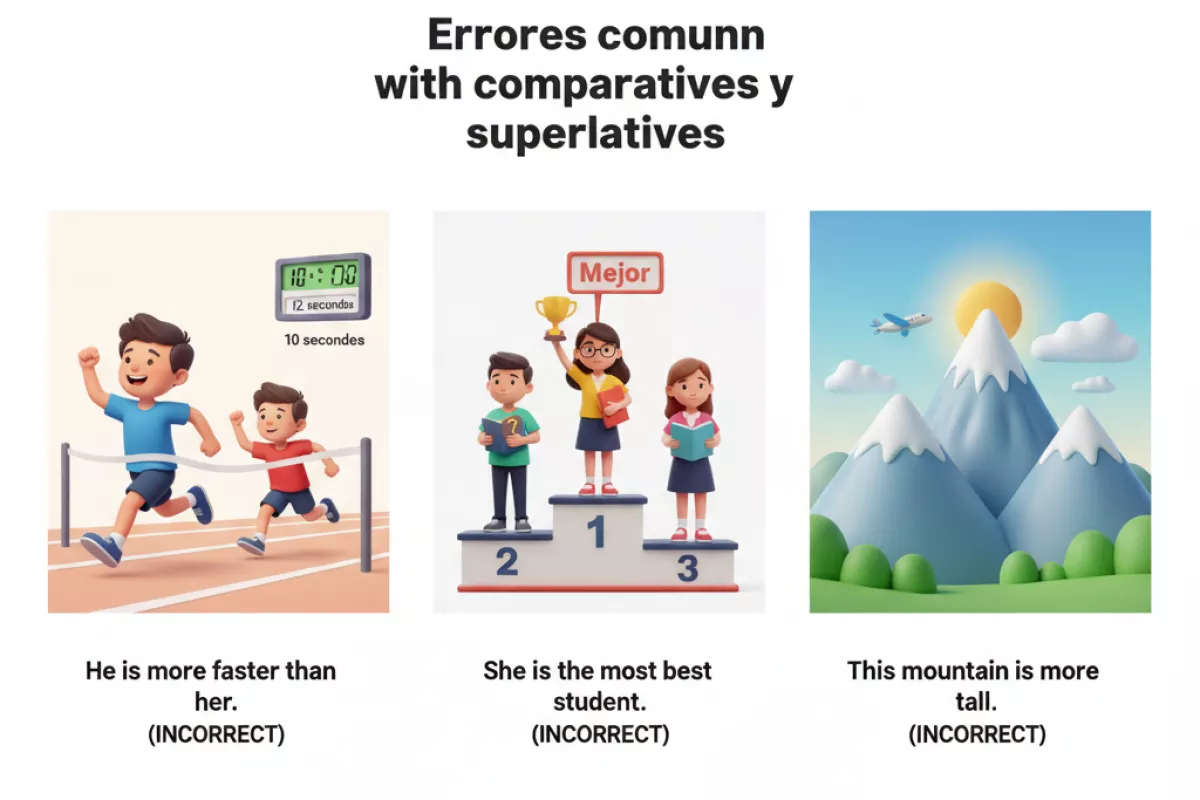 Aprende cómo funcionan los comparativos y superlativos en inglés, la diferencia entre formas cortas y largas y errores comunes como more better. Verás ejemplos correctos e incorrectos, consejos para evitar fallos y un ejercicio práctico final.
Muchos estudiantes se confunden con las comparaciones en inglés cuando quieren decir que algo es más, menos o el mejor. En clase veo que los errores suelen venir de traducir palabra por palabra, elegir mal entre -er y more o mezclar than con estructuras incorrectas. Aquí lo verás claro con ejemplos cotidianos para que suene natural al hablar y escribir, y puedas corregirte rápidamente sin memorizar reglas interminables.
Cómo funcionan los comparativos
Los comparativos sirven para poner en relación dos elementos (personas, cosas, ideas o situaciones) y señalar una diferencia o una igualdad en una característica: tamaño, velocidad, precio, frecuencia, etc. En inglés suelen aparecer con una estructura muy estable, lo que ayuda a detectar rápidamente qué se está comparando y en qué sentido.
La idea clave es elegir bien el patrón según el tipo de adjetivo o adverbio y mantener la simetría: si comparas “A” con “B”, la frase debe dejar claro el punto de comparación y usar la forma correcta (más/menos/igual). En muchos casos, el error no está en el vocabulario, sino en mezclar estructuras (por ejemplo, usar more con un adjetivo que ya lleva -er).
Estructuras básicas para comparar
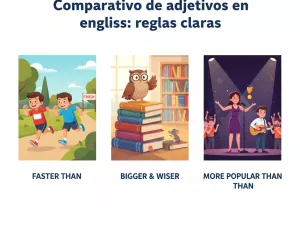
- Superioridad: A + be + adjetivo comparativo + than + B (A is taller than B).
- Superioridad con adverbios: A + verbo + adverbio comparativo + than + B (She runs faster than him).
- Inferioridad: A + be + less + adjetivo + than + B (This task is less difficult than the last one).
- Igualdad: A + be + as + adjetivo + as + B (My phone is as expensive as yours).
- Igualdad con adverbios: A + verbo + as + adverbio + as + B (He speaks as clearly as the teacher).
- Comparar cantidades (countable/uncountable): more/fewer/less + sustantivo + than (fewer books (contable), less money (no contable)).
Cómo formar el comparativo: reglas prácticas
La forma depende sobre todo de la longitud del adjetivo/adverbio y de su ortografía. Como guía rápida, muchos adjetivos cortos usan -er, mientras que los más largos suelen usar more. Hay excepciones frecuentes (irregulares) que conviene memorizar porque son muy comunes en textos y conversación.
| Tipo de palabra | Forma comparativa | Ejemplo |
|---|---|---|
| Adjetivo corto (1 sílaba) | raíz + -er | small → smaller (A smaller bag) |
| Adjetivo en -e | + -r | nice → nicer (nicer than before) |
| Consonante-vocal-consonante (CVC) | doblar consonante + -er | big → bigger (bigger than mine) |
| Adjetivo en -y | -y → -ier | happy → happier (happier than you) |
| Adjetivo largo (2+ sílabas) | more + adjetivo | interesting → more interesting |
| Adverbio en -ly | more + adverbio | carefully → more carefully |
| Irregulares frecuentes | forma especial | good → better; bad → worse; far → farther/further |
Patrones útiles que suelen aparecer en textos reales
- Comparativo + and + comparativo para cambios progresivos: It’s getting colder and colder.
- The + comparativo..., the + comparativo... para relaciones causa-efecto: The more you practice, the easier it gets.
- much/far/a lot + comparativo para intensificar: This is far better than the old version.
- a bit/a little/slightly + comparativo para matizar: She is slightly taller than her sister.
- no/not as + adjetivo + as para igualdad negativa: This room is not as quiet as the library.
- than + pronombre: en registro formal se ve than + I/he/she; en uso común, than + me/him/her (microdiferencia de registro).
Puntos de control para evitar confusiones
- Si usas -er, no añadas more: evitar formas dobles como “more faster”.
- Con as...as, no se usa than: “as tall as”, no “as tall than”.
- Para cantidad, distingue fewer (contable) de less (no contable): fewer emails vs less time.
- En comparaciones, mantén el mismo tipo de elemento: “Her salary is higher than mine” (no mezclar persona con salario).
- Si el segundo término se sobreentiende, puede omitirse: This route is shorter (than the other one).
Cómo funcionan los superlativos
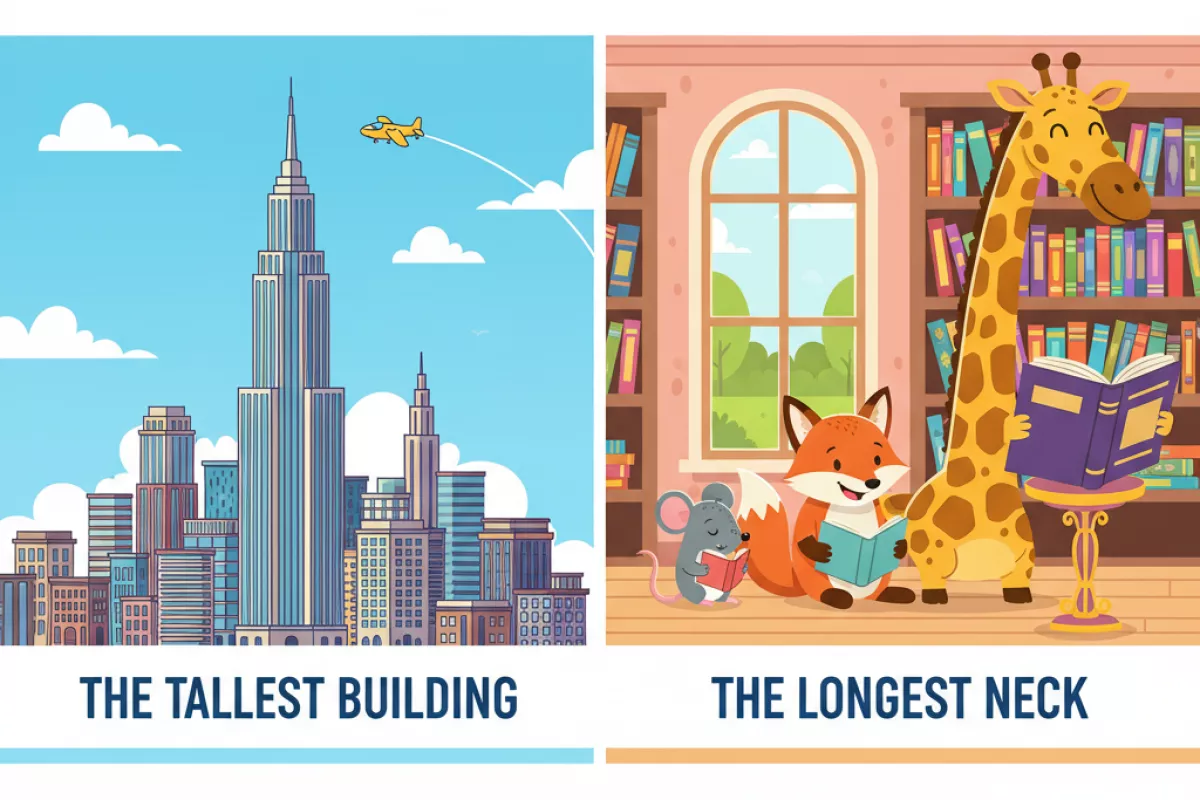
Los superlativos se usan para señalar un extremo dentro de un grupo: quién o qué ocupa el primer lugar por arriba o por abajo en una cualidad. La idea práctica es que no comparan “A con B”, sino “A frente a todos los demás” (o frente a un conjunto implícito).
En inglés, la forma depende sobre todo de la longitud del adjetivo y de su terminación. Además, suelen ir con the porque se habla de “el/la más…” dentro de un marco definido: the tallest building (el más alto). Aun así, hay casos donde the no aparece, especialmente cuando el superlativo funciona como intensificador o en estructuras fijas.
Patrones de formación: -est y most
| Tipo de adjetivo | Regla | Ejemplo |
|---|---|---|
| Corto (1 sílaba) | añadir -est + normalmente the | the smallest, the fastest |
| Termina en -e | añadir -st | the nicest, the largest |
| CVC (consonante-vocal-consonante) al final | duplicar consonante final + -est | the biggest, the hottest |
| Termina en consonante + y | y → i + -est | the happiest, the easiest |
| Largo (2+ sílabas, frecuente) | the most + adjetivo | the most interesting, the most expensive |
| Para el extremo inferior | the least + adjetivo | the least helpful, the least practical |
Irregulares y formas que suelen causar errores
Algunos adjetivos no siguen los patrones anteriores y conviene memorizarlos, porque son una fuente frecuente de mezclas como more better o most best. También hay adjetivos “flexibles” (sobre todo de dos sílabas) que aceptan dos opciones según el registro, aunque una suele sonar más natural en conversación.
- good → the best (mejor / el mejor)
- bad → the worst (peor / el peor)
- far → the farthest / the furthest (más lejano)
- many/much → the most (muchos/mucho; countable/uncountable: contable/no contable)
- little → the least (menos)
- old → the oldest / the eldest (edad; eldest suele ser en familia)
- simple → the simplest / the most simple (la primera suele ser la opción común)
- clever → the cleverest / the most clever (varía por estilo)
- quiet → the quietest (ojo con la ortografía)
- friendly → the friendliest (no friendlyest)
El artículo the y cuándo puede omitirse
La pauta general es the + superlativo cuando se identifica un “número uno” dentro de un conjunto: the highest score in the class. El artículo ayuda a marcar que no es una comparación abierta, sino un máximo/mínimo en un marco concreto.
- Con nombre: the fastest route, the most important rule.
- Con complemento que define el grupo: the cheapest option on the menu.
- Después de posesivos/demostrativos: my best friend, this is my worst day (aquí the no se usa porque ya hay determinante).
- Como intensificador informal: That’s best! (muy raro en formal; no es “el mejor” literal).
- Con superlativo como complemento: It was best to leave early (estructura fija: “lo mejor era…”).
Errores típicos de forma y concordancia
Muchos fallos aparecen por aplicar reglas de comparativos al extremo (por ejemplo, añadir more donde toca -est) o por mezclar dos marcas a la vez. También es habitual olvidar que el superlativo no “concuerda” en plural como en español: el adjetivo no cambia por número, lo que cambia es el sustantivo.
- No duplicar marcas: the most fastest ✗ → the fastest ✓ / the most fast (poco natural) ✗
- Evitar dobles irregulares: the most best ✗ → the best ✓
- Ortografía con -y: the funnyest ✗ → the funniest ✓
- Duplicación CVC: the bigest ✗ → the biggest ✓
- Plural del sustantivo, no del adjetivo: the tallest buildings ✓ (no existe “tallests”).
- Con much/many: the most people (contable) / the most time (no contable).
Errores típicos como more better
Este tipo de fallo aparece cuando se mezclan dos mecanismos distintos para formar el comparativo en inglés: el sufijo -er (faster, smaller) y el intensificador more (more interesting, more expensive). En la mayoría de casos, el idioma elige uno u otro, pero no ambos a la vez.
La idea práctica es sencilla: si el adjetivo ya lleva forma comparativa (por ejemplo, termina en -er o es un comparativo irregular), no se añade more. Y si el comparativo se construye con more, el adjetivo se queda en su forma base (sin -er).
Patrón correcto: una sola marca de comparativo
| Tipo de adjetivo | Incorrecto | Correcto |
|---|---|---|
| Corto (1 sílaba aprox.) | more faster | faster |
| Termina en -y | more happier | happier |
| Largo (2+ sílabas frecuente) | interestinger | more interesting |
| Irregular | more better | better |
Combinaciones típicas que conviene evitar
- more better → better
- more worse → worse
- more faster → faster
- more slower → slower
- more cheaper → cheaper
- more easier → easier
- more simpler → simpler
- more nicer → nicer
- more bigger → bigger
- more smaller → smaller
- more colder → colder
- more hotter → hotter
- more younger → younger
- more older → older
- more funnier → funnier
- more happier → happier
Errores paralelos con superlativos: “the most best”
El mismo cruce ocurre con superlativos: se combinan -est (the fastest) y the most (the most interesting). Igual que con los comparativos, se usa solo una marca. Además, en superlativo suele aparecer the porque se identifica “el/la más…” dentro de un grupo.
- the most best → the best
- the most worst → the worst
- the most fastest → the fastest
- the most easiest → the easiest
- the most happiest → the happiest
- the interestingset → the most interesting
Cómo decidir rápido: “-er/-est” o “more/most”
Como regla operativa, muchos adjetivos cortos aceptan -er/-est, y muchos adjetivos largos prefieren more/most. Aun así, hay variación (por ejemplo, simple puede verse como simpler o more simple según registro), pero lo que no cambia es que no se duplican las marcas.
- Si ves more, deja el adjetivo en base: more + adjective (no *adjective-er*).
- Si ves -er, no añadas more.
- Con irregulares, memoriza la forma: good → better → the best; bad → worse → the worst.
- En superlativo, revisa el artículo: “the + superlative” (el/la más…).
Diferencia entre formas cortas y largas
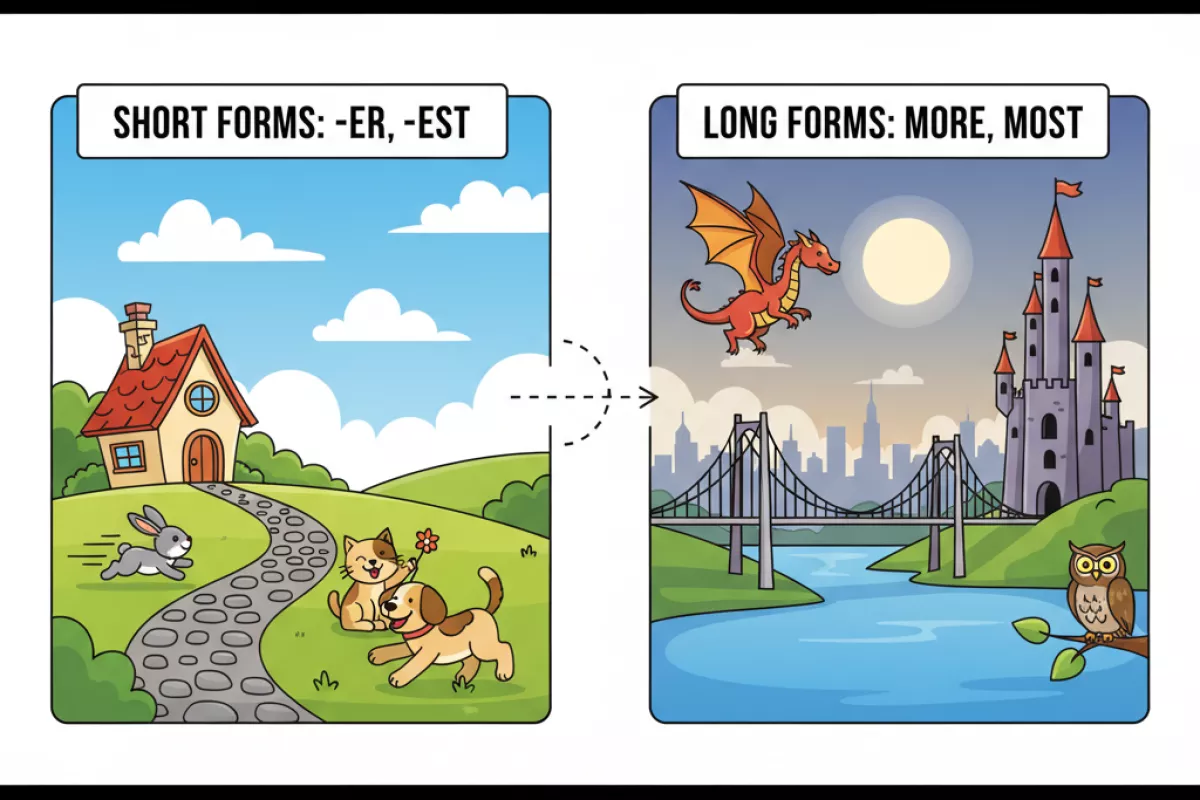
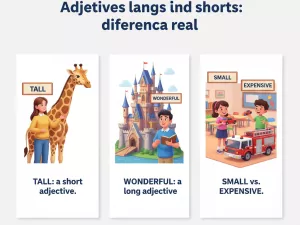
En inglés, los comparativos y superlativos se forman de dos maneras principales: con terminaciones (-er, -est) o con more/most. Elegir bien no es “por gusto”: depende sobre todo de la longitud de la palabra, su terminación y algunos patrones muy frecuentes.
En la práctica, muchos fallos aparecen por mezclar sistemas (por ejemplo, usar more y -er a la vez) o por aplicar la forma corta a adjetivos que suelen ir con la forma larga. Tener claros los criterios reduce errores y hace que la frase suene natural.
Regla general: una sílaba (y algunas de dos) vs. dos o más sílabas
| Tipo de adjetivo | Forma recomendada | Ejemplo comparativo | Ejemplo superlativo |
|---|---|---|---|
| 1 sílaba (short, tall, fast) | -er / -est | taller than | the tallest |
| 2 sílabas en -y (happy, busy) | -ier / -iest | happier than | the happiest |
| 2 sílabas “variables” (simple, quiet, clever) | -er/-est o more/most (según uso) | simpler / more simple | the simplest / the most simple |
| 2+ sílabas (important, expensive) | more / most | more important than | the most important |
| Participios usados como adjetivos (tired, bored) | more / most | more tired than | the most tired |
Patrones de ortografía típicos en la forma corta
- -y → -ier/-iest: happy → happier → the happiest.
- Consonante + vocal + consonante (a menudo se duplica la consonante final): big → bigger → the biggest; hot → hotter → the hottest.
- -e final (se añade solo -r/-st): nice → nicer → the nicest.
- No duplicar si termina en dos consonantes o en vocal larga típica: fast → faster (no “fastter”); clean → cleaner.
Errores comunes al elegir entre forma corta y larga
- Doble comparativo/superlativo: more taller / most fastest (incorrecto). Debe ser taller / fastest o more tall / most fast (aunque lo natural suele ser taller/fastest).
- Usar -er con adjetivos largos: beautifuller (incorrecto). Debe ser more beautiful.
- Forzar more/most con adjetivos de 1 sílaba en contextos normales: more tall suele sonar menos natural que taller (aunque puede aparecer por énfasis o contraste en algunos estilos).
- Confundir “the” en superlativos: He is smartest (posible en ciertos contextos informales), pero la forma estándar es He is the smartest (el más…).
- Mezclar “than”: En comparativos, lo habitual es usar than (que): taller than me.
Lista rápida: ¿cuándo suele ir con more/most?
- Adjetivos de 2+ sílabas: more interesting, the most expensive.
- Adjetivos terminados en -ed/-ing: more tired, the most boring.
- Muchos adjetivos en -ful/-less: more careful, the most useless.
- Muchos adjetivos en -able/-ible: more comfortable, the most reliable.
- Cuando el hablante busca claridad o un estilo más formal con ciertos adjetivos “variables”: more simple, the most quiet.
Casos especiales que conviene memorizar
- Irregulares: good → better → the best; bad → worse → the worst; far → farther/further → the farthest/the furthest.
- Con “much/many” (countable/uncountable: contable/no contable): more → the most.
- Con “little” (cantidad): less → the least (no confundir con “small”: smaller/the smallest).
Ejemplos correctos e incorrectos
Para evitar fallos con comparaciones en inglés, conviene fijarse en dos decisiones rápidas: (1) si el adjetivo suele formar el grado con -er/-est o con more/most, y (2) qué estructura exige la frase (por ejemplo, than tras un comparativo o the con un superlativo). Con estas dos comprobaciones se corrigen la mayoría de errores de forma y de orden.
Los ejemplos siguientes muestran patrones frecuentes: dobles comparativos, confusión entre less/fewer (uncountable/countable: “no contable/contable”), uso incorrecto de the, y comparaciones “incompletas” sin el elemento de referencia. La idea práctica es identificar el molde y repetirlo con tu propio vocabulario.
Errores típicos y su corrección
| Incorrecto | Correcto | Regla/patrón |
|---|---|---|
| She is more taller than me. | She is taller than me. | No se combinan more + -er (doble comparativo). |
| This is the most easiest way. | This is the easiest way. | No se combinan most + -est (doble superlativo). |
| My car is more fast than yours. | My car is faster than yours. | Adjetivos cortos suelen ir con -er: fast → faster. |
| It’s the better option. | It’s the best option. | Better es comparativo; con “la mejor” se usa superlativo. |
| He is the tallest than his brother. | He is taller than his brother. | Con than va comparativo; el superlativo no lleva than. |
| She is more smart than her sister. | She is smarter than her sister. | smart suele ir con -er: smart → smarter. |
| This is more cheaper. | This is cheaper. | Evita “more + comparativo” (doble marca). |
| He has fewer money than I do. | He has less money than I do. | Money es uncountable (no contable): less, no fewer. |
| There is less people here today. | There are fewer people here today. | People es plural (contable): fewer + plural, y “there are”. |
| My room is the cleaner in the house. | My room is the cleanest in the house. | “En la casa” implica superlativo: the + -est. |
| This is best restaurant in town. | This is the best restaurant in town. | Superlativo normalmente requiere the. |
| She is the most tall in her class. | She is the tallest in her class. | tall → tallest (no “most tall”). |
| I’m older that you. | I’m older than you. | Tras comparativo se usa than, no that. |
| Of the three, John is taller. | Of the three, John is the tallest. | Con “de los tres” se elige un extremo: superlativo. |
| She is as taller as her brother. | She is as tall as her brother. | Estructura de igualdad: as + adj. base + as. |
| This exercise is more easier than the last one. | This exercise is easier than the last one. | easy → easier; no añadir more. |
| Which is more better? | Which is better? | better ya es comparativo de good. |
| He is the most funniest person I know. | He is the funniest person I know. | funny → funniest; sin most. |
Patrones rápidos para autocorregirte
- Comparativo: adj. + -er o more + adj., seguido de than cuando se menciona el segundo término.
- Superlativo: the + adj. + -est o the most + adj.; suele ir con “in/of” para delimitar el grupo (in the class, of the three).
- Igualdad: as + adjetivo (forma base) + as; no uses -er ni more dentro de esta estructura.
- less vs fewer: less con uncountable (no contable) como money, time; fewer con plurales contables como people, books.
- Evita dobles marcas: no combines more/most con -er/-est en el mismo adjetivo.
Consejos para evitar errores
La mayoría de fallos con las formas de comparación aparecen por dos motivos: aplicar una regla a un adjetivo que no la admite (por ejemplo, usar -er con palabras largas) o mezclar estructuras (como combinar more con una terminación en -er). Para escribir con seguridad, conviene identificar primero el tipo de adjetivo/adverbio y luego elegir un patrón estable.
En la práctica, ayuda pensar en tres decisiones rápidas: (1) ¿la palabra es corta o larga?, (2) ¿estoy comparando dos cosas o el “máximo” dentro de un grupo?, y (3) ¿necesito un adverbio en -ly o un adjetivo? Con esas preguntas, se reducen mucho las combinaciones incorrectas.
1) Elige el patrón correcto según la forma de la palabra
- Adjetivos cortos (1 sílaba, muchos de 2): tall → taller → the tallest.
- Adjetivos largos (normalmente 2+ sílabas): interesting → more interesting → the most interesting.
- Adverbios en -ly: carefully → more carefully → the most carefully (no carefuller).
- Adjetivos en -y: cambia a -i: happy → happier → the happiest.
- Consonante-vocal-consonante (CVC): duplica consonante: big → bigger → the biggest.
- Terminan en -e: añade -r/-st: nice → nicer → the nicest.
2) Evita “dobles comparativos” y “dobles superlativos”
- No mezcles more con -er: correcto more useful o useful no lleva -er; incorrecto more usefuler.
- No mezcles most con -est: correcto the most important; incorrecto the most importantest.
- Si dudas, elige una sola estrategia: o sufijo (-er/-est) o perífrasis (more/most).
3) Controla los irregulares (memoriza el trío completo)
| Base | Comparativo | Superlativo |
|---|---|---|
| good | better | the best |
| bad | worse | the worst |
| far | farther/further | the farthest/the furthest |
| many/much (contable/no contable) | more | the most |
| little (cantidad) | less | the least |
Un error típico es inventar formas regulares: gooder o badder. Para evitarlo, aprende cada conjunto como una “familia” (base–comparativo–superlativo) y úsalo siempre igual.
4) Asegura la estructura completa de la comparación
- Comparativo entre dos: A is taller than B (no omitas than si hay segundo término).
- Si el segundo término es una oración, cuida el pronombre: than I am / than me (en registro informal).
- Para igualdad: as + adjective + as: as fast as (no so fast than).
- Para inferioridad: less + adjective + than: less expensive than.
- Para cambios: getting + comparative: It’s getting colder.
5) No confundas adjetivos y adverbios (especialmente con -ly)
- Después de verbos de enlace (be, seem, feel): usa adjetivo: She feels bad (no badly si hablas del estado).
- Para describir una acción: usa adverbio: He drives carefully.
- Con hard y late: el adverbio no lleva -ly: work hard, arrive late.
- Good (adjetivo) vs well (adverbio / “bien”): a good singer, sings well.
6) Usa “the” y las preposiciones correctas en superlativos
- En general, superlativo + the: the highest, the most useful.
- Para situarlo en un grupo: the best in the class vs the best of the three (grupo específico).
- Con posesivos puede omitirse the: my best friend.
- Evita duplicar determinantes: no the my best.
7) Revisa cuantificadores: “fewer/less” y “many/much”
- fewer con contables (plural): fewer mistakes.
- less con no contables: less time.
- many con contables: many books; much con no contables: much information.
- En comparaciones, mantén la coherencia: less traffic pero fewer cars.
8) Lista de verificación rápida antes de entregar un texto
- ¿Comparo dos elementos (-er/more) o un máximo en un grupo (-est/most)?
- ¿He evitado combinaciones dobles (more + -er, most + -est)?
- ¿El adjetivo/adverbio encaja con la regla (corto, largo, -ly, -y, CVC)?
- ¿He usado than cuando corresponde y as…as para igualdad?
- ¿El superlativo lleva the y la preposición adecuada (in/of)?
- ¿He elegido bien entre less/fewer y much/many (contable/no contable)?
Ejercicios prácticos
En esta parte vas a practicar las estructuras que más suelen fallar al comparar: la elección de la forma (-er / more), el uso de than, y los patrones con artículos y cuantificadores (por ejemplo, fewer con contables (contables) y less con incontables (incontables)). La idea es fijarte en la forma completa de la frase, no solo en el adjetivo.
En cada bloque, completa o corrige oraciones para que suenen naturales y gramaticales. Presta atención a detalles típicos: dobles comparativos, “the” en superlativos, y estructuras paralelas como as…as o the more…, the more….
1) Completa con la forma correcta (comparativo o superlativo)
- This exam is _____ (easy) than the last one.
- She is the _____ (careful) student in the group.
- My new phone is _____ (good) than my old one.
- Today is the _____ (hot) day of the week.
- This suitcase is _____ (heavy) than that backpack.
- That was the _____ (bad) mistake I could make.
- His explanation was _____ (clear) than mine.
- It’s the _____ (interesting) chapter in the book.
- Our office is _____ (far) from the station than yours.
- She speaks _____ (quietly) than her brother.
Mostrar respuestas
- easier
- most careful
- better
- hottest
- heavier
- worst
- clearer
- most interesting
- farther / further
- more quietly
2) Corrige el error (una corrección por frase)
- My house is more bigger than yours.
- She is the most tallest in her class.
- This is more easy than I expected.
- He is the better player of the team.
- I have less friends than before.
- This is the most unique solution.
- He runs fastlier than me.
- That was the funniest joke of all jokes.
- She is more smarter than her sister.
- This problem is the more important.
Mostrar respuestas
- My house is bigger than yours.
- She is the tallest in her class.
- This is easier than I expected.
- He is the best player on the team.
- I have fewer friends than before.
- This is a unique solution.
- He runs faster than me.
- That was the funniest joke of all.
- She is smarter than her sister.
- This problem is the most important.
3) Elige la opción correcta (A/B)
- I feel (A) worse (B) worst today than yesterday.
- This route is (A) more short (B) shorter than the highway.
- He is (A) the most experienced (B) the more experienced engineer here.
- We need (A) less (B) fewer time to finish.
- There are (A) less (B) fewer emails in my inbox now.
- That’s (A) the funniest (B) funniest story I’ve heard.
- Her results are (A) better (B) more better this term.
- This is (A) the least (B) less expensive option.
- He drives (A) more carefully (B) carefuller than his friends.
- It was (A) the most (B) more surprising moment of the match.
Mostrar respuestas
- A
- B
- A
- A
- B
- A
- A
- A
- A
- A
4) Patrones clave: as…as / not as…as / the more…, the more…
- This chair is not _____ comfortable _____ that one.
- My laptop is _____ fast _____ yours.
- The _____ I practice, the _____ confident I feel.
- She isn’t _____ outgoing _____ her sister.
- The _____ you wait, the _____ impatient he gets.
- This explanation is _____ clear _____ the previous one.
- The _____ we talk, the _____ we understand the problem.
- He’s not _____ tall _____ his father.
- The _____ I read, the _____ I realize how much I don’t know.
- This app is _____ useful _____ the paid version.
Mostrar respuestas
- as / as
- as / as
- more / more
- as / as
- longer / more
- as / as
- more / more
- as / as
- more / more
- as / as
5) Completa con much / far / a bit / slightly + comparativo
- This version is _____ better than the old one.
- Her apartment is _____ bigger than mine, but not huge.
- Today feels _____ colder than yesterday.
- The second test was _____ more difficult than the first.
- Your answer is _____ clearer than mine.
- This restaurant is _____ cheaper than the one near my house.
- I’m _____ more tired than I thought.
- His tone sounded _____ friendlier this time.
Mostrar respuestas
- much
- a bit
- slightly
- far
- much
- a bit
- far
- slightly
| Patrón | Forma correcta | Ejemplo modelo |
|---|---|---|
| Doble comparativo | bigger / more interesting | This bag is bigger than mine. |
| Superlativo con “the” | the + -est / the most | It’s the most useful tool. |
| Contables vs. incontables | fewer + plural / less + uncountable (incontable) | Fewer mistakes, less time. |
| Comparación de igualdad | as + adj/adv + as | He’s as reliable as she is. |
| Progresión | the + comparative, the + comparative | The more you study, the better you do. |
| Adverbios en -ly | more + adverb | She speaks more clearly now. |