Ejercicios de Present Continuous con soluciones

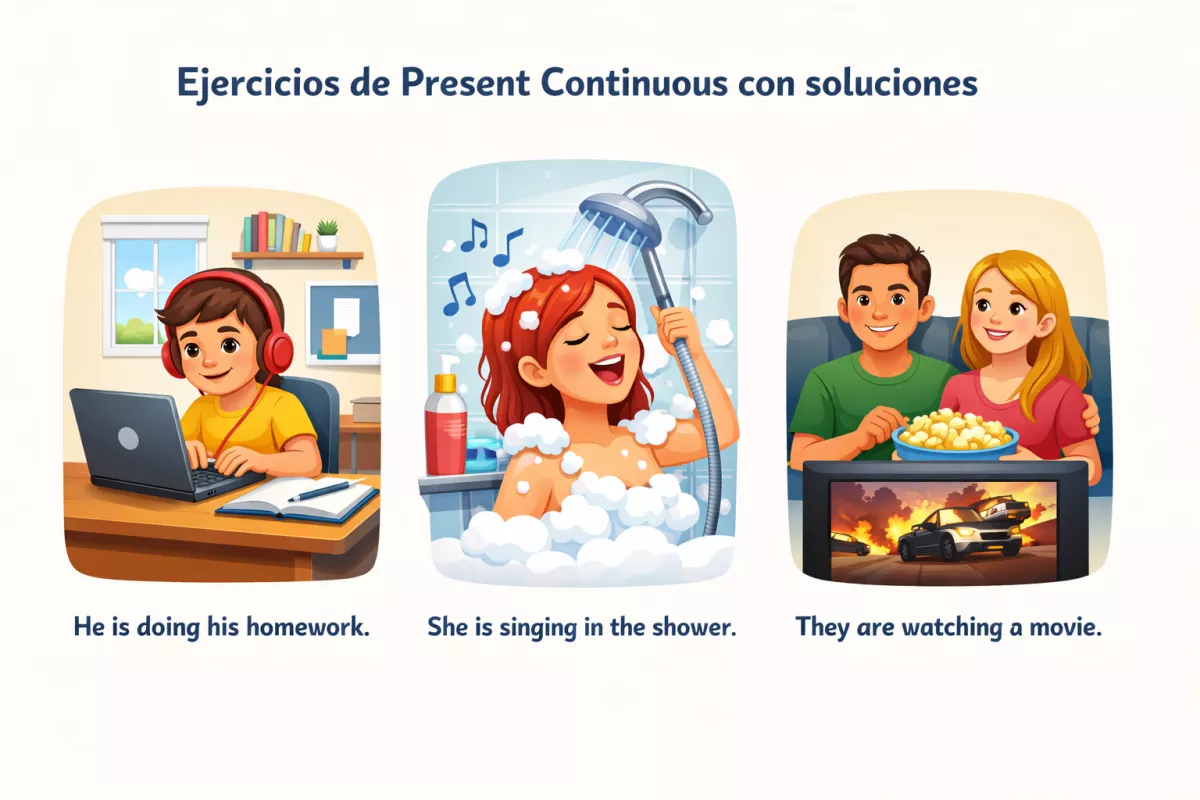 Incluye ejercicios de Present Continuous con oraciones afirmativas, negativas y preguntas, además de uso de palabras clave, traducción de frases, práctica mixta de estructuras y corrección de errores comunes. También trae soluciones explicadas paso a paso.
Si quieres dominar la forma verbal que usamos para hablar de acciones que ocurren ahora mismo, practicar con actividades resueltas es una de las maneras más efectivas de mejorar. Aunque al principio parece un tema sencillo, muchos estudiantes dudan al formar oraciones, hacer preguntas o elegir el verbo adecuado en situaciones cotidianas. Aquí podrás reforzar su uso con ejemplos claros y respuestas que te ayudarán a entender la estructura y a reconocer cuándo suena natural en el inglés real.
Ejercicios de oraciones afirmativas
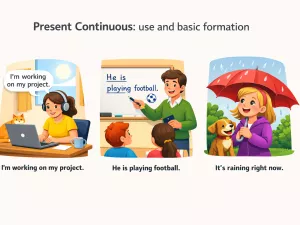
Para dominar este tiempo verbal, conviene empezar por la estructura más estable: sujeto + verbo to be + verbo principal en -ing. En frases afirmativas, el objetivo no es solo “poner el verbo en gerundio”, sino construir una idea que suene natural y refleje una acción en progreso, una situación temporal o un plan cercano según el contexto.
Muchos estudiantes entienden la regla, pero fallan en los detalles: olvidan el auxiliar, escriben mal la forma en -ing o usan el presente simple cuando quieren hablar de algo que está ocurriendo ahora. Por eso, aquí trabajaremos con frases breves y claras, centradas en la forma correcta.
| Sujeto | Auxiliar | Verbo principal | Ejemplo |
|---|---|---|---|
| I | am | working | I am working now. (Estoy trabajando ahora.) |
| He / She / It | is | studying | She is studying English. (Ella está estudiando inglés.) |
| We / You / They | are | playing | They are playing outside. (Ellos están jugando afuera.) |
| Nombre singular | is | reading | Laura is reading a book. (Laura está leyendo un libro.) |
- I / read / a magazine
- She / cook / dinner
- They / play / football
- We / study / for the exam
- He / wash / the car
- You / listen / to music
- My brother / sleep / on the sofa
- The children / draw / pictures
- It / rain / a lot today
- Anna and Tom / work / in the office
Mostrar respuestas
- I am reading a magazine.
- She is cooking dinner.
- They are playing football.
- We are studying for the exam.
- He is washing the car.
- You are listening to music.
- My brother is sleeping on the sofa.
- The children are drawing pictures.
- It is raining a lot today.
- Anna and Tom are working in the office.
Consejo de profesor: si dudas entre presente simple y esta estructura, añade mentalmente “ahora mismo”. Si la frase funciona bien con esa idea, normalmente necesitas present continuous.
- Complete: She ________ (write) an email.
- Complete: I ________ (learn) a lot this week.
- Complete: The dog ________ (run) in the garden.
- Complete: We ________ (watch) a new series.
- Complete: My parents ________ (travel) by train.
- Complete: He ________ (make) lunch.
- Complete: You ________ (sit) in my chair.
- Complete: The baby ________ (cry).
- Complete: Julia ________ (talk) to her teacher.
- Complete: I ________ (wait) for the bus.
Mostrar respuestas
- is writing
- am learning
- is running
- are watching
- are traveling
- is making
- are sitting
- is crying
- is talking
- am waiting
Ejercicios de negativas
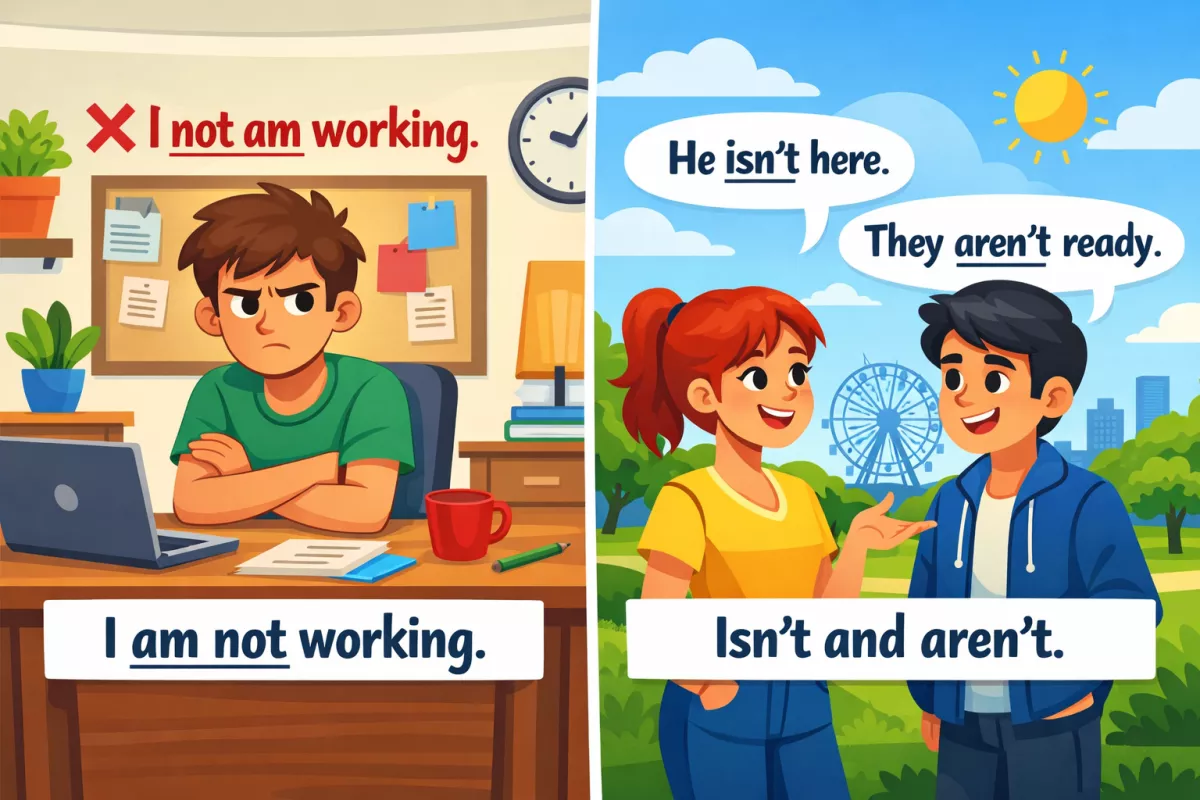
En las oraciones negativas, la clave está en colocar not después del verbo to be: am not, is not, are not. Es una estructura sencilla, pero muy frecuente en errores de orden. En inglés no decimos “I not am working”, sino “I am not working”. Ese orden debe volverse automático.
También es útil acostumbrarse a las contracciones, porque aparecen constantemente en el inglés real: isn’t y aren’t. Con am not, la contracción funciona de otra manera y no siempre se enseña igual al principio, así que en estos ejercicios usaremos la forma completa cuando convenga para que la base quede bien fijada.
- She is sleeping.
- They are watching TV.
- I am driving fast.
- He is wearing a jacket.
- We are waiting outside.
- The cat is eating.
- You are speaking clearly.
- My friends are studying.
- It is snowing.
- Laura is cleaning her room.
Mostrar respuestas
- She is not sleeping.
- They are not watching TV.
- I am not driving fast.
- He is not wearing a jacket.
- We are not waiting outside.
- The cat is not eating.
- You are not speaking clearly.
- My friends are not studying.
- It is not snowing.
- Laura is not cleaning her room.
- Complete: I ________ not working today.
- Complete: She ________ not listening.
- Complete: They ________ not coming with us.
- Complete: He ________ not using the computer.
- Complete: We ________ not staying at home.
- Complete: The baby ________ not sleeping.
- Complete: You ________ not reading the instructions.
- Complete: My sister ________ not feeling well.
- Complete: It ________ not raining now.
- Complete: The students ________ not writing anything.
Mostrar respuestas
- am
- is
- are
- is
- are
- is
- are
- is
- is
- are
Ejercicios de preguntas
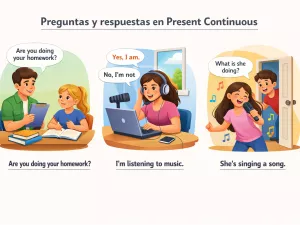
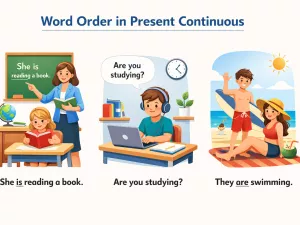
Cuando pasamos a las preguntas, el cambio principal es el orden. El auxiliar va al principio: Am I...?, Is she...?, Are they...? Este punto parece pequeño, pero marca una gran diferencia, porque muchos alumnos traducen desde el español y mantienen el orden afirmativo. En inglés, el auxiliar abre la pregunta.
Además, conviene practicar tanto preguntas de sí o no como preguntas con partículas interrogativas: What, Where, Why, Who. Si el alumno solo sabe formar “Are you studying?”, pero no “What are you studying?”, su manejo del tiempo verbal todavía está incompleto.
| Tipo | Estructura | Ejemplo |
|---|---|---|
| Pregunta cerrada | Auxiliar + sujeto + verbo en -ing | Are they coming? (¿Están viniendo?) |
| Con palabra interrogativa | Wh-word + auxiliar + sujeto + verbo en -ing | What is he doing? (¿Qué está haciendo?) |
| Con I | Am + I + verbo en -ing | Am I speaking too fast? (¿Estoy hablando demasiado rápido?) |
| Con sujeto plural | Are + sujeto + verbo en -ing | Are we taking the right bus? (¿Estamos tomando el autobús correcto?) |
- She is working.
- They are playing in the park.
- He is studying for the test.
- You are using my phone.
- We are leaving now.
- The teacher is speaking.
- I am making a mistake.
- Tom is waiting outside.
- The children are sleeping.
- It is getting dark.
Mostrar respuestas
- Is she working?
- Are they playing in the park?
- Is he studying for the test?
- Are you using my phone?
- Are we leaving now?
- Is the teacher speaking?
- Am I making a mistake?
- Is Tom waiting outside?
- Are the children sleeping?
- Is it getting dark?
- What / she / read
- Where / they / go
- Why / he / laugh
- Who / you / wait for
- What / we / watch
- Why / the baby / cry
- Where / I / sit
- What / Tom / write
- Who / the students / talk to
- Why / it / make that noise
Mostrar respuestas
- What is she reading?
- Where are they going?
- Why is he laughing?
- Who are you waiting for?
- What are we watching?
- Why is the baby crying?
- Where am I sitting?
- What is Tom writing?
- Who are the students talking to?
- Why is it making that noise?
Una observación muy útil: si la pregunta te suena rara, revisa primero el auxiliar. En este tiempo, casi todos los fallos serios nacen ahí, no en el verbo principal.
Uso de palabras clave
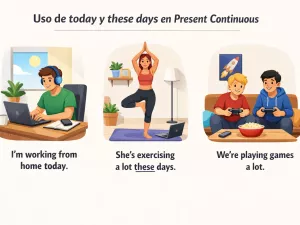
Una forma muy práctica de reconocer cuándo encaja este tiempo es fijarse en ciertas expresiones que suelen acompañarlo. No son obligatorias, pero ayudan mucho: now (ahora), right now (ahora mismo), at the moment (en este momento), today (hoy), this week (esta semana). Estas palabras orientan al estudiante hacia una acción temporal, en desarrollo o limitada al presente.
Eso sí: no conviene depender de ellas como si fueran una fórmula mágica. Hay frases en present continuous sin ninguna palabra clave visible, y también hay contextos en los que una expresión temporal puede combinarse con otros tiempos. Lo importante es entender la intención comunicativa y usar estas pistas como apoyo, no como muleta.
- I ________ (study) right now.
- She ________ (work) at the moment.
- They ________ (stay) with friends this week.
- We ________ (eat) dinner now.
- He ________ (look) for a new job these days.
- You ________ (do) very well today.
- The children ________ (play) outside at the moment.
- My father ________ (drive) now.
- It ________ (get) colder today.
- I ________ (read) an interesting book these days.
Mostrar respuestas
- am studying
- is working
- are staying
- are eating
- is looking
- are doing
- are playing
- is driving
- is getting
- am reading
- I am cooking now.
- She is wearing a blue coat today.
- They are living in Madrid this year.
- We are talking at the moment.
- He is feeling tired today.
- You are working hard these days.
- The dog is sleeping right now.
- My friends are studying this week.
- It is raining now.
- I am using my brother’s laptop today.
Mostrar respuestas
- now
- today
- this year
- at the moment
- today
- these days
- right now
- this week
- now
- today
Corrección de errores comunes
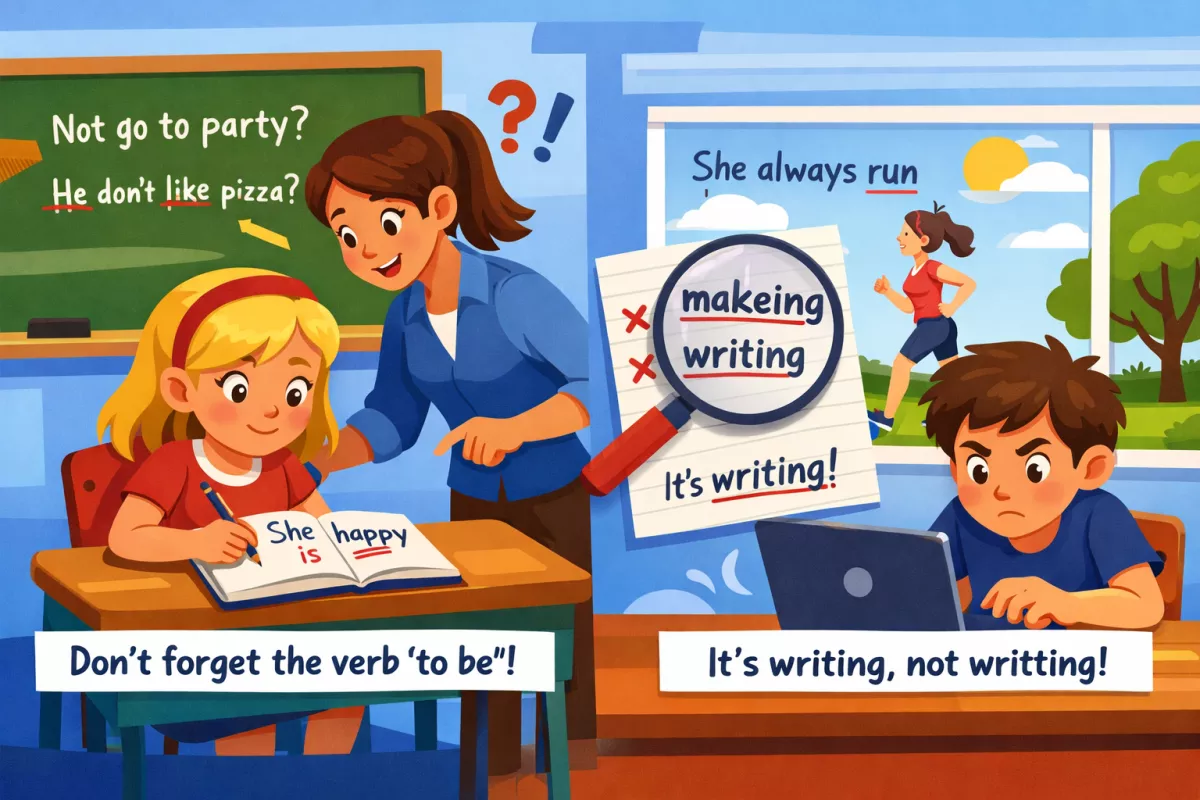
En esta parte ya no basta con producir frases correctas: toca detectar fallos típicos. Este tipo de práctica es especialmente valiosa porque obliga a mirar la estructura con atención. Los errores más frecuentes suelen ser cuatro: omitir el verbo to be, usar mal el orden en negativas y preguntas, escribir incorrectamente la terminación -ing y mezclar este tiempo con el presente simple.
También aparecen problemas ortográficos que no son menores. Por ejemplo, write → writing, make → making, run → running, lie → lying. No todo consiste en añadir -ing sin pensar. A veces hay que quitar una letra final, duplicar consonante o cambiar la terminación. Corregir estos detalles mejora mucho la precisión.
| Error típico | Forma incorrecta | Forma correcta |
|---|---|---|
| Falta el auxiliar | She working now. | She is working now. (Ella está trabajando ahora.) |
| Orden negativo incorrecto | They not are coming. | They are not coming. (Ellos no están viniendo.) |
| Pregunta mal formada | You are listening? | Are you listening? (¿Estás escuchando?) |
| Gerundio mal escrito | He is makeing dinner. | He is making dinner. (Él está preparando la cena.) |
- She reading a book now.
- I am study for the exam.
- They is playing outside.
- He not is sleeping.
- Are working you today?
- We are makeing lunch.
- The baby are crying.
- It raining a lot.
- You is listening to me.
- Tom is writting an email.
Mostrar respuestas
- She is reading a book now.
- I am studying for the exam.
- They are playing outside.
- He is not sleeping.
- Are you working today?
- We are making lunch.
- The baby is crying.
- It is raining a lot.
- You are listening to me.
- Tom is writing an email.
- I am not understand this.
- She is runing in the park.
- What you are doing?
- My parents is traveling today.
- He is not wear a coat.
- Are they coming now?
- We are having breakfast right now.
- The students are talk to the teacher.
- It is geting late.
- Anna not is using her phone.
Mostrar respuestas
- I do not understand this. / I am not understanding this. (menos natural en la mayoría de contextos)
- She is running in the park.
- What are you doing?
- My parents are traveling today.
- He is not wearing a coat.
- Are they coming now?
- We are having breakfast right now.
- The students are talking to the teacher.
- It is getting late.
- Anna is not using her phone.
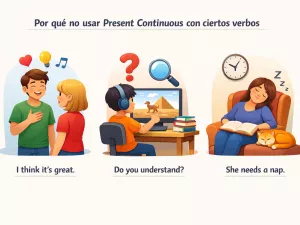
Nota práctica: algunos verbos, como understand, know o believe, normalmente no se usan en esta forma en contextos básicos. No es un capricho: expresan estado más que acción en progreso.
Traducción de frases
Traducir bien no consiste en pasar palabra por palabra del español al inglés. Lo importante es identificar la intención: si la frase expresa una acción que está sucediendo ahora, una situación temporal o un cambio en progreso, entonces esta estructura suele ser la adecuada. En cambio, si habla de hábitos o verdades generales, probablemente habrá que usar otro tiempo.
Este tipo de práctica es muy útil porque obliga a tomar decisiones reales. En español decimos “estoy leyendo”, “están trabajando”, “¿qué estás haciendo?”, y eso suele orientar bastante bien. Aun así, hay que vigilar los sujetos, el auxiliar correcto y la forma del verbo principal.
- Estoy hablando con mi jefe.
- Ella está estudiando en su habitación.
- No estamos esperando el tren.
- ¿Están jugando los niños en el jardín?
- Mi hermano está buscando sus llaves.
- Ahora mismo no estoy usando el ordenador.
- ¿Qué está escribiendo tu amiga?
- Hoy está haciendo mucho frío.
- Estamos cenando con unos amigos.
- Ellos no están durmiendo.
Mostrar respuestas
- I am talking to my boss.
- She is studying in her room.
- We are not waiting for the train.
- Are the children playing in the garden?
- My brother is looking for his keys.
- I am not using the computer right now.
- What is your friend writing?
- It is very cold today. / It is getting very cold today.
- We are having dinner with some friends.
- They are not sleeping.
- ¿Por qué estás llorando?
- Estamos aprendiendo mucho este mes.
- Mi madre no está cocinando ahora.
- ¿Quién está llamando a la puerta?
- Tu perro está durmiendo en el sofá.
- No estoy mintiendo.
- ¿Dónde se están quedando ustedes?
- Los estudiantes están preparando un proyecto.
- Él está mejorando poco a poco.
- No está lloviendo en este momento.
Mostrar respuestas
- Why are you crying?
- We are learning a lot this month.
- My mother is not cooking now.
- Who is knocking at the door?
- Your dog is sleeping on the sofa.
- I am not lying.
- Where are you staying?
- The students are preparing a project.
- He is improving little by little.
- It is not raining at the moment.
Práctica mixta de estructuras
Cuando el alumno ya ha trabajado afirmativas, negativas, preguntas y traducción, llega el momento más útil: mezclarlo todo. Esta fase se parece mucho más a una situación real, porque en una conversación no usamos un solo tipo de oración, sino varias estructuras seguidas. Aquí lo importante es reaccionar bien y elegir la forma adecuada sin depender de una pista demasiado evidente.
En esta práctica conviene fijarse en tres cosas al mismo tiempo: el sujeto, el orden de la frase y el contexto. Si controlas esos tres elementos, el tiempo verbal deja de ser una regla aislada y se convierte en una herramienta que puedes usar con soltura.
- Complete: She ________ (not / work) today.
- Transforme en pregunta: They are staying at a hotel.
- Complete: What ________ you ________ (do)?
- Transforme en negativa: I am waiting for John.
- Complete: We ________ (have) lunch now.
- Transforme en pregunta: He is wearing my jacket.
- Complete: The students ________ (write) their answers.
- Transforme en negativa: It is snowing outside.
- Complete: Where ________ she ________ (go)?
- Transforme en afirmativa: They are not listening.
Mostrar respuestas
- is not working
- Are they staying at a hotel?
- are / doing
- I am not waiting for John.
- are having
- Is he wearing my jacket?
- are writing
- It is not snowing outside.
- is / going
- They are listening.
- My sister / study / for her exam
- we / not / travel / this weekend
- what / they / discuss
- I / look for / my glasses
- he / not / sleep / now
- where / the children / play
- it / get / dark
- you / not / listen / carefully
- why / she / laugh
- Tom and I / work / on a new project
Mostrar respuestas
- My sister is studying for her exam.
- We are not traveling this weekend.
- What are they discussing?
- I am looking for my glasses.
- He is not sleeping now.
- Where are the children playing?
- It is getting dark.
- You are not listening carefully.
- Why is she laughing?
- Tom and I are working on a new project.
Soluciones explicadas paso a paso
Esta última parte no repite las respuestas anteriores, sino que muestra cómo razonarlas. Cuando un estudiante se equivoca, normalmente no necesita solo la forma correcta; necesita entender por qué esa forma es correcta. Si aprendes a revisar sujeto, auxiliar y verbo principal en ese orden, podrás autocorregirte con mucha más facilidad.
Voy a presentar varios casos representativos, parecidos a los que suelen aparecer en clase y en exámenes. La idea es que veas el proceso mental completo: identificar el sujeto, elegir am / is / are, formar el verbo en -ing y colocar cada pieza en su sitio según sea afirmación, negación o pregunta.
1. Frase afirmativa
Ejemplo: She / cook / dinner
- El sujeto es she.
- Con she, el auxiliar correcto es is.
- El verbo cook pasa a cooking.
- Unimos todo: She is cooking dinner.
El error típico aquí sería escribir “She cooking dinner” y olvidar el auxiliar.
2. Frase negativa
Ejemplo: They / not / come / with us
- El sujeto es they.
- Con they, usamos are.
- La negación va después del auxiliar: are not.
- El verbo come pasa a coming.
- Resultado final: They are not coming with us.
Muchos alumnos colocan mal la negación y escriben “They not are coming”. En inglés ese orden no funciona.
3. Pregunta cerrada
Ejemplo: You are using my phone.
- Detectamos que es una afirmación en present continuous.
- Para convertirla en pregunta, el auxiliar pasa al principio.
- Are va delante del sujeto you.
- El resto se mantiene: using my phone.
- Resultado: Are you using my phone?
Si dejas “You are using my phone?” estarás imitando el orden del español, pero no la estructura estándar del inglés.
4. Pregunta con palabra interrogativa
Ejemplo: What / he / write
- La palabra interrogativa es What.
- El sujeto es he, así que el auxiliar será is.
- El verbo write cambia a writing.
- Orden correcto: What is he writing?
Un fallo muy común es “What he is writing?”, que suena lógico desde el español, pero no sigue el orden inglés.
5. Corrección de ortografía en -ing
Ejemplo: Tom is writting an email.
- La estructura general está bien: sujeto + auxiliar + verbo.
- El problema está en la ortografía del verbo.
- Write pierde la e final antes de añadir -ing.
- No se escribe writting, sino writing.
- La frase correcta es: Tom is writing an email.
6. Elección del auxiliar correcto
Ejemplo: My parents is traveling today.
- El sujeto es My parents.
- Aunque no aparezca they, sigue siendo plural.
- Por eso no usamos is, sino are.
- La forma correcta es: My parents are traveling today.
Este error aparece mucho cuando el sujeto no es un pronombre, sino un nombre o grupo nominal.
7. Cuándo no usar esta estructura
Ejemplo: I am not understand this.
- La construcción parece seguir la forma básica, pero el verbo crea un problema.
- Understand suele funcionar como verbo de estado en inglés general.
- En contextos normales, se prefiere el presente simple.
- La opción natural es: I do not understand this.
Este punto es importante porque aprender una estructura no significa usarla con todos los verbos sin filtro.
Mi recomendación final como docente: antes de mirar una solución, intenta justificarla en voz alta. Si puedes explicar por qué usas is y no are, o por qué el auxiliar va delante en una pregunta, entonces de verdad lo estás aprendiendo.
- Explique paso a paso: She is not listening.
- Explique paso a paso: Are they waiting outside?
- Explique paso a paso: What is your brother doing?
- Explique paso a paso: We are having dinner now.
Mostrar respuestas
- Sujeto: she. Auxiliar: is. Negación: not después del auxiliar. Verbo: listen cambia a listening. Resultado: She is not listening.
- Auxiliar al inicio: are. Sujeto: they. Verbo principal: wait cambia a waiting. Complemento: outside. Resultado: Are they waiting outside?
- Palabra interrogativa: what. Auxiliar con sujeto singular your brother: is. Verbo: do cambia a doing. Resultado: What is your brother doing?
- Sujeto: we. Auxiliar: are. Verbo: have cambia a having. Expresión temporal: now. Resultado: We are having dinner now.