Very en inglés: cuándo no significa “muy”

 Aprende qué significa realmente very en inglés, cuándo suena poco natural y qué alternativas usar en su lugar. Verás la diferencia entre intensidad y énfasis, errores comunes por traducción literal, ejemplos corregidos y un ejercicio práctico final.
Si alguna vez has traducido very como intensificador y la frase ha sonado rara, no eres el único. En el inglés real, esta palabra no siempre sirve para intensificar; también puede señalar exactamente cuál, cuándo o quién, cambiando sutilmente el significado. Aquí verás sus usos más comunes en conversación y lectura, con ejemplos claros para reconocerlos al instante y usarlos de forma natural.
Significado real de very
En inglés, very no siempre funciona como el intensificador “muy”. Además de reforzar adjetivos y adverbios, puede actuar como un marcador de precisión (“exactamente ese”), de identidad (“el mismo”) o de énfasis en expresiones fijas. La clave es mirar qué palabra modifica y qué estructura lo acompaña.
En la práctica, se interpreta de forma distinta según el patrón: si va antes de un adjetivo (“very tired”), suele intensificar; si aparece antes de un determinante o un sustantivo con sentido de “mismo/preciso”, cambia de función (“the very idea”). Reconocer estas combinaciones evita traducciones literales que suenan forzadas en español.
Patrones donde no equivale a “muy”
- the very + noun: “el/la mismísimo/a” o “precisamente”. Ej.: “the very end” (el final exacto).
- at the very + place/time: “justo en”. Ej.: “at the very beginning” (justo al principio).
- that/this/your + very + noun: “ese/este/tu mismo”. Ej.: “that very day” (ese mismo día).
- the very same + noun: “exactamente el mismo”. Ej.: “the very same problem” (el mismo problema).
- very + own: “propio/a” con énfasis. Ej.: “my very own room” (mi propia habitación).
- the very idea/thought: “la sola idea”. Ej.: “The very idea shocked me.” (la sola idea).
- to the very + limit/edge: “hasta el límite”. Ej.: “to the very limit” (hasta el límite).
- from the very start: “desde el principio mismo”.
- in the very middle: “en pleno”. Ej.: “in the very middle of the meeting” (en plena reunión).
- the very moment: “justo en el momento (en que)”.
- the very first/last: “el primerísimo / el último de verdad” (según contexto). Nota: aquí suele ser énfasis, no cantidad.
- the very + name/title: “el mismísimo”. Ej.: “the very Shakespeare” (el mismísimo Shakespeare; uso enfático).
Comparación rápida: intensificador vs. “precisamente/el mismo”
| Patrón | Sentido habitual | Ejemplo |
|---|---|---|
| very + adjective/adverb | Intensidad (“muy”) | “She is very busy.” |
| the very + noun | Precisión/énfasis (“mismísimo”, “precisamente”) | “at the very entrance” (justo en la entrada) |
| that/this + very + noun | Identidad temporal/espacial (“ese mismo”, “justo ese”) | “that very night” (esa misma noche) |
| the very same + noun | Identidad exacta (“exactamente el mismo”) | “the very same answer” (la misma respuesta) |
| very + own | Propiedad enfatizada (“propio/a”) | “her very own office” (su propia oficina) |
Detalles que suelen confundir a hispanohablantes
- Orden: en “that very day”, very va entre el demostrativo y el sustantivo; no se coloca después.
- Artículo “the”: “the very end” necesita “the” porque se refiere a un punto específico (no “a very end”).
- Matiz: “the very idea” no es “la idea muy…”, sino “la sola idea” o “la mismísima idea”, según el tono.
- Uso enfático: “the very Shakespeare” es retórico; no describe “muy Shakespeare”, sino identidad/énfasis.
- Colocaciones fijas: expresiones como “from the very start” o “at the very least” funcionan como bloques; conviene aprenderlas como unidad.
Ejemplos listos para reutilizar
- “I found it at the very bottom of the drawer.” (justo al fondo)
- “On that very morning, everything changed.” (esa misma mañana)
- “This is the very reason I called.” (precisamente la razón)
- “They met at the very corner.” (justo en la esquina)
- “From the very start, he was honest.” (desde el principio mismo)
- “The very thought of it scares me.” (la sola idea)
- “That’s the very same jacket.” (exactamente la misma)
- “She has her very own studio.” (su propio estudio)
- “At the very least, send a message.” (como mínimo)
- “He arrived at the very last minute.” (en el último minuto)
- “In the very middle of dinner, the phone rang.” (en plena cena)
- “This happened at the very moment we left.” (justo en el momento)
Cuándo very no es natural
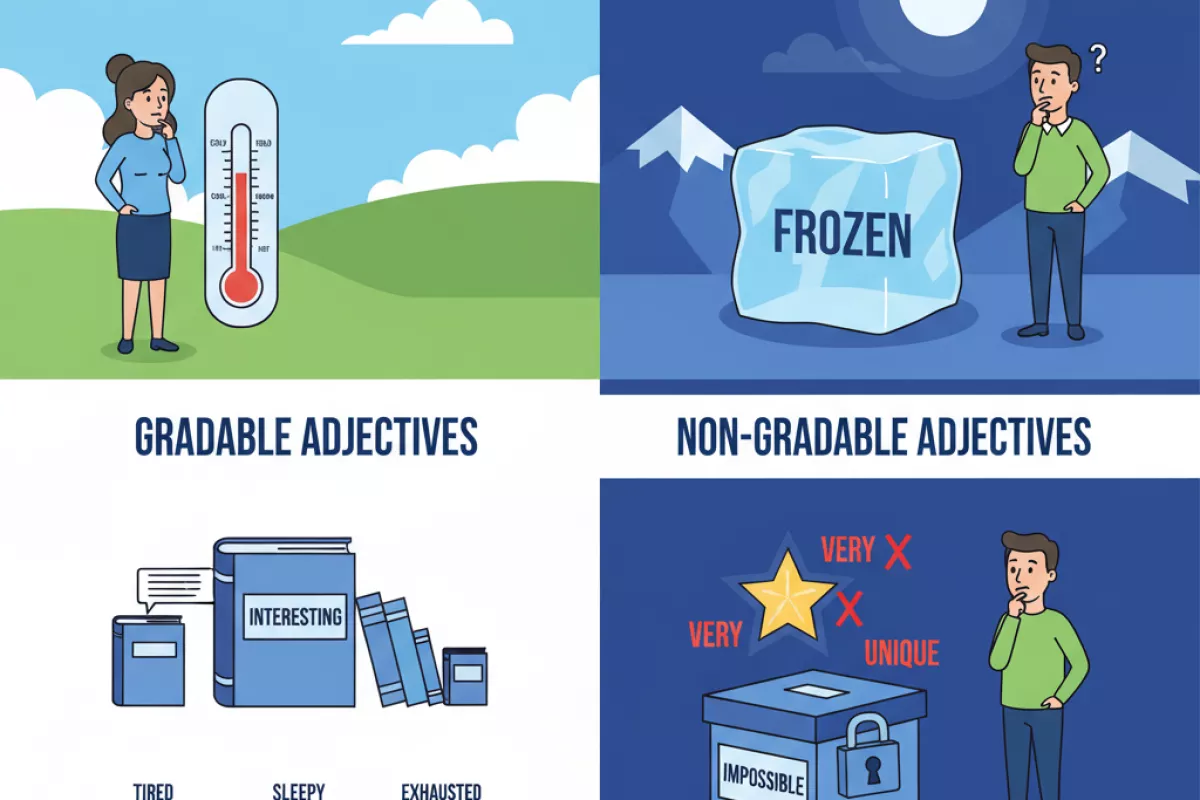
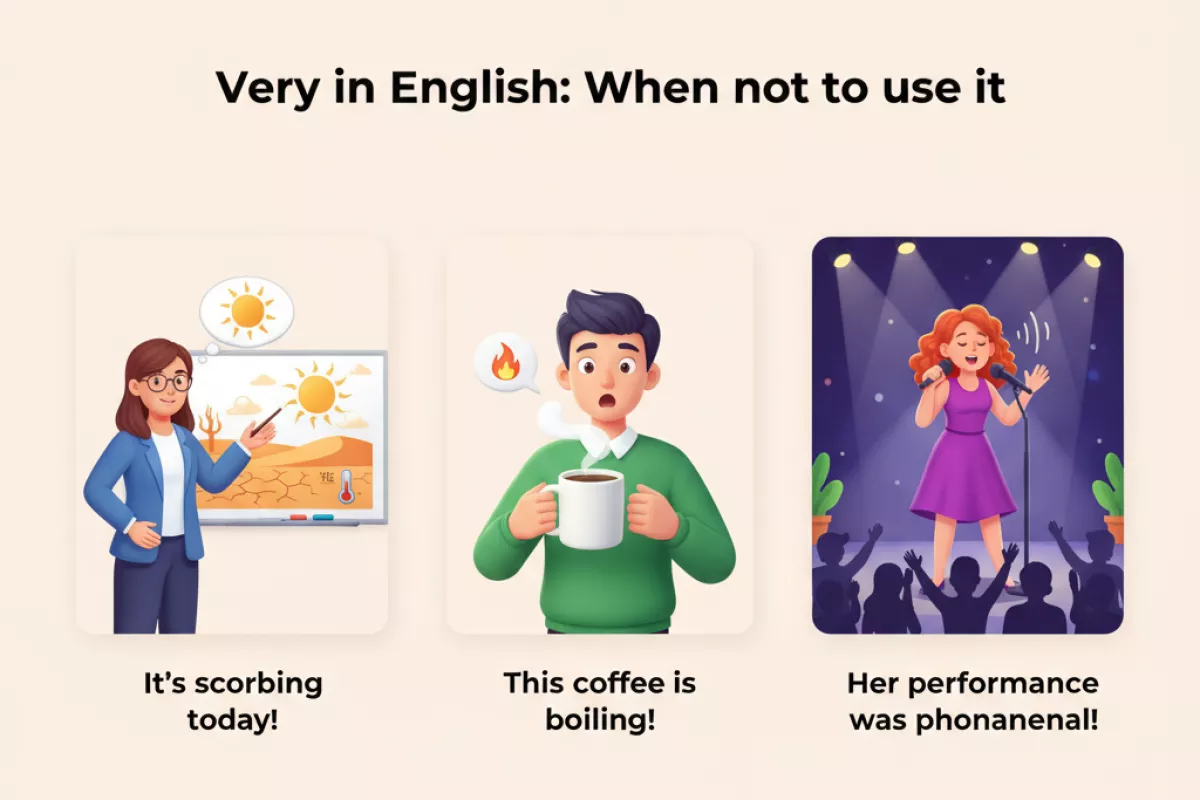
En inglés, el intensificador very funciona bien con adjetivos “graduables” (los que admiten grados: cold, tired, interesting). Pero suena forzado cuando el adjetivo ya expresa un extremo, una categoría cerrada o una idea “todo o nada”. En esos casos, los hablantes suelen elegir otros intensificadores o reformular la frase.
La clave práctica es fijarse en el significado del adjetivo: si ya implica “máximo”, “mínimo”, “completo”, “imposible” o “único”, normalmente no se intensifica con very. En su lugar se usan opciones como absolutely, completely, totally, really o se cambia la estructura.
Adjetivos extremos o “no graduables”
Algunos adjetivos ya llevan incorporada la idea de “al límite” (por ejemplo, freezing no es solo “frío”, sino “helador”). Con ellos, very suele sonar poco natural; se prefiere absolutely o un intensificador similar.
- very freezing → absolutely freezing (helador)
- very boiling → absolutely boiling (hirviendo)
- very exhausted → completely exhausted (agotado)
- very terrified → absolutely terrified (aterrorizado)
- very hilarious → absolutely hilarious (graciosísimo)
- very fascinating → really fascinating (fascinante)
- very enormous → absolutely enormous (enorme)
- very tiny → absolutely tiny (minúsculo)
- very perfect → absolutely perfect (perfecto)
- very impossible → completely impossible (imposible)
- very amazing → absolutely amazing (increíble)
- very awful → absolutely awful (horrible)
Estados “completos” o resultados cerrados
Cuando el adjetivo describe un resultado final o una condición total, lo natural es intensificar con adverbios de completitud. La idea no es “más o menos”, sino “en qué grado está completado”.
- very finished → completely finished (terminado)
- very empty → completely empty (vacío)
- very full → completely full (lleno)
- very closed → completely closed (cerrado)
- very open → completely open (abierto)
- very ready → fully ready (listo)
- very certain → absolutely certain (seguro)
- very correct → completely correct (correcto)
- very wrong → completely wrong (equivocado)
Con adjetivos que ya significan “único” o “final”
Hay palabras que por significado se resisten a la gradación: unique (único), dead (muerto), final (final). En registros formales, se evita intensificarlas con very; en conversación puede aparecer, pero suele percibirse como impreciso o enfático de forma poco elegante.
| Con very (menos natural) | Alternativa habitual | Idea que se transmite |
|---|---|---|
| very unique | truly unique / really unusual (inusual) | No “más único”, sino “de verdad” o “poco común” |
| very dead | completely dead / clearly dead (claramente) | Estado binario; se matiza con evidencia o completitud |
| very final | absolutely final / the final version (versión final) | Se refuerza la definitividad o se reformula |
| very perfect | absolutely perfect / almost perfect (casi) | O es perfecto, o se aproxima: se elige el matiz |
| very impossible | completely impossible / highly unlikely (muy improbable) | Se expresa imposibilidad total o probabilidad baja |
Patrones útiles para sonar más natural
En vez de forzar very con adjetivos “cerrados”, suele funcionar mejor elegir un intensificador que encaje con el tipo de significado: completitud, certeza, reacción emocional o evaluación. Estos patrones se pueden aplicar de forma productiva con muchos adjetivos.
- absolutely + adjetivo extremo: absolutely brilliant (brillante)
- completely/totally + estado completo: completely silent (en silencio)
- fully + preparado/capaz: fully aware (consciente)
- highly + probable/valorable (registro más formal): highly effective (eficaz)
- really + adjetivo graduable (comodín conversacional): really good (bueno)
- Reformular con un sustantivo: very important → of great importance (gran importancia)
Alternativas a very en inglés
En lugar de intensificar con very, el inglés suele preferir dos estrategias: elegir un adjetivo más preciso (que ya incluye la intensidad) o usar un intensificador que encaje con el registro (formal/informal) y con el tipo de adjetivo. El resultado suena más natural y, a menudo, más exacto.
La idea práctica es fijarse en el patrón: very + adjetivo se puede reemplazar por (1) un adjetivo “fuerte” o (2) un intensificador alternativo + adjetivo. En ambos casos, conviene mantener la colocación típica (collocation): no todos los intensificadores combinan bien con todos los adjetivos.
1) Sustituir “very + adjetivo” por un adjetivo más específico
| En vez de… | Mejor opción | Ejemplo breve |
|---|---|---|
| very big | huge / enormous | It’s a huge problem. |
| very small | tiny | It’s a tiny detail. |
| very good | excellent / outstanding | Her work is excellent. |
| very bad | awful / terrible | The timing is awful. |
| very tired | exhausted | I’m exhausted. |
| very angry | furious | He was furious. |
| very happy | delighted / thrilled | We’re delighted to help. |
| very sad | devastated | She was devastated. |
| very cold | freezing | It’s freezing outside. |
| very hot | boiling / scorching | It’s scorching today. |
| very important | crucial / essential | It’s crucial to check the data. |
| very interesting | fascinating | That’s fascinating. |
| very boring | tedious | The process is tedious. |
| very noisy | deafening | The music was deafening. |
| very hungry | starving (hambriento) | I’m starving. |
| very scared | terrified | They were terrified. |
Estos adjetivos “fuertes” suelen eliminar la necesidad de intensificar. Un detalle útil: algunos son más informales en ciertos contextos (por ejemplo, starving se usa mucho en conversación para “tener mucha hambre”, sin ser literal).
2) Intensificadores alternativos según el registro
Si necesitas mantener el mismo adjetivo (por estilo, claridad o nivel), puedes cambiar el intensificador. La clave es escoger uno que suene natural con adjetivos gradables (los que admiten grado: cold, important, interesting) y que encaje con la situación.
- really: el comodín más frecuente en conversación. Example: It’s really important.
- so: muy común para énfasis emocional. Example: I’m so glad you came.
- quite: puede significar “bastante” o “muy” según el dialecto; en general es más moderado. Example: It’s quite difficult.
- pretty: informal; suele equivaler a “bastante”. Example: It’s pretty good.
- rather: más formal o matizado; a veces suena a “algo” o “más bien”. Example: It’s rather unusual.
- extremely: formal y fuerte. Example: The results are extremely promising.
- highly: típico con participios/adjetivos como recommended, unlikely, effective. Example: It’s highly recommended.
- deeply: frecuente con estados/emociones. Example: I’m deeply grateful.
- incredibly: fuerte; puede sonar enfático o subjetivo. Example: She’s incredibly talented.
- absolutely: suele ir con adjetivos no gradables (categorías “todo o nada”). Example: That’s absolutely impossible.
- totally: más informal; también encaja con no gradables. Example: I totally agree.
- completely: neutro; muy común con different, wrong, ready. Example: You’re completely right.
3) Patrones útiles para sonar natural (sin depender de “very”)
Además de cambiar una palabra, el inglés recurre mucho a estructuras que intensifican sin un adverbio típico. Estos patrones ayudan especialmente cuando quieres evitar una repetición constante de intensificadores.
- Adjetivo + enough (suficiente): It’s big enough for three people.
- Too + adjetivo (demasiado): It’s too expensive.
- Not that + adjetivo (no tan): It’s not that complicated.
- Far + comparativo (mucho más): This is far better than the old version.
- Way + comparativo (muchísimo más, informal): It’s way easier now.
- By far + superlativo (con diferencia): It’s by far the best option.
- Such a/an + (adjetivo) + sustantivo: It was such a good idea. (ojo con a/an)
- What a/an + (adjetivo) + sustantivo: What an amazing view! (exclamación)
- So + adjetivo + that…: It was so loud that we left.
- Adjetivo + as hell (muy informal): It’s cold as hell.
Como regla rápida: si el adjetivo ya expresa un extremo (freezing, exhausted, impossible), suele sonar mejor evitar very y elegir un intensificador compatible (absolutely, completely) o, directamente, dejar el adjetivo sin intensificar.
Diferencia entre intensidad y énfasis
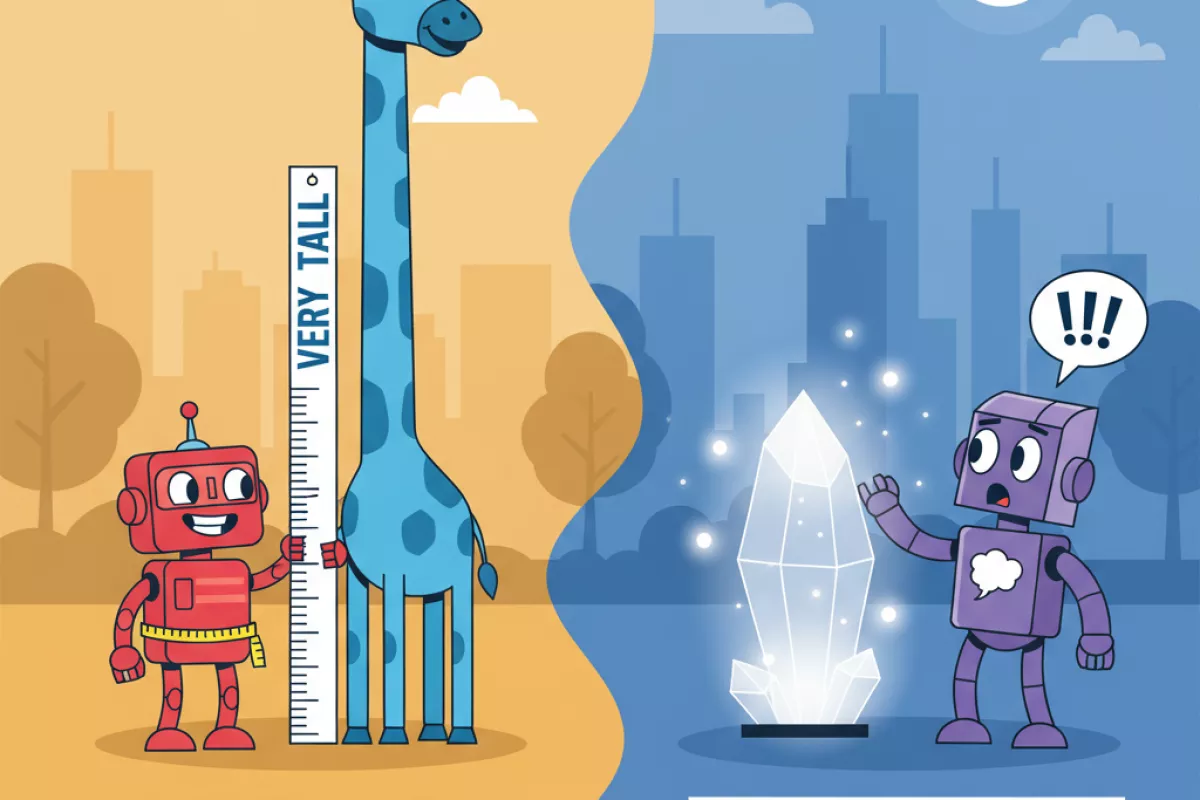
En inglés, very no siempre aporta “más cantidad” de una cualidad; a veces funciona como un recurso para subrayar lo que se dice, sin cambiar demasiado el grado real. La clave práctica es distinguir si el hablante está midiendo una característica (grado) o si está reforzando una valoración, una reacción o una idea.
Una pista útil es mirar qué tipo de palabra viene después: con adjetivos graduables suele aumentar el grado (very tall), mientras que con adjetivos “extremos”, participios o estructuras fijas puede sonar más a refuerzo retórico que a una escala objetiva. Además, en registros formales, very aparece en fórmulas de énfasis que no equivalen a “muy” de forma literal.
Intensidad (grado real) vs. énfasis (refuerzo del mensaje)
| Función | Patrón típico | Ejemplo | Lectura en español |
|---|---|---|---|
| Intensidad | very + adjective (gradable) | It’s very cold. | Sube el grado (“hace mucho frío”). |
| Intensidad | very + adverb | She speaks very clearly. | Modifica el modo (“muy claramente”). |
| Énfasis | the very + noun | at the very end | Precisión/enfoque (“justo al final”). |
| Énfasis | very + same/own | your very own room | Recalca pertenencia (“tu propia”). |
| Énfasis | very + superlative | the very best option | Refuerzo (“la mejor de verdad”). |
Señales rápidas para identificar cada uso
- Probable intensidad si el adjetivo admite grados con naturalidad: big, small, easy, busy, tired.
- Probable énfasis si la expresión apunta a exactitud o a “justo”: the very beginning, the very moment, the very same day.
- Más énfasis que grado con superlativos: the very latest, the very first time (no es “muy primero”, sino “la primera vez en absoluto”).
- Atención al registro: en cartas o avisos, very puede sonar protocolario: You are very welcome. (cortesía).
Patrones frecuentes donde “very” no se traduce como “muy”
Estos usos suelen expresar precisión, identidad o refuerzo discursivo. En español, a menudo se resuelven con “justo”, “precisamente”, “mismo/a”, “propio/a” o con una reformulación breve.
- the very idea (la sola idea)
- the very thought of it (solo pensarlo)
- at the very least (como mínimo)
- at the very most (como máximo)
- to the very end (hasta el final)
- from the very beginning (desde el principio)
- at the very last minute (en el último minuto)
- in the very same place (en el mismo sitio)
- on that very day (ese mismo día)
- the very next day (al día siguiente)
- your very own (tu propio)
- his very words (sus propias palabras)
- the very best (la mejor de verdad)
- the very worst (la peor con diferencia)
- the very first thing (lo primero que…)
Errores típicos de interpretación
- Traducir literalmente the very end como “el muy final”: en uso real significa “el final exacto / justo al final”.
- Leer the very same como “muy igual”: normalmente equivale a “el mismo” o “exactamente el mismo”.
- Asumir que very siempre intensifica: en your very own no aumenta grado, sino que recalca exclusividad o pertenencia.
- Confundir el artículo en the very + noun: the suele ser obligatorio porque se señala un punto específico (el, la).
Errores típicos por traducción literal
Muchos fallos con este intensificador nacen de calcar la estructura del español: se intenta usarlo como equivalente universal de “muy”, y en inglés eso no siempre encaja. El resultado suele ser una frase gramatical, pero poco natural, o directamente una combinación que un nativo evitaría.
La idea práctica es fijarse en el patrón: a veces funciona como intensificador normal (very + adjetivo/adverbio), pero otras veces actúa como marcador de exactitud (“el mismo”), o necesita un adjetivo concreto para sonar idiomático. También hay casos en los que el inglés prefiere otras opciones (really, so, quite, highly, etc.) según el registro y el tipo de palabra.
Calcos frecuentes y cómo corregirlos
- “Very” + sustantivo:
Incorrecto: “It’s very problem.”
Mejor: “It’s a big problem.” / “It’s a real problem.” (real: “de verdad”). - “Very” con verbos:
Incorrecto: “I very like it.”
Mejor: “I really like it.” / “I like it a lot.” - “Very” con comparativos:
Incorrecto: “very better”, “very more interesting”
Mejor: “much better” / “far more interesting” (far: “mucho”). - “Very” con superlativos:
Poco natural: “the very best” (solo en énfasis retórico)
Más neutro: “the best” / “by far the best” (by far: “con diferencia”). - Confundir “very” con “much”:
Incorrecto: “very people”
Mejor: “many people” (many: contable) / “much time” (much: incontable). - “Very” con adjetivos absolutos (combinación posible, pero a menudo suena forzada):
Raro: “very perfect”, “very unique”
Mejor: “almost perfect” (almost: “casi”) / “truly unique” (truly: “realmente”). - Usarlo donde se espera “exactamente el mismo”:
Incorrecto: “This is very same book.”
Mejor: “This is the very same book.” (the very same: “exactamente el mismo”). - Confundir “the very” con “very”:
Incorrecto: “I met him in very morning.”
Mejor: “I met him in the very morning.” (the very: “justo”) o, más común, “early in the morning”. - Traducir “muy” en expresiones fijas donde el inglés no usa intensificador:
Forzado: “very thanks”
Mejor: “Thanks a lot.” / “Thank you very much.” - “Very” con participios que no admiten bien grado:
Raro: “very married”, “very dead”
Mejor: “happily married” / “completely dead” (completely: “por completo”). - “Very” con adverbios en -ly cuando el registro pide otra cosa:
Posible pero plano: “very quickly”
Alternativas según intención: “really quickly” (informal) / “extremely quickly” (más enfático) / “remarkably quickly” (remarkably: “sorprendentemente”). - “Very” con “fun” (adjetivo vs. sustantivo):
Ambiguo: “It was very fun.” (común en EE. UU., informal)
Más estándar: “It was a lot of fun.” (fun: sustantivo, incontable). - “Very” con “well” (adverbio):
Correcto: “I’m very well.” (más formal/menos frecuente)
Más habitual: “I’m doing very well.” / “I’m really well.” (según contexto).
Combinaciones que suelen sonar más naturales que el calco
| Calco desde “muy…” | Opción más idiomática | Matiz típico |
|---|---|---|
| very important | highly important | registro más formal |
| very likely | highly likely | probabilidad (formal) |
| very different | completely different | contraste total |
| very sure | pretty sure | certeza moderada (pretty: “bastante”) |
| very tired | exhausted | más directo, sin intensificador |
| very big | huge | más expresivo |
| very small | tiny | más expresivo |
| very angry | furious | intensidad alta |
Pistas rápidas para evitar el “español calcado”
- Si lo que intensificas es un verbo, cambia a “really” o reestructura: “I really appreciate it.” (appreciate: “apreciar”).
- Si lo que sigue es un sustantivo, busca un adjetivo compatible: “a serious issue”, “a major concern”.
- Si la idea es “exactamente”, piensa en the very + nombre: “at the very end” (end: “final”).
- Con comparativos, evita “very” y usa “much/far/a lot”: “far better”, “a lot more useful”.
- Cuando el adjetivo ya implica un extremo (perfect, impossible, unique), suele funcionar mejor un enfoque como “almost”, “virtually” (virtually: “prácticamente”) o un adjetivo alternativo.
Ejemplos corregidos
En estos casos, very no funciona como “muy” delante de un adjetivo cualquiera, sino como un marcador de precisión: señala que algo es exactamente ese lugar, momento o elemento. Por eso aparece con frecuencia antes de the, this/that o posesivos, y suele combinarse con sustantivos como moment, day, same, end o beginning.
La idea práctica es distinguir dos patrones: (1) very + adjetivo (“muy”) y (2) the/this/that/my + very + sustantivo (“el/la mismísimo/a”, “justo”). Abajo se corrigen frases típicas donde un hispanohablante intenta usar very como intensificador, pero en realidad necesita el uso de “exactitud”.
| Incorrecto | Correcto | Patrón |
|---|---|---|
| I met her in very station. | I met her at the very station. | the very + sustantivo (lugar exacto) |
| We arrived in very moment. | We arrived at the very moment. | the very + sustantivo (instante exacto) |
| He said it in very day. | He said it on that very day. | that very + sustantivo (día concreto) |
| This is very same problem. | This is the very same problem. | the very same + sustantivo (exactamente el mismo) |
| She lives in very house. | She lives in that very house. | that very + sustantivo (esa casa en particular) |
| Call me in very morning. | Call me this very morning. | this very + sustantivo (hoy por la mañana) |
| They found it at very end. | They found it at the very end. | at the very end (al final exacto) |
| It happened from very beginning. | It happened from the very beginning. | from the very beginning (desde el inicio exacto) |
Más frases modelo con “precisión” (the/this/that + very)
- That’s the very thing I was talking about. (eso mismo)
- You’re standing in the very spot where it happened. (punto exacto)
- I remember that very conversation. (esa conversación)
- He chose this very moment to call. (este momento)
- We stayed in the very room where the meeting took place. (misma sala)
- She repeated the very same excuse. (misma excusa)
- At that very instant, the lights went out. (instante exacto)
- They met on that very street years ago. (esa calle)
- He arrived at the very last minute. (último minuto)
- This is the very reason we left early. (razón exacta)
- I saw him at the very entrance. (entrada exacta)
- She was there at the very start of the project. (inicio)
Errores típicos y cómo evitarlos
- Olvidar el artículo o el demostrativo: si very marca “exactitud”, normalmente necesitas the, this o that delante del sustantivo: the very moment, that very day.
- Confundir “very + adjetivo” con “the very + sustantivo”: very late (muy tarde) no es lo mismo que the very late train, que suena forzado; para “el tren tardío” se prefiere the late train o reformular.
- Usarlo con sustantivos incontables sin determinante: no digas very information; si quieres intensificar, usa a lot of information (mucha) o very useful information (muy útil). Aquí very va con el adjetivo, no con el sustantivo (uncountable).
- Colocación con “same”: lo natural es the very same + sustantivo, no very same a secas cuando va antes de un nombre contable.
Ejercicios prácticos
En estas actividades vas a entrenar tres usos frecuentes de very que no se traducen como “muy”: (1) very + sustantivo con sentido de “el mismísimo / el propio”, (2) the very + superlativo/ordinal para enfatizar “exactamente ese”, y (3) expresiones fijas como at the very least.
La idea clave es fijarte en la palabra que viene después de very: si va seguida de un adjetivo (very cold), suele ser intensidad (“muy”); si va seguida de un sustantivo (the very idea), normalmente es énfasis de identidad (“la mera idea / la idea en sí”).
Patrones de referencia (rápidos)
| Patrón | Sentido típico | Ejemplo |
|---|---|---|
| the very + noun | “el mismísimo / el propio” | They met at the very entrance (la misma entrada). |
| very + noun (sin the) | más formal; “el mero / el propio” | At that very moment, she called. |
| the very + superlative | énfasis: “el/la más…” (exactamente) | This is the very best option. |
| the very + ordinal | énfasis: “justo el…” | On the very first day, it rained. |
| at the very least / at the very most | mínimo / máximo (enfatizado) | It’ll take, at the very least, an hour. |
| the very same | “exactamente el mismo” | We chose the very same seat. |
Ejercicio 1: Elige el sentido de “very”
- They arrived at the very end of the movie.
- It was a very long meeting.
- The very thought of it made him nervous.
- She’s the very person I wanted to talk to.
- This is the very best solution we have.
- I was very tired after the flight.
- He found it on the very first try.
- At the very least, send me a message.
- It’s the very same model as mine.
- That’s a very interesting point.
Mostrar respuestas
- “exactamente/al final mismo” (no intensidad)
- intensidad (“muy”)
- “la mera idea” (no intensidad)
- “la persona misma / la persona indicada” (no intensidad)
- énfasis del superlativo (“la mejor de verdad / la mejor posible”)
- intensidad (“muy”)
- énfasis del ordinal (“justo al primer intento”)
- expresión fija: mínimo enfatizado
- expresión fija: “exactamente el mismo”
- intensidad (“muy”)
Ejercicio 2: Completa con “very” o sin “very”
- That’s ______ kind of you.
- We met at ______ entrance, not the side door.
- It happened at that ______ moment.
- This is ______ best restaurant in town.
- I’m ______ sorry about the delay.
- On the ______ first page, there’s a typo.
- At the ______ least, tell me the truth.
- The ______ idea of moving abroad scares her.
- It’s the ______ same answer as before.
- He’s ______ the person you should ask.
Mostrar respuestas
- very
- the very
- very
- the very
- very
- very
- very
- very
- very
- exactamente: “He’s the person you should ask.” / con énfasis: “He’s the very person you should ask.”
Ejercicio 3: Reescribe manteniendo el significado (sin usar “muy”)
- Nos vimos en la misma puerta de entrada.
- Justo en ese momento sonó el teléfono.
- Como mínimo, necesito dos días.
- Es exactamente la misma excusa de siempre.
- Es la persona indicada para el puesto.
- En el primer día ya hubo problemas.
- La mera idea de fallar le preocupa.
- Es la mejor opción posible.
Mostrar respuestas
- We saw each other at the very entrance.
- At that very moment, the phone rang.
- At the very least, I need two days.
- It’s the very same excuse as always.
- She’s the very person for the job.
- On the very first day, there were problems.
- The very idea of failing worries him.
- It’s the very best option.
Ejercicio 4: Detecta y corrige el uso incorrecto
- She is very my friend.
- We met at very the station.
- This is very best choice.
- At very least, call me.
- He is the very tired today.
- They arrived in the very time.
- That very happened yesterday.
- It was the very interesting movie.
Mostrar respuestas
- She is my friend. / She is a very good friend. (good)
- We met at the station. / We met at the very station.
- This is the very best choice.
- At the very least, call me.
- He is very tired today.
- They arrived on time. / They arrived at the very same time.
- That happened yesterday.
- It was a very interesting movie.
Preguntas frecuentes sobre el uso de very en inglés
A continuación encontrarás respuestas a dudas comunes sobre cómo usar correctamente very en inglés. Este adverbio no siempre significa “muy”, y entender sus diferentes funciones te ayudará a evitar errores típicos y sonar más natural.
1. ¿Siempre significa very “muy”?
No. Aunque muchas veces funciona como intensificador (very cold), también puede indicar precisión o identidad, como en the very moment (justo en ese momento) o the very same (exactamente el mismo).
2. ¿Cuándo very no se usa como intensificador?
Cuando aparece antes de un sustantivo con estructuras como the very + noun o that very + noun, no significa “muy”, sino “justo”, “mismo” o “exactamente”.
3. ¿Por qué “very perfect” o “very unique” suenan raros?
Porque estos adjetivos ya expresan un extremo. En su lugar, es más natural usar absolutely perfect o truly unique.
4. ¿Puedo usar very con cualquier adjetivo?
No siempre. Funciona bien con adjetivos gradables como happy, big o tired, pero no con adjetivos absolutos como dead, final o impossible.
5. ¿Cuál es la diferencia entre very y really?
Very se usa sobre todo con adjetivos y adverbios (very fast), mientras que really es más flexible y también se usa con verbos: I really like it.
6. ¿Por qué no se puede decir “I very like it”?
Porque very no modifica verbos. En este caso necesitas really o una estructura como a lot: I really like it / I like it a lot.
7. ¿Qué significa exactamente the very + noun?
Esta estructura se usa para enfatizar precisión o identidad. Por ejemplo, the very end significa “el final exacto”, no “muy final”.
8. ¿Cómo puedo evitar usar demasiado very?
Usa adjetivos más específicos como huge en lugar de very big, o intensificadores como absolutely, really o extremely según el contexto.