Past Perfect vs Past Simple: diferencia con ejemplos

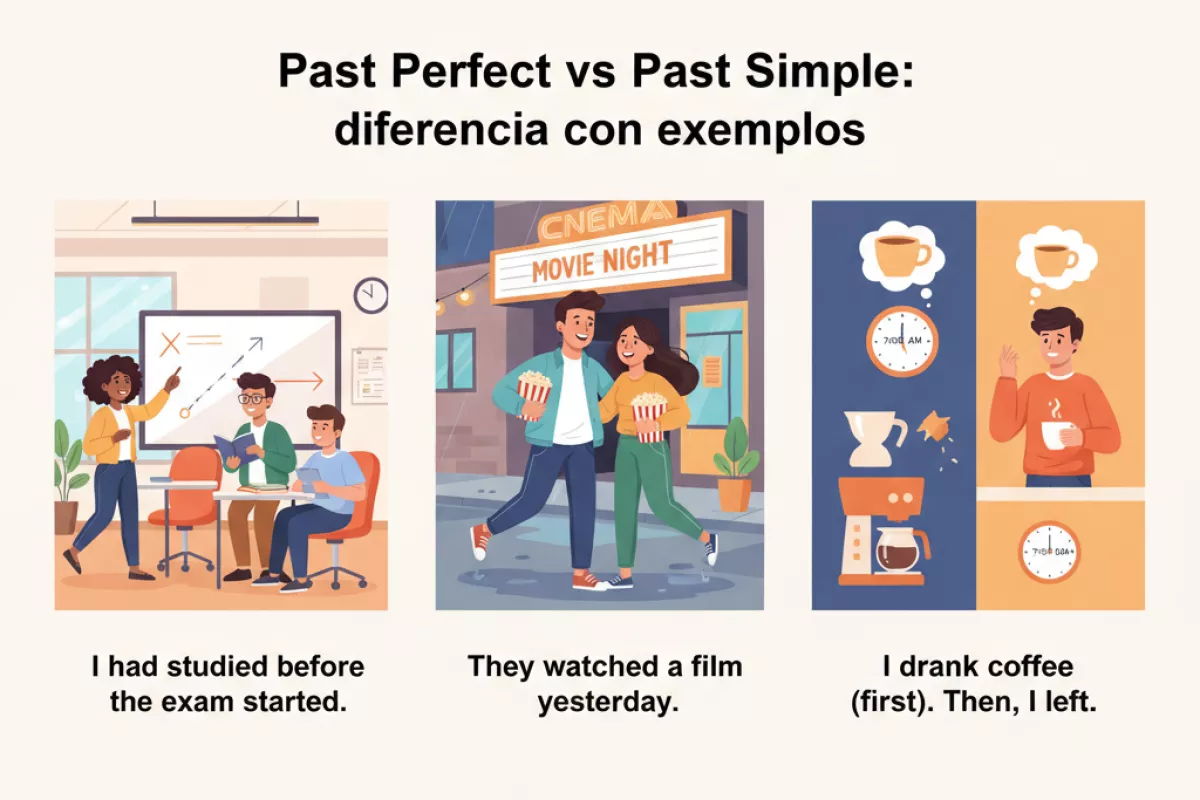 Aprende qué expresa cada tiempo verbal en inglés y cómo cambia el significado al hablar de una acción pasada frente a una acción anterior a ese pasado. Incluye comparaciones claras con ejemplos, explica cuándo usar cada tiempo, señala errores comunes de hispanohablantes y termina con ejercicios prácticos para consolidar lo aprendido.
Muchos estudiantes dudan al elegir entre contar un hecho pasado o describir algo que ya había ocurrido antes de otro momento en el pasado. La clave es ordenar la historia mentalmente y elegir el tiempo verbal que deje claro qué ocurrió primero y qué después. Aquí verás ejemplos reales, errores típicos y consejos prácticos para expresarte con naturalidad al contar experiencias, anécdotas o explicaciones.
Qué expresa cada tiempo verbal
Para elegir entre Past Simple y Past Perfect, conviene pensar en una idea práctica: cuántos “pasados” hay en tu historia. Si solo narras un hecho terminado en el pasado, normalmente basta con el pasado simple. Si, en cambio, necesitas dejar claro que un evento ocurrió antes que otro (ambos en el pasado), el pasado perfecto sirve para marcar esa anterioridad.
En la comunicación real, el contraste se usa para ordenar la cronología, explicar causas y evitar ambigüedades. A veces el orden se entiende por conectores (after, before) o por el contexto; aun así, el pasado perfecto resulta útil cuando quieres que el lector/oyente no tenga que “adivinar” qué ocurrió primero.
| Tiempo verbal | Qué comunica | Patrón típico | Ejemplo |
|---|---|---|---|
| Past Simple | Acción terminada en un momento pasado (secuencia o hecho puntual). | verb en pasado: worked / went / saw | I arrived at 8. |
| Past Perfect | Acción anterior a otra acción pasada (el “pasado del pasado”). | had + participio: had worked / had gone / had seen | I had arrived before you called. |
| Past Simple (con marcadores) | Orden cronológico claro sin necesidad de marcar anterioridad extra. | Conectores: then (luego), after (después) | I arrived, then I called you. |
| Past Perfect (para causa/antecedente) | Antecedente que explica una situación pasada. | had + participio + resultado en pasado | She was tired because she had worked late. |
Past Simple: hechos cerrados y secuencias
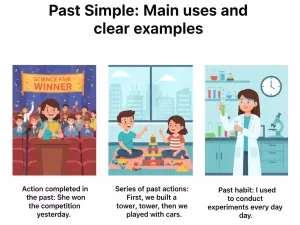
El pasado simple se usa para contar eventos completos en el pasado, especialmente cuando se narran en orden. También aparece con expresiones de tiempo terminadas (por ejemplo, yesterday (ayer), last week (la semana pasada), in 2019).
- We visited the museum.
- He called me yesterday.
- They moved to London in 2018.
- I woke up, got dressed, and left.
- She didn’t answer the email.
- Did you see the message?
- The meeting started at 9.
- I lost my keys on Monday.
Past Perfect: anterioridad y “pasado del pasado”
El pasado perfecto se centra en la relación entre dos momentos pasados: uno ocurre primero y queda “cerrado” antes del segundo. Es frecuente con before (antes) y after (después), pero no depende de ellos: su función principal es dejar clara la prioridad temporal.
- When I arrived, they had already left.
- She had finished the report before the deadline.
- We couldn’t get in because we had forgotten the code.
- After he had spoken, the room went quiet.
- I didn’t recognize him; I had never met him before.
- They had booked the tickets, so they didn’t worry.
- By the time you called, I had gone to bed.
- She was upset because someone had taken her seat.
Cuándo es opcional y cuándo es necesario
Hay casos en los que ambos tiempos pueden aparecer sin cambiar demasiado el sentido, porque el orden ya se entiende por el contexto. Sin embargo, cuando el orden podría interpretarse de dos maneras, el pasado perfecto ayuda a evitar confusiones.
- Opcional si el orden es obvio: After I arrived, I called you. (el conector ya ordena la secuencia).
- Recomendable si quieres enfatizar “ya había ocurrido”: When I arrived, you had already started.
- Necesario si sin él cambia la lógica: I realized I had left my phone at home. (primero lo dejé, luego me di cuenta).
- Útil para explicar causas en pasado: He was nervous because he had never flown before.
Acción anterior vs acción pasada
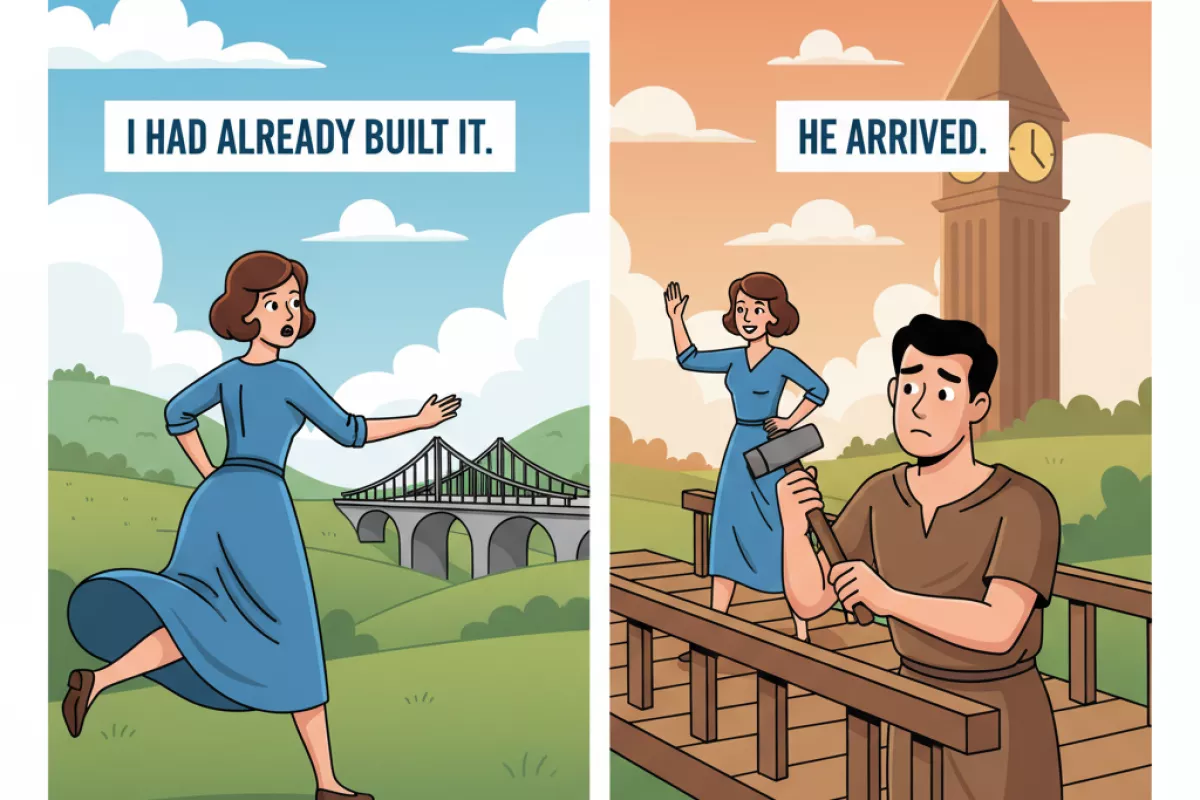
Cuando narras dos hechos en el pasado, la pregunta práctica es: ¿cuál ocurrió primero y cuál después? Para marcar esa relación temporal con claridad, el past perfect se usa para el evento ya completado antes de otro punto pasado, mientras que el past simple presenta el hecho principal o el momento en que avanza la historia.
La idea clave es que no se trata de “más pasado” por sonar más complejo, sino de orden. Si el orden ya está claro por conectores (por ejemplo, before (antes), after (después)) o por el contexto, muchas veces basta con el pasado simple; pero si puede haber ambigüedad, el past perfect evita confusiones.
Cómo decidir rápido qué tiempo usar
- Usa past perfect para la acción que ya había ocurrido antes del segundo evento: had + past participle.
- Usa past simple para el evento que ocurre después o para el que funciona como “marco” narrativo: verbo en pasado.
- Si mencionas un resultado visible en un momento pasado, a menudo el hecho que lo causó va en past perfect.
- Si cuentas hechos en orden cronológico (primero A, luego B) y lo dices explícitamente, puedes mantener ambos en past simple sin perder claridad.
Comparación en ejemplos (primero vs después)
| Relación temporal | Ejemplo | Lectura rápida |
|---|---|---|
| Primero (antecedente) | She had left before I arrived. | Ella se fue antes; yo llegué después. |
| Después (evento marco) | I arrived and she wasn’t there. | El foco narrativo está en “llegué”. |
| Resultado en un momento pasado | He was tired because he had worked all night. | El cansancio se entiende por la acción previa. |
| Secuencia clara por conector | After we ate, we watched a movie. | El conector ya ordena la secuencia. |
| Ambigüedad sin past perfect | When I got to the station, the train left. | ¿Se fue justo al llegar o antes? Puede ser confuso. |
| Ambigüedad resuelta | When I got to the station, the train had left. | El tren ya se había ido antes de llegar. |
Patrones frecuentes con conectores y “puntos de referencia”
- By the time + past simple, had + participle: By the time we arrived, the store had closed.
- When + past simple, had + participle (para indicar que algo ya estaba hecho): When I called, she had already gone.
- Because + past simple + causa previa en past perfect: I apologized because I had misunderstood.
- Before + past simple, had + participle: They had booked the tickets before they told us.
- After: suele permitir pasado simple en ambos si el orden es obvio, pero el past perfect aparece si quieres enfatizar “ya completado”: After he had finished, he left.
Ejemplos adicionales para fijar el contraste
- I recognized her because I had met her before.
- They didn’t let us in because we had forgotten our IDs (documentos).
- The film started when we arrived; we missed the beginning.
- The film had started when we arrived; it was already playing.
- He called me after he arrived at the office.
- He called me after he had arrived at the office (énfasis en “ya estaba allí”).
- I didn’t know the answer because I hadn’t read the email.
- She was upset because someone had taken her seat.
- We were late because the bus had broken down.
- When the teacher came in, the students had already sat down.
- When the teacher came in, the students sat down (acción posterior, reacción).
- By 2010, they had moved to London (ciudad).
- In 2010, they moved to London (fecha del cambio).
- I couldn’t pay because I had lost my wallet.
- She smiled because she had heard the news.
Errores típicos y cómo evitarlos
- Usar past perfect sin un segundo punto pasado: si no hay un evento de referencia (otra acción pasada o un “by the time…”), suele ser innecesario.
- Olvidar el participio: es had gone, had seen, had done (irregular), no had went.
- Confundir “when”: con when, el past simple puede indicar simultaneidad o secuencia; si quieres dejar claro “ya había pasado”, recurre al past perfect.
Comparación directa con ejemplos
La diferencia práctica entre ambos tiempos se entiende mejor si piensas en una línea temporal: el Past Simple cuenta hechos terminados en un momento concreto del pasado, mientras que el Past Perfect marca un hecho anterior a otro hecho pasado (es decir, “pasado del pasado”).
En uso real, el punto clave es el orden: si mencionas dos acciones pasadas y necesitas dejar claro cuál ocurrió primero, el tiempo compuesto suele aparecer en la acción más antigua. En cambio, si el orden ya es obvio por conectores como before (antes) o por el contexto, a veces basta con el tiempo simple.
| Situación | Past Perfect (acción anterior) | Past Simple (acción posterior) |
|---|---|---|
| Dos acciones, importa el orden | She had left before I arrived. | I arrived after she left. |
| Resultado ya estaba “listo” cuando ocurrió algo | They had finished dinner when the guests came. | The guests came and they finished dinner. |
| Experiencia previa relevante en ese momento pasado | I had never seen snow until I moved to Canada. | I moved to Canada and saw snow. |
| Explicar causa en el pasado | He was tired because he had worked late. | He worked late and was tired. |
| Secuencia narrativa (acciones una tras otra) | After I had locked the door, I walked away. | I locked the door and walked away. |
| Con “when”: acción anterior vs interrupción | When I arrived, she had already started. | When I arrived, she started. |
Patrones útiles para decidir rápido
- Acción A ocurrió antes de Acción B (ambas en pasado): usa Past Perfect para A y Past Simple para B.
- “Already / just / yet” suelen encajar con el tiempo compuesto cuando se habla de un “estado previo” en ese momento pasado: already (ya), just (acabar de).
- “By the time + pasado” casi pide Past Perfect para lo que ya estaba completado: “By the time we got there, …”.
- Con “before/after”: si el orden queda clarísimo, puedes ver ambos en simple; si quieres enfatizar el “pasado anterior”, el compuesto aporta precisión.
Ejemplos en pares (misma idea, enfoque distinto)
- Past Perfect + Past Simple: I had saved the file before the computer crashed. / Past Simple: I saved the file before the computer crashed.
- She had studied French, so she understood the menu. / She studied French and understood the menu.
- We had met once, but I didn’t recognize him. / We met once and I didn’t recognize him.
- They hadn’t booked a table, so they waited outside. / They didn’t book a table and they waited outside.
- By the time the movie started, we had found our seats. / The movie started and we found our seats.
- When I called, he had gone out. / When I called, he went out.
- I had never driven at night until I got that job. / I never drove at night until I got that job.
- She had lost her keys, so she took a taxi. / She lost her keys and took a taxi.
- He had repaired the bike before his sister asked for help. / He repaired the bike before his sister asked for help.
- We hadn’t seen that neighborhood before we moved there. / We didn’t see that neighborhood before we moved there.
- The train had left when we reached the platform. / The train left when we reached the platform.
- After she had read the email, she replied. / She read the email and replied.
Errores típicos (y cómo evitarlos)
- Usar el tiempo compuesto sin un “segundo pasado” claro: si no hay otra referencia en pasado, normalmente basta con Past Simple.
- Confundir “when”: “When I arrived, she started” sugiere que empezó en ese momento; “When I arrived, she had started” indica que ya había empezado antes.
- Olvidar el participio en verbos irregulares: had went (incorrecto) → had gone (ido).
- Sobreusar el compuesto en narración: para contar eventos en cadena (then, next), el tiempo simple suele ser el patrón natural.
Cuándo usar uno u otro
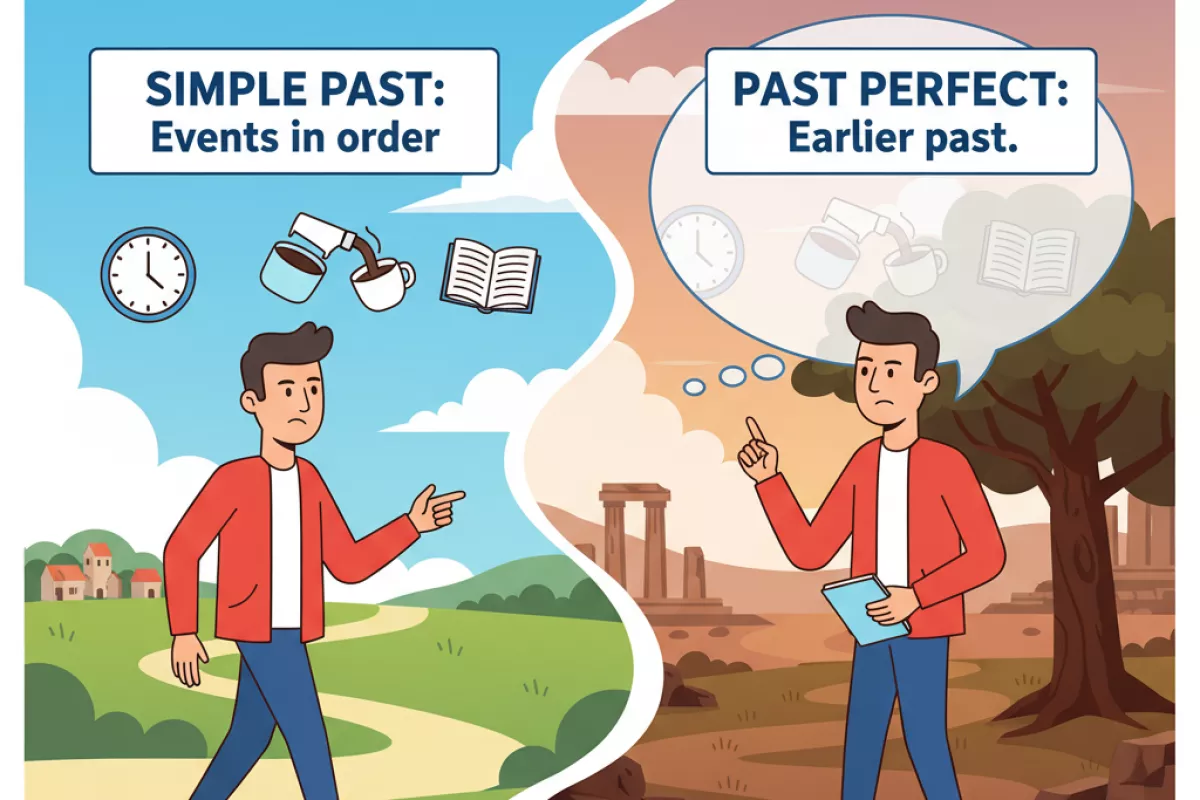
La elección depende de cómo se ordenan los hechos en el tiempo. Cuando cuentas una historia en pasado, a veces solo narras una secuencia (un evento tras otro) y otras veces necesitas dejar claro que un hecho ocurrió antes que otro, aunque ambos estén en el pasado.
La idea práctica es esta: usa el tiempo que “lleva el hilo” del relato para los eventos principales, y reserva el otro para marcar un “pasado anterior” que explica, justifica o prepara lo que viene después. En muchos casos, el contexto (y conectores como already (ya) o before (antes)) te indica cuál encaja mejor.
Patrones típicos de uso
- Usa Past Simple para acciones terminadas en un momento concreto del pasado: Yesterday, I met John.
- Usa Past Simple para una secuencia de acciones en narración: She opened the door, walked in, and sat down.
- Usa Past Simple cuando el orden ya es obvio por el contexto y no necesitas “marcar” anterioridad: I got home and took a shower.
- Usa Past Perfect cuando comparas dos momentos pasados y quieres señalar el evento más antiguo: When I arrived, they had left.
- Usa Past Perfect para dar “background” (información previa) antes del evento principal: He was nervous because he had forgotten his notes.
- Usa Past Perfect con by the time (para cuando) para enfatizar que algo ya estaba completado: By the time we got there, the movie had started.
- Usa Past Perfect con already (ya) y just (acabar de) si necesitas remarcar la anterioridad: She had just finished when the phone rang.
- Usa Past Simple en preguntas sobre “qué pasó” en un momento pasado, sin contraste explícito: What did you do after work?
Comparación rápida (qué comunica cada uno)
| Situación | Tiempo más natural | Ejemplo |
|---|---|---|
| Evento único y cerrado en el pasado | Past Simple | I called you last night. |
| Dos eventos pasados; necesitas marcar cuál ocurrió primero | Past Perfect + Past Simple | I called you after I had finished work. |
| Relato con acciones en cadena (orden cronológico) | Past Simple | We arrived, checked in, and went to our room. |
| Explicación de una causa anterior a un resultado en pasado | Past Perfect (para la causa) | He missed the train because he had overslept. |
| Con “by the time” para indicar algo completado antes de otro momento pasado | Past Perfect | By the time she came, we had eaten. |
Conectores que suelen “pedir” un tiempo u otro
- after: a menudo va con Past Simple en la acción posterior y Past Perfect en la anterior si quieres claridad: After I had sent the email, I felt relieved.
- before: puede funcionar con Past Simple en ambos si el orden es evidente, pero Past Perfect refuerza la anterioridad: I had met her before I moved to London.
- when: suele introducir el evento “marco” en Past Simple, y el anterior en Past Perfect: When we got to the station, the train had left.
- by the time (para cuando): casi siempre empuja a Past Perfect para lo ya completado: By the time I arrived, they had decided.
- because: si la causa ocurrió antes del resultado (ambos en pasado), Past Perfect ayuda a ordenar: She apologized because she had misunderstood.
Errores frecuentes y cómo evitarlos
- Usar Past Perfect “de más” en historias donde el orden ya está claro. Si no hay contraste entre dos momentos pasados, normalmente basta con Past Simple: We went to a café and talked.
- Olvidar el segundo punto de referencia. El Past Perfect suele necesitar un “ancla” en pasado (explícita o implícita): He had left suena incompleto si no se entiende when o by the time qué pasó después.
- Confundir “ago” (hace) con estructuras de anterioridad. Con ago se usa Past Simple: She left two hours ago.
- Mezclar tiempos sin intención. Si el objetivo es narrar, mantén Past Simple como base y usa el otro tiempo solo para el “salto atrás” necesario.
Regla práctica para decidir en segundos
- Si estás contando qué pasó en una línea temporal simple: elige Past Simple.
- Si necesitas responder qué había pasado antes de otro momento pasado: introduce Past Perfect para el hecho anterior y mantén Past Simple para el hecho posterior.
Errores comunes de hispanohablantes
La dificultad más típica al elegir entre past simple y past perfect no es la forma, sino la lógica temporal: en inglés suele marcarse de manera explícita qué acción ocurrió primero cuando se cuentan dos hechos pasados relacionados. En español, esa relación a menudo se entiende por contexto y se traduce con pretérito indefinido o pluscuamperfecto sin tanta rigidez.
La idea clave es práctica: usa el tiempo “más atrás” para la acción anterior y el “más cercano” para la acción posterior. Además, fíjate en conectores como when (cuando), after (después) o by the time (para cuando), porque suelen activar patrones muy predecibles.
Confundir el orden real de los hechos
| Patrón problemático | Versión natural en inglés | Qué expresa |
|---|---|---|
| Usar past simple en las dos acciones aunque una ocurrió antes | When I arrived, she had left. | Primero se fue; después yo llegué. |
| Usar past perfect para “lo más reciente” por sonar más “pasado” | She left when I arrived. | Mi llegada es el punto de referencia; no es “más atrás”. |
| Meter past perfect sin necesidad cuando el orden ya está claro | After we ate, we went home. | After ya ordena los hechos; suele bastar past simple. |
| Olvidar que “by the time” suele pedir una acción completada antes | By the time we got there, the movie had started. | Para ese momento, ya había empezado. |
| Usar “when” como si siempre significara simultaneidad | When I got to the station, the train had already left. | When marca el momento de referencia; la otra acción puede ser anterior. |
Usar el past perfect como “pasado más formal”
Otro patrón frecuente es emplear el tiempo compuesto para “sonar más avanzado”, incluso cuando solo se narra una acción pasada sin relación con otra. En inglés, este tiempo casi siempre necesita un punto de referencia en el pasado (explícito o muy claro en el contexto).
- Incorrecto: I had visited London last year. → Correcto: I visited London last year.
- Incorrecto: She had bought a new phone yesterday. → Correcto: She bought a new phone yesterday.
- Incorrecto: We had met at 8 pm. → Correcto: We met at 8 pm.
- Correcto con referencia: I had visited London before I moved to the UK.
Errores con marcadores temporales típicos
Algunas expresiones de tiempo empujan claramente hacia uno u otro uso. Los fallos aparecen cuando se traduce literalmente desde el español (“ya”, “todavía”, “cuando”) sin ajustar el patrón inglés.
- Already (ya) con acción anterior: By 9 o’clock, they had already finished.
- Just (acababa de): When I called, he had just arrived.
- Yet (todavía) en pasado con referencia: By the time we left, she hadn’t finished yet.
- Before (antes) puede hacer innecesario el compuesto: I left before he arrived. (El orden ya está marcado.)
- Until (hasta) suele ir con past simple: We waited until the store opened.
- By the time (para cuando) suele pedir acción completada: By the time the teacher came in, we had sat down.
Formas verbales: participios irregulares y negativos
Muchos errores no son de elección del tiempo, sino de construcción: el auxiliar had + participio pasado. Aquí influyen los participios irregulares y la tendencia a “inventar” formas por analogía con el español.
- Confusión de participio: had went → had gone (ido).
- Confusión de participio: had took → had taken (tomado).
- Confusión de participio: had ate → had eaten (comido).
- Confusión de participio: had wrote → had written (escrito).
- Negación correcta: She hadn’t seen it before (no lo había visto).
- Pregunta correcta: Had you met him before?
Sobreusar “had” en narración con secuencia simple
En narraciones (historias, biografías, anécdotas), es común encadenar acciones en orden cronológico. En ese caso, el pasado simple suele ser suficiente; el compuesto se reserva para retroceder y aclarar un “pasado del pasado”.
- Secuencia normal: I opened the door, walked in, and turned on the lights.
- Retroceso necesario: I realized I had left my keys at home.
- Contraste típico: We went to the restaurant, but it had closed.
Ejemplos contrastados
Cuando narras dos acciones en el pasado, la clave es decidir si quieres marcar una secuencia (una ocurrió antes que la otra) o simplemente contar hechos en orden sin enfatizar cuál fue anterior. Para señalar claramente “esto ya había pasado cuando ocurrió lo otro”, se usa el past perfect; para relatar eventos terminados en un momento pasado, se usa el past simple.
En la práctica, piensa en dos puntos: (1) ¿hay un “pasado de referencia” (por ejemplo, when I arrived)? y (2) ¿necesitas dejar claro que otra acción estaba completada antes de ese punto? Si la respuesta es sí, el past perfect suele ser el patrón natural.
| Situación | Con past perfect (acción anterior) | Con past simple (acción en el punto de referencia) |
|---|---|---|
| Llegada a un lugar | When I arrived, they had already left. | I arrived and they left. |
| Trabajo terminado antes | She had finished the report before the meeting started. | The meeting started and she finished the report. |
| Experiencia previa relevante | He had never driven on the left, so he was nervous. | He never drove on the left, so he was nervous. |
| Resultado visible en el pasado | They were tired because they had walked for hours. | They were tired because they walked for hours. |
| Explicación de un problema | I couldn’t log in because I had forgotten my password. | I couldn’t log in because I forgot my password. |
| Acción interrumpida en el pasado | We had just sat down when the phone rang. | We sat down when the phone rang. |
| Orden de eventos poco obvio | By the time the police arrived, the thief had escaped. | The police arrived and the thief escaped. |
| Cambio de planes | I had planned to call you, but I fell asleep. | I planned to call you, but I fell asleep. |
Patrones útiles para decidir rápido
- When + pasado de referencia: When I got home, my sister had cooked dinner. (cena)
- By the time + pasado de referencia: By the time we arrived, the movie had started.
- Before/after (si quieres remarcar anterioridad): I had saved the file before the computer crashed.
- Because para causa ya completada: He apologized because he had said something rude. (grosero)
- Already / just / never con énfasis temporal: She had already seen that episode.
- Past simple en cadena para narración directa: He opened the door, walked in, and sat down.
Más pares de contraste (misma idea, distinto enfoque)
- When I called, you had gone out. / When I called, you went out.
- She was upset because she had lost her keys. / She was upset because she lost her keys.
- We didn’t recognize him because he had changed his hairstyle. / We didn’t recognize him because he changed his hairstyle.
- After they had eaten, they went for a walk. / After they ate, they went for a walk.
- I realized I had made a mistake. / I realized I made a mistake.
- He told me he had met her before. / He told me he met her before.
- By 2010, they had built three bridges. / In 2010, they built three bridges.
- When the lesson started, I had forgotten my notebook. / When the lesson started, I forgot my notebook.
- She couldn’t pay because she had left her wallet at home. / She couldn’t pay because she left her wallet at home.
- We had booked a table, but the restaurant was full. / We booked a table, but the restaurant was full.
- He had studied French, so the test was easier. / He studied French, so the test was easier.
- They had cleaned the house when the guests arrived. / They cleaned the house when the guests arrived.
Errores típicos y cómo evitarlos
- Usar past perfect sin un pasado de referencia: “I had visited Paris.” suena incompleto si no se entiende “antes de qué”. Mejor: I had visited Paris before I moved to London.
- Confundir “simple pasado” con “anterioridad”: “When I arrived, they left” suele indicar que se fueron después de mi llegada; si quieres “ya se habían ido”, usa had left.
- Olvidar el participio: had went (incorrecto) → had gone. (ir)
- Sobreusar past perfect en narración: si los hechos van en secuencia clara, el pasado simple suele ser suficiente: I woke up, got dressed, and left.
Ejercicios prácticos para casa
La práctica más útil consiste en decidir dos cosas: si una acción ya estaba completada antes de otra (marco anterior) o si simplemente narras eventos en secuencia. En los ejercicios verás pistas típicas: already (ya), yet (todavía), when (cuando), after (después de), before (antes de), y expresiones como by the time (para cuando).
Concéntrate en el patrón: para el tiempo anterior usa had + past participle (had gone, had eaten, had finished) y para la acción principal de la historia usa el pasado simple (went, ate, finished). En preguntas, recuerda la inversión: Had + sujeto + participio.
Ejercicio 1: Completa con la forma correcta
- When I arrived, the movie ______ (start).
- She ______ (not/meet) him before that day.
- They ______ (finish) dinner, then they went for a walk.
- By the time we got to the station, the train ______ (leave).
- He ______ (break) his phone, so he couldn’t call me.
- I realized I ______ (forget) my keys at home.
- We ______ (live) there for two years before we moved.
- After she ______ (send) the email, she noticed a mistake.
- When the teacher asked, I ______ (not/do) the homework.
- He ______ (never/see) snow until he visited Canada (country).
Mostrar respuestas
- had started
- hadn’t met
- finished
- had left
- had broken
- had forgotten
- had lived
- had sent
- hadn’t done
- had never seen
Ejercicio 2: Elige la opción correcta
- We (didn’t go / hadn’t gone) to that restaurant before.
- When she called, I (finished / had finished) my meeting.
- He (lost / had lost) his wallet, so he went back home.
- After they (arrived / had arrived), they checked in.
- By the time I got there, everyone (left / had left).
- I (didn’t recognize / hadn’t recognized) him at first because he looked different.
- She (was / had been) tired because she studied all night.
- When we started the test, we (didn’t read / hadn’t read) the instructions carefully.
- They (bought / had bought) the tickets online, then they printed them.
- He (didn’t tell / hadn’t told) me the truth until yesterday.
Mostrar respuestas
- hadn’t gone
- had finished
- lost
- arrived
- had left
- didn’t recognize
- was
- hadn’t read
- bought
- didn’t tell
Ejercicio 3: Ordena la cronología (A ocurrió antes que B)
- A: I ate breakfast. B: I left the house.
- A: She learned English. B: She moved to London (city).
- A: They booked the hotel. B: They arrived in Rome (city).
- A: He locked the door. B: He realized his phone was inside.
- A: We met before. B: We talked at the conference (event).
- A: The plane took off. B: I got to the gate.
- A: I read the report. B: I sent my feedback.
- A: She finished the exam. B: The teacher collected the papers.
Mostrar respuestas
- I had eaten breakfast before I left the house.
- She had learned English before she moved to London.
- They had booked the hotel before they arrived in Rome.
- He had locked the door before he realized his phone was inside.
- We had met before we talked at the conference.
- The plane had taken off before I got to the gate.
- I had read the report before I sent my feedback.
- She had finished the exam before the teacher collected the papers.
Ejercicio 4: Preguntas y negativas (transformación)
- They had finished the project. (question)
- She had seen that movie. (negative)
- He left early because he had felt sick. (question about the earlier action)
- I had already paid. (question)
- We had visited Paris (city) before. (negative)
- The class started after the teacher had arrived. (question about the teacher)
- She had written the report. (question)
- They had never tried sushi. (question)
Mostrar respuestas
- Had they finished the project?
- She hadn’t seen that movie.
- Had he felt sick?
- Had you already paid?
- We hadn’t visited Paris before.
- Had the teacher arrived before the class started?
- Had she written the report?
- Had they ever tried sushi?
Ejercicio 5: Mini-historia (elige el tiempo verbal correcto)
- Yesterday I ______ (wake up) late because my alarm ______ (not/ring).
- When I ______ (get) to work, my boss ______ (already/leave).
- I ______ (feel) stressed because I ______ (forget) an important document.
- After I ______ (send) the file, I ______ (notice) the attachment was wrong.
- In the end, everything ______ (be) fine because I ______ (fix) it quickly.
Mostrar respuestas
- woke up / hadn’t rung
- got / had already left
- felt / had forgotten
- sent / noticed
- was / fixed