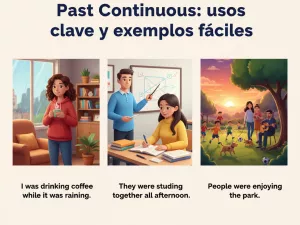
Past Perfect: cuándo se usa y por qué es importante

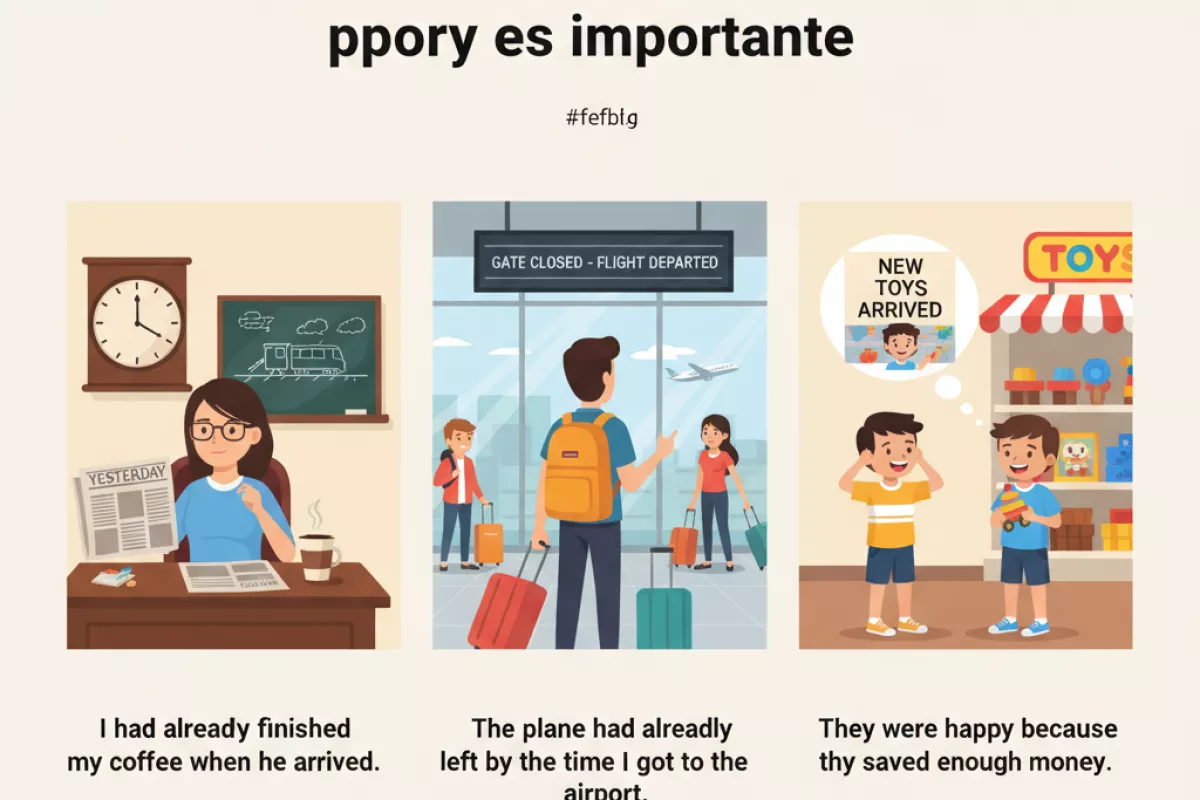 Aprende qué expresa el Past Perfect en inglés y por qué es clave para organizar el pasado con claridad. Verás cómo conecta dos acciones pasadas para indicar cuál ocurrió primero, cuándo es realmente necesario usarlo, ejemplos claros en contexto, errores comunes de hispanohablantes y un ejercicio práctico.
Cuando quieres describir dos acciones en el pasado y dejar claro cuál ocurrió antes, necesitas una herramienta que ordene la historia sin confundir al oyente. Muchos estudiantes lo evitan, pero en conversaciones reales aparece constantemente: al dar una razón, corregir un malentendido o añadir contexto. Aquí aprenderás cuándo usarlo y cómo reconocerlo al escuchar.
Qué expresa el Past Perfect
Este tiempo verbal se usa para marcar anterioridad dentro del pasado: sitúa una acción o estado como ya completado antes de otro punto pasado que funciona como referencia. La idea práctica es ordenar dos (o más) hechos pasados y dejar claro cuál ocurrió primero, incluso si el orden no coincide con el orden en que se cuentan.
En la mayoría de casos aparece junto a un segundo evento en Past Simple (pasado simple), o con una expresión temporal que fija el “momento de corte” en el pasado. Así, el lector/oyente entiende qué información es el “pasado anterior” y cuál es el “pasado principal” de la narración.
Relación temporal: “un pasado antes de otro pasado”
- Acción anterior completada antes de otra acción pasada: When I arrived, they had left (se habían ido).
- Estado previo vigente hasta un momento pasado: She had lived in Lima for years before she moved (se mudó).
- Experiencia previa relevante para un evento pasado: He had never seen snow before that trip (ese viaje).
- Causa o explicación de un resultado en el pasado: He was tired because he had worked late (hasta tarde).
- Secuencia narrativa para evitar ambigüedad: I realized I had forgotten my keys (llaves).
Cómo se construye el significado (patrones típicos)
El patrón base es had + past participle (participio). Se combina con conectores y marcadores temporales que ayudan a fijar el punto de referencia pasado: before (antes), after (después), when (cuando), by the time (para cuando), already (ya), just (acabar de).
También es común con verbos de pensamiento o descubrimiento (realize, remember, notice) para mostrar que una acción anterior explica lo que alguien entendió en ese momento pasado.
| Función | Patrón frecuente | Ejemplo |
|---|---|---|
| Acción anterior a otra acción pasada | Past Perfect + Past Simple | They had finished dinner when I called (llamé). |
| “Para cuando…” (límite temporal) | By the time + Past Simple, Past Perfect | By the time we arrived, the movie had started (empezado). |
| Duración hasta un punto pasado | had + participle + for/since | She had worked there for two years before she quit (renunció). |
| Explicar una causa en el pasado | Past Simple + because + Past Perfect | He apologized because he had misunderstood (malentendido). |
| Experiencia previa (con “never/ever”) | had never/ever + participle + before | I had never tried sushi before that night (esa noche). |
Señales útiles para reconocerlo en contexto
- before: We had met before we started working together (juntos).
- after: After she had saved enough money, she bought a car (coche).
- when: When he arrived, I had already left (ya).
- by the time: By the time they came back, the store had closed (cerrado).
- already / just: She had just finished (acabar de) her exam when the bell rang.
- Verbos de “darse cuenta”: I realized I had sent the wrong file (archivo).
- Contexto narrativo con salto atrás: He looked familiar; I had seen him somewhere (en algún lugar).
Qué matiz aporta frente a contar todo en Past Simple
Usar solo pasado simple puede dejar el orden temporal implícito o ambiguo. Con este tiempo compuesto, el hablante fija explícitamente qué ocurrió primero, lo que resulta especialmente útil cuando la segunda acción se menciona antes en la frase, o cuando se introduce una explicación retrospectiva (un “flashback” breve) dentro de una historia.
Por qué es importante en el pasado
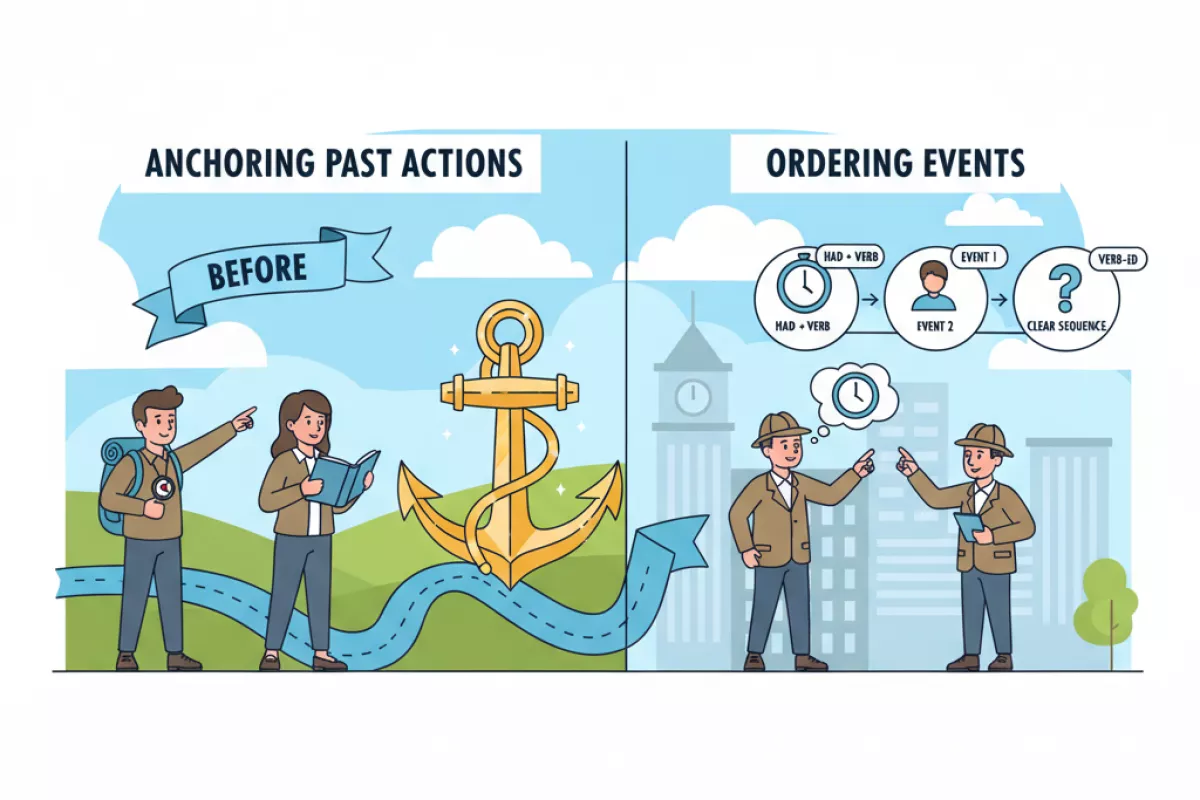
Este tiempo verbal es clave cuando necesitas ordenar dos (o más) acciones pasadas y dejar claro cuál ocurrió primero. En lugar de depender solo de conectores como before (antes) o after (después), la forma verbal marca la secuencia y reduce ambigüedades, especialmente en narraciones, explicaciones y reportes.
En la práctica, funciona como un “ancla” temporal: establece un punto de referencia en el pasado (normalmente expresado en past simple) y sitúa otra acción aún más atrás. Por eso es tan útil para contar historias, justificar decisiones, describir causas y efectos y explicar experiencias previas dentro de un marco pasado.
Qué aporta a la claridad del mensaje
- Secuencia inequívoca: diferencia el evento anterior del evento principal en pasado.
- Relación causa-efecto: permite mostrar que un resultado pasado se debe a un hecho previo.
- Contexto narrativo: añade “historia previa” sin romper el hilo temporal.
- Precisión en explicaciones: útil en disculpas, informes y descripciones de incidentes.
- Menos dependencia de marcadores: aunque aparezcan already (ya) o yet (todavía), la gramática sostiene el orden.
Comparación rápida: cuándo usarlo frente a otras opciones
| Objetivo | Forma más natural | Ejemplo |
|---|---|---|
| Contar dos acciones pasadas y marcar la anterior | Past perfect + past simple | She had left when I arrived. |
| Enumerar hechos pasados en orden sin retroceso | Past simple | I arrived, sat down, and called him. |
| Dar “fondo” o situación en progreso en el pasado | Past continuous + past simple | I was studying when she called. |
| Hablar de experiencia previa conectada al presente | Present perfect | I have visited London. |
Patrones frecuentes que conviene reconocer
Muchos usos aparecen con estructuras repetibles. Identificarlas acelera la comprensión y evita errores típicos como usar past simple en ambos verbos cuando sí hay “pasado del pasado”. Fíjate en estas plantillas: suelen combinar una referencia en pasado con un hecho anterior.
- When + past simple + past perfect: When I got home, they had eaten.
- After + past perfect + past simple: After she had finished, she went out.
- Before + past simple + past perfect: Before he called, I had sent the email.
- By the time + past simple + past perfect: By the time we arrived, the film had started.
- Because + past perfect + past simple: He apologized because he had forgotten.
- Reported speech (estilo indirecto): She said she had seen it.
- Question form: Had you met him before you moved?
- Negative form: They hadn’t heard the news when I told them.
- With “already” (ya): The train had already left.
- With “just” (acabar de): She had just arrived when it started raining.
- With “never” (nunca): I had never tried sushi before that day.
- With “ever” (alguna vez): Had you ever been there before?
Errores comunes que cambia el significado
La importancia no es solo “usar una forma más avanzada”, sino evitar interpretaciones distintas. En inglés, elegir entre past simple y esta forma puede cambiar qué evento se entiende como anterior, incluso si el orden de la frase parece sugerirlo.
- Usar past simple en ambos verbos cuando hay retroceso temporal: “When I arrived, she left” no expresa claramente que ella se fue antes.
- Confundir “had” auxiliar con “had” de posesión: en “had eaten”, had es auxiliar; no significa “tener”.
- Olvidar el participio: “had went” es incorrecto; debe ser “had gone” (ir).
- Abusar del tiempo en narraciones simples: si no hay un “pasado anterior” relevante, el past simple suele ser suficiente.
Relación entre dos acciones pasadas
Cuando se narran hechos en el pasado, a menudo aparecen dos acciones conectadas: una ocurrió primero y la otra después. En inglés, el past perfect sirve para marcar con claridad cuál de las dos ya estaba completada antes de que sucediera la siguiente, incluso si ambas se mencionan en pasado.
La idea práctica es simple: se usa para “ordenar” los eventos. Normalmente, la acción más antigua va en past perfect (had + participio) y la más reciente en past simple. Esto evita ambigüedades, sobre todo cuando el orden no es obvio por el contexto o cuando la frase empieza por el resultado y luego explica la causa.
Patrón básico: primero pasado anterior, luego pasado simple
- Past perfect (acción previa) + past simple (acción posterior): She had left when I arrived.
- Past simple (acción posterior) + past perfect (acción previa): I arrived after she had left.
Conectores frecuentes y cómo afectan al orden
Muchos conectores ya sugieren secuencia (after, before, when, as soon as). Aun así, el pasado anterior se mantiene útil cuando quieres enfatizar que la primera acción estaba terminada antes de la segunda, o cuando el orden podría interpretarse de otra forma.
| Conector | Esquema típico | Ejemplo |
|---|---|---|
| after (después) | Past simple + after + past perfect | We went home after we had finished. |
| before (antes) | Past simple + before + past simple / past perfect | He checked the report before he sent it. |
| when (cuando) | Past perfect + when + past simple | They had already eaten when I got there. |
| as soon as (en cuanto) | Past simple + as soon as + past perfect | She called me as soon as she had landed. |
| by the time (para cuando) | By the time + past simple + past perfect | By the time the show started, we had found our seats. |
Ejemplos útiles (causa → resultado y resultado → causa)
En la práctica, este tiempo verbal aparece mucho cuando explicas un resultado en pasado y luego aclaras qué había ocurrido antes. Observa cómo el pasado anterior “empuja” una acción hacia atrás en la línea temporal.
- I couldn’t enter because I had forgotten my password. (password: “contraseña”)
- She was tired because she had worked late.
- They missed the train because they had left home too late.
- He apologized after he had realized his mistake.
- We didn’t recognize him because he had changed his hairstyle.
- She found the keys she had lost.
- I noticed that someone had opened the window.
- He said he had never seen snow before.
- We were surprised because they had already decided.
- By 2010, the company had launched three products.
- When I arrived, the meeting had started.
- After we had booked the hotel, we bought the tickets.
Errores típicos y cómo evitarlos
La confusión más común es usar pasado anterior cuando no hay dos momentos distintos, o cuando el orden ya está completamente claro y no se busca énfasis. También es frecuente mezclarlo con el present perfect por similitud de forma.
- Usarlo sin “dos pasados” reales: Yesterday I had eaten pizza. → si no hay otra acción pasada de referencia, suele bastar Yesterday I ate pizza.
- Olvidar la acción de referencia: si dices She had left, el lector espera “¿antes de qué?”; añade la segunda acción o el marco temporal.
- Confundir tiempos: I have seen it before I arrived → en narración pasada, mejor I had seen it before I arrived.
- Participios irregulares: revisar formas como go → gone, write → written, take → taken para no caer en *had went*.
Cuándo es necesario usarlo
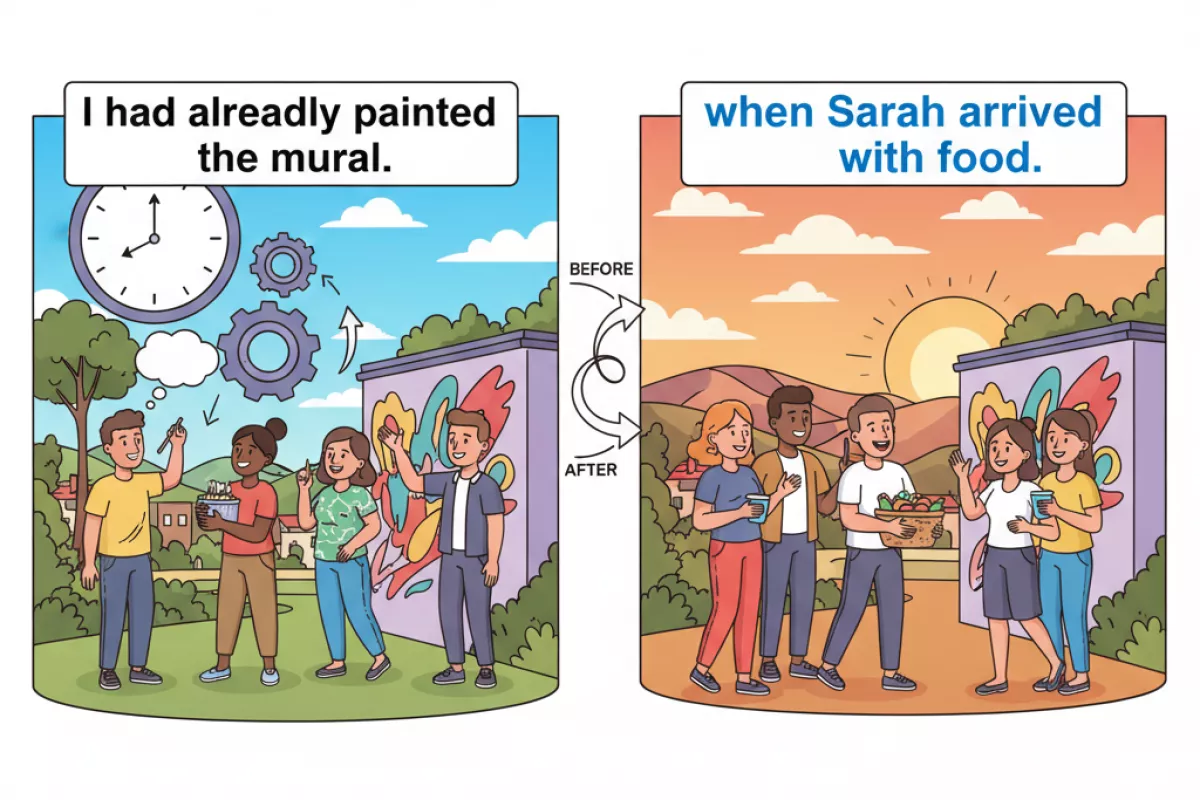
Este tiempo verbal se vuelve especialmente útil cuando necesitas dejar claro el orden de dos acciones en el pasado y evitar ambigüedades. La idea práctica es sencilla: una acción ya estaba completada antes de que ocurriera otra, también en pasado, y quieres que el lector u oyente lo entienda sin tener que deducirlo por el contexto.
En español muchas veces resolvemos esa relación con “ya”, “antes de”, “cuando”, o con el pluscuamperfecto (“había + participio”). En inglés, el patrón equivalente ayuda a marcar ese “pasado del pasado” de forma explícita, sobre todo cuando aparecen dos momentos pasados en la misma frase o en oraciones consecutivas.
Casos típicos en los que conviene usarlo
- Dos acciones pasadas y necesitas marcar cuál ocurrió primero: “When I arrived, they had left” (ya se habían ido).
- Una acción anterior explica una situación pasada: “He was nervous because he had lost his keys” (había perdido).
- Conectores temporales que introducen un “antes de”: “After she had finished, she went out” (después de terminar).
- Con “by the time” para indicar un límite temporal: “By the time we got there, the movie had started” (ya había empezado).
- En estilo narrativo para ordenar eventos cuando se cuenta una historia con saltos temporales: primero se establece un punto pasado y luego se retrocede a algo anterior.
- Para aclarar causa previa en pasado, incluso si la consecuencia también está en pasado: “I apologized because I had misunderstood” (había malentendido).
- En reported speech (estilo indirecto) cuando el original estaba en present perfect: “She said she had seen it” (lo había visto).
- Con “already / just / never” para enfatizar anterioridad completada: “They had already eaten” (ya habían comido).
- En preguntas sobre experiencia previa a un punto pasado: “Had you met him before you moved?” (antes de mudarte).
- En condicionales irreales del pasado (tercer condicional): “If I had known, I would have called” (si hubiera sabido).
- Para corregir malentendidos de secuencia cuando el oyente podría interpretar el orden al revés: “I didn’t go because I had forgotten” (había olvidado).
- Cuando hay varios pasados en un mismo párrafo y necesitas “anclar” qué pasó primero sin repetir fechas.
Comparación rápida: cuándo basta el pasado simple y cuándo no
| Situación | Forma recomendada | Ejemplo |
|---|---|---|
| Acciones en secuencia clara (primero A, luego B) sin riesgo de confusión | Past Simple + Past Simple | “I woke up and I opened the window” (abrí). |
| Dos acciones pasadas, pero necesitas marcar cuál ocurrió antes | Past Perfect + Past Simple | “I opened the window because I had heard a noise” (había oído). |
| Un “límite” en el pasado (antes de ese momento ya había ocurrido algo) | Past Perfect con “by the time” | “By the time he arrived, we had finished” (habíamos terminado). |
| Condición irreal referida al pasado | If + Past Perfect | “If they had left earlier, they would have caught the train” (habrían alcanzado). |
| Estilo indirecto al contar lo que alguien dijo/pensó sobre un hecho anterior | Past Perfect en reported speech | “He said he had never tried sushi” (nunca). |
Patrones y señales que suelen “pedir” este tiempo
Más que memorizar reglas sueltas, ayuda reconocer disparadores frecuentes: conectores de anterioridad, expresiones de límite y estructuras que comparan dos momentos pasados. Si aparece un punto de referencia en pasado (llegué, vi, fue, dijo) y quieres hablar de algo completado antes de ese punto, normalmente esa es la señal.
- By the time + pasado simple: “By the time I arrived, … had + participle”.
- After / before cuando la cronología no es obvia: “After he had spoken, …”.
- Because para causa anterior: “because + had + participle”.
- When en narración con salto atrás: “When I got home, I realized I had left my phone” (había dejado).
- Already / just / never para reforzar completitud previa: “had already finished”, “had just arrived”.
- The first/second time + referencia pasada: “It was the first time I had seen snow” (nieve).
Errores comunes que conviene evitar
- Usarlo sin un punto de referencia pasado: si no hay “otro pasado” con el que comparar, a menudo basta el pasado simple.
- Forzarlo con marcadores de tiempo específicos (yesterday, last year) cuando solo se narra un hecho: “I had gone yesterday” suele sonar innecesario si no hay contraste con otro evento.
- Confundirlo con present perfect: “I have seen” conecta con el presente; “I had seen” se ancla a un momento pasado.
- Olvidar el participio y usar la forma base: debe ser “had + V3” (“had eaten”, no “had eat”).
Ejemplos claros en contexto
La forma had + past participle se usa cuando necesitas dejar claro que una acción ocurrió antes que otra en el pasado. La idea práctica es ordenar eventos: primero el “pasado anterior” (con had) y después el segundo hecho (normalmente en past simple).
En muchos casos aparece con marcadores como already (ya), just (acabar de) o con conectores temporales como when y after. También es común en narración para explicar antecedentes sin repetir fechas o sin depender solo del contexto.
Situaciones típicas y patrones que se repiten
- When + past simple para el evento “más reciente” y had + past participle para el anterior: When I arrived, she had left.
- After + past perfect para marcar que algo ya estaba completado: After he had finished, he went out.
- Con before para enfatizar prioridad temporal: I had met him before we moved.
- Con already para “ya” en pasado: They had already eaten when we got there.
- Con just para “acababa de”: She had just arrived when the phone rang.
- En explicaciones de causa previa: He was tired because he had worked all night.
- En estilo indirecto (reporting): She said she had seen the email.
- Con negación para “no había” antes de otro hecho: I hadn’t heard the news when you called.
Comparación rápida: ordenar dos acciones pasadas
| Situación | Ejemplo | Qué aclara |
|---|---|---|
| La salida ocurrió antes de la llegada | When I arrived, she had left. | Primero se fue; después llegué. |
| La comida ocurrió antes de “llegar allí” | They had eaten when we got there. | El orden es inequívoco. |
| La acción previa explica un estado | He was nervous because he had lost his keys. | La causa es anterior al nerviosismo. |
| Antecedente en una historia | I recognized her; I had met her years earlier. | “Años antes” queda integrado en la narración. |
Ejemplos listos para copiar (con atención a errores frecuentes)
- By the time the meeting started, we had prepared the slides.
- I didn’t want dessert because I had already had cake.
- She couldn’t open the file because she had forgotten the password.
- We had never seen snow before we moved to Canada.
- Had you ever visited London before that trip? (inversión en pregunta)
- I hadn’t finished the report when my boss asked for it.
- After they had booked the hotel, they bought the plane tickets.
- When the teacher came in, the students had stopped talking.
- He apologized because he had said something rude.
- She realized she had left her ID (documento) at home.
- We were late because the train had been delayed. (voz pasiva)
- I was surprised that they had chosen a smaller room. (comparativo)
- The movie had started when we arrived, so we missed the beginning.
- He didn’t recognize me because we hadn’t met in person (en persona) before.
Mini-guía para elegirlo sin dudar
- Úsalo cuando haya dos puntos en el pasado y quieras marcar cuál ocurrió primero.
- Si el orden ya es obvio por before/after/by the time, puedes mantenerlo para enfatizar completitud, pero no es obligatorio en todos los casos.
- En narración, es útil para “retroceder” y dar antecedentes; luego se vuelve al pasado simple para continuar la secuencia principal.
Errores comunes de hispanohablantes
Los fallos más habituales aparecen cuando se intenta trasladar literalmente al inglés la lógica del pasado en español. En inglés, este tiempo no se elige “por sonar más pasado”, sino para ordenar dos acciones pasadas: una ocurrió antes que la otra y el hablante quiere dejarlo claro.
La idea práctica es sencilla: si en una narración ya estás en pasado (por ejemplo, con went, arrived, said) y necesitas mencionar algo que pasó todavía antes, ahí es donde muchos se equivocan. A continuación tienes patrones típicos y cómo corregirlos.
Confundirlo con el pasado simple
- Error: When I arrived, he left. (suena a acciones en secuencia)
Mejor: When I arrived, he had left. (ya se había ido antes) - Error: I didn’t know she was there because she left.
Mejor: I didn’t know she was there because she had left. - Error: After we ate, we had paid. (invierte el orden lógico)
Mejor: After we ate, we paid. / We had paid before we ate (según el orden real) - Clave: si el orden ya queda claro por then, and, o por la secuencia natural, a menudo basta el pasado simple.
Usarlo “por sistema” con before y after
Before y after ya indican relación temporal, así que el tiempo verbal se elige por énfasis y claridad, no por obligación. El error típico es poner la forma compuesta en la cláusula equivocada o en ambas sin necesidad.
- Error: After he had arrived, we had started the meeting. (a veces suena recargado)
Mejor: After he arrived, we started the meeting. (secuencia clara) - Error: Before I went to bed, I had brushed my teeth. (no siempre necesario)
Mejor: Before I went to bed, I brushed my teeth. (rutina; orden evidente) - Uso útil: I had already eaten before they arrived. (contraste explícito con already (ya))
Mezclar had con participios incorrectos
Muchos errores vienen de memorizar la estructura pero fallar en el participio pasado. Conviene vigilar especialmente los irregulares frecuentes y no confundir pasado simple con participio.
| Verbo | Error típico | Forma correcta |
|---|---|---|
| go | had went | had gone |
| see | had saw | had seen |
| take | had took | had taken |
| write | had wrote | had written |
| break | had break | had broken |
| choose | had chose | had chosen |
Negación y preguntas con la estructura equivocada
- Error: I hadn’t went.
Mejor: I hadn’t gone. - Error: Had you went there before?
Mejor: Had you gone there before? - Error: You had not finished? (pregunta poco natural sin inversión)
Mejor: Had you not finished? / Haven’t you finished? (según el sentido)
Confundirlo con present perfect
- Error: I have lost my keys yesterday. (mezcla con marcador de pasado)
Mejor: I lost my keys yesterday. - Error: When I got home, I have eaten.
Mejor: When I got home, I had eaten. (la comida ocurrió antes de llegar) - Regla práctica: si aparece un punto de tiempo terminado (yesterday, in 2019), normalmente no se usa present perfect.
Aplicarlo aunque no haya “dos pasados” que ordenar
- Error: I had lived in Madrid. (sin referencia posterior, queda incompleto)
Mejor: I lived in Madrid. / I had lived in Madrid before I moved to Valencia. - Error: She had studied a lot. (falta el segundo punto de referencia)
Mejor: She studied a lot. / She had studied a lot, so she passed.
Olvidar marcadores que lo vuelven más natural
- Con already (ya): They had already left when we arrived.
- Con just (acabar de): She had just finished when the phone rang.
- Con yet (todavía): He hadn’t called yet when I went to sleep.
- Con by the time (para cuando): By the time we got there, the store had closed.
Ejercicios prácticos para casa
La forma más rápida de afianzar este tiempo verbal es practicarlo en contextos donde hay dos momentos en el pasado y necesitas dejar claro cuál ocurrió primero. En la mayoría de frases, la pista es una “línea temporal”: una acción ya estaba completada cuando otra sucedió.
En los ejercicios verás patrones frecuentes como had + past participle y combinaciones con when, by the time y already (ya). Presta atención a la posición de los marcadores y a la concordancia del participio (por ejemplo, gone (ido) vs. went (fue)).
Ejercicio 1: Completa con la forma correcta
- When I arrived, the movie ________ (start).
- She ________ (finish) her homework before dinner.
- By the time we got to the station, the train ________ (leave).
- He didn’t recognize me because we ________ (meet / not) before.
- They ________ (not / hear) the news when I told them.
- I ________ (never / try) sushi until that night.
- After she ________ (lock) the door, she realized her keys were inside.
- We ________ (book) the hotel in advance, so check-in was quick.
- When the teacher asked, I ________ (forget) the answer.
- By 2010, he ________ (live) in three different countries.
Mostrar respuestas
- had started
- had finished
- had left
- had not met
- had not heard
- had never tried
- had locked
- had booked
- had forgotten
- had lived
Ejercicio 2: Elige entre pasado simple y la forma con “had”
- We (didn’t go / hadn’t gone) to the party because we were tired.
- She (left / had left) before I could say goodbye.
- When he called, I (finished / had finished) the report.
- I (saw / had seen) that film twice, so I knew the ending.
- They (didn’t understand / hadn’t understood) the question, so they asked again.
- By the time the meeting started, our boss (arrived / had arrived).
- He (lost / had lost) his wallet and then he cancelled his cards.
- We (ate / had eaten) already (ya), so we just had coffee.
- When I was a child, we (visited / had visited) my grandparents every summer.
- After she (sent / had sent) the email, she noticed a typo.
Mostrar respuestas
- didn’t go
- had left
- had finished
- had seen
- didn’t understand
- had arrived
- lost
- had eaten
- visited
- had sent
Ejercicio 3: Reescribe usando “had” para marcar anterioridad
- I ate breakfast. Then I went to work.
- She didn’t study. She failed the exam.
- We arrived at the airport. The gate closed.
- He bought a new phone. He realized he didn’t need it.
- They met once. Years later, they worked together.
- I didn’t save the file. The computer crashed.
- She took the medicine. She felt better.
- We didn’t book a table. The restaurant was full.
Mostrar respuestas
- After I had eaten breakfast, I went to work.
- She failed the exam because she hadn’t studied.
- When we arrived at the airport, the gate had closed.
- After he had bought a new phone, he realized he didn’t need it.
- They had met once before they worked together years later.
- The computer crashed because I hadn’t saved the file.
- After she had taken the medicine, she felt better.
- The restaurant was full because we hadn’t booked a table.
Ejercicio 4: Detecta y corrige el error
- When I got home, my brother has left.
- She had went to the store before it closed.
- By the time we arrived, they already ate.
- He didn’t had finished his work when the boss called.
- After I had saw the message, I replied.
- We were angry because they didn’t told us earlier.
- Had you ever went to London before 2019?
- When she had arrived, the class started.
Mostrar respuestas
- When I got home, my brother had left.
- She had gone to the store before it closed.
- By the time we arrived, they had already eaten.
- He hadn’t finished his work when the boss called.
- After I had seen the message, I replied.
- We were angry because they hadn’t told us earlier.
- Had you ever gone to London before 2019?
- When she arrived, the class had started.
Ejercicio 5: Ordena las palabras para formar frases correctas
- had / already / I / left / when / you / called
- because / missed / we / the bus / had / we / late / been
- never / before / had / seen / such / they / a / view
- by the time / started / the show / had / the lights / gone out
- had / she / finished / after / she / the report / relaxed
- hadn’t / he / the instructions / read / so / he / made / a mistake
- had / you / where / put / the keys / forgotten
- we / had / not / met / until / that day
- the plane / had / taken off / when / we / reached / the gate
- had / I / realized / my phone / I / lost / only later
Mostrar respuestas
- I had already left when you called.
- We missed the bus because we had been late.
- They had never seen such a view before.
- By the time the show started, the lights had gone out.
- After she had finished the report, she relaxed.
- He hadn’t read the instructions, so he made a mistake.
- Had you forgotten where you had put the keys?
- We had not met until that day.
- The plane had taken off when we reached the gate.
- I had realized only later I had lost my phone.